Photographs
what it really looks like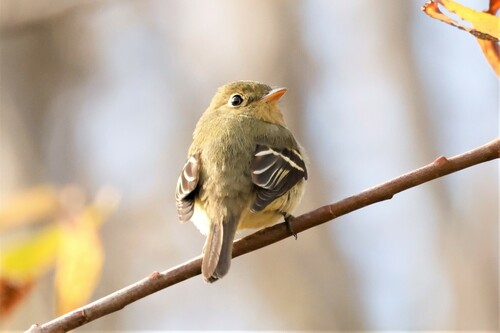
Photographs from iNaturalist · photographer credits
About from Wikipedia
Description
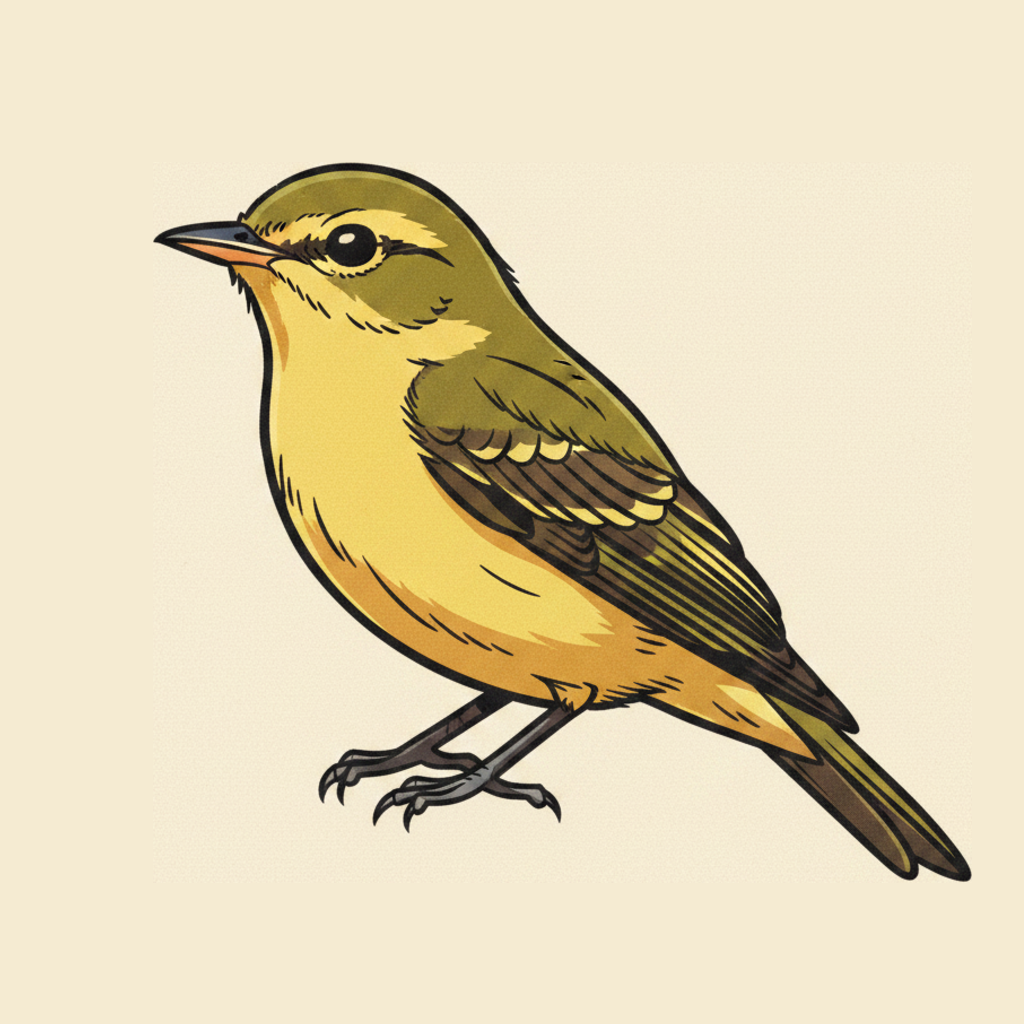
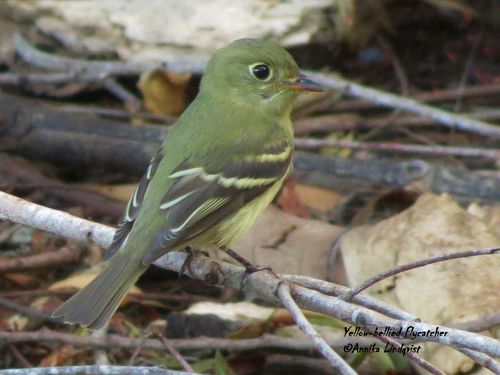
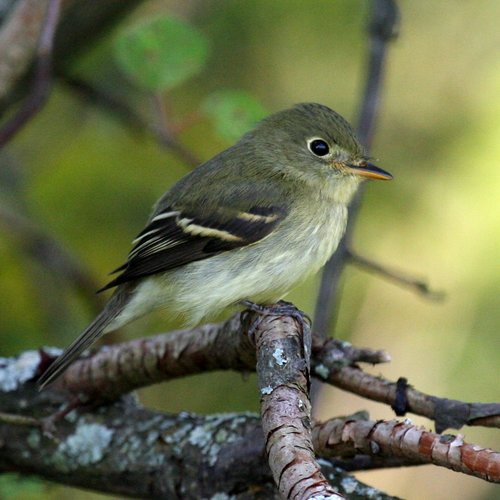
Adults have greenish upperparts and yellowish underparts (especially on the throat), with a dusky wash on the chest. They have a white or yellow eye ring that lacks the teardrop projection of the western flycatcher, white or yellowish wing bars that contrast strongly against the black wings, a broad, flat bill, and a relatively short tail when compared to other members of the genus. The upper mandible of the bill is dark, while the lower mandible is orange-pink. DNA testing in 2014 confirmed a field mark, involving the extent of buffy edging on the secondaries, to reliably distinguish this species from the western flycatcher. Measurements: Length: 5.1–5.9 in (13–15 cm) Weight: 0.3–0.6 oz (8.5–17.0 g) Wingspan: 7.1–7.9 in (18–20 cm) Yellow-bellied flycatchers wait on a perch low or in the middle of a tree and fly out to catch insects in flight, sometimes hovering over foliage. They sometimes eat berries or seeds. The yellow-bellied flycatcher's song can be transcribed as a rough, descending "tse-berk", which can be similar to the more common least flycatcher's snappier, more evenly pitched "che-bek."
Adapted from Yellow-bellied flycatcher on Wikipedia, used under CC BY-SA 4.0.