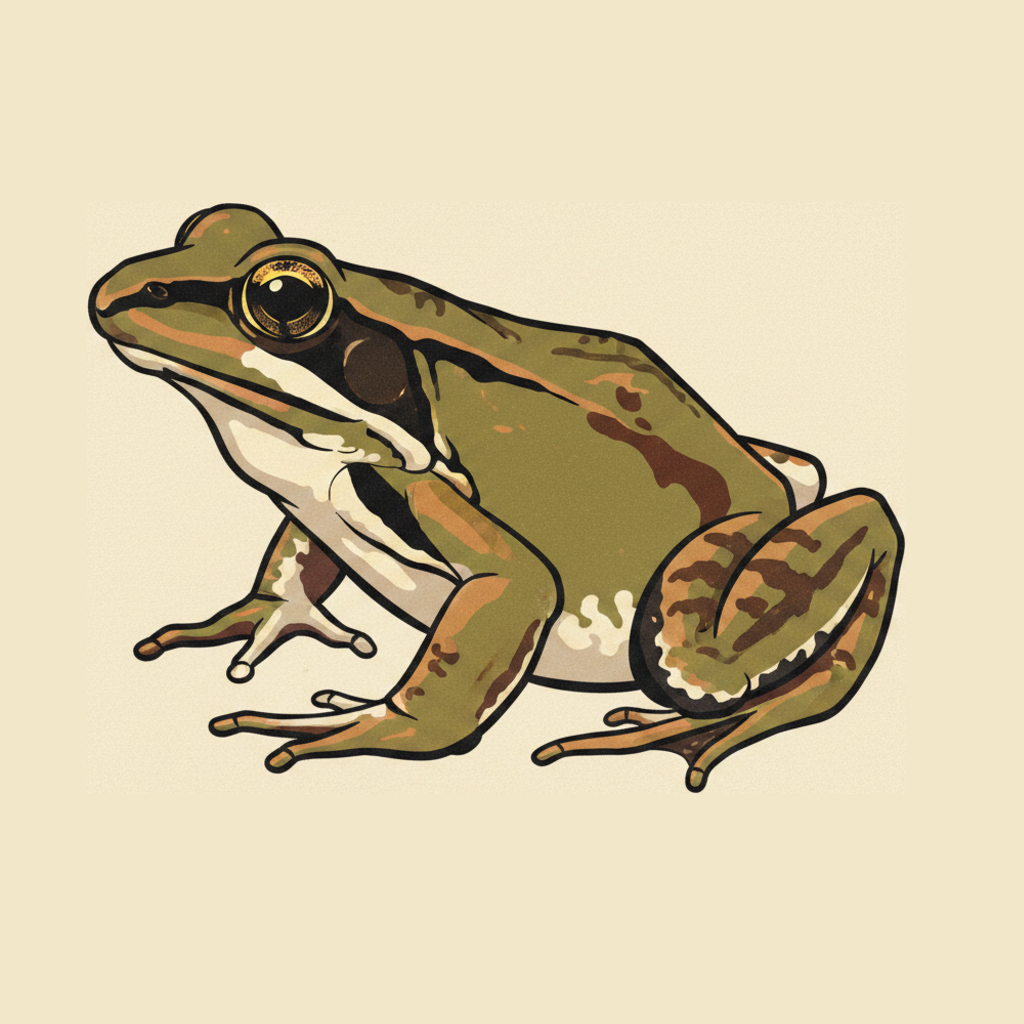
Photographs
what it really looks like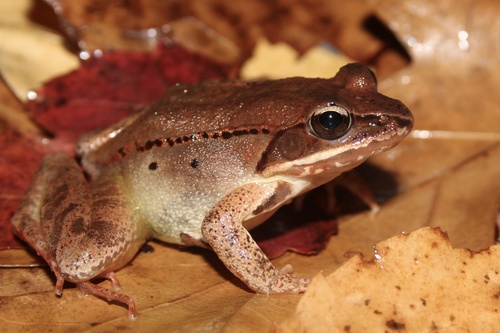
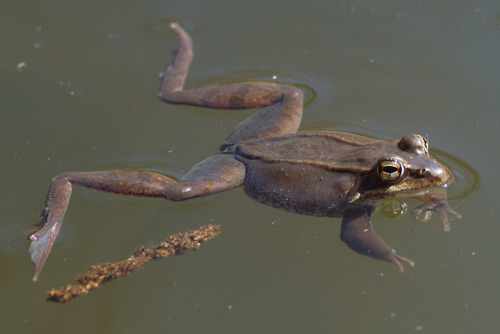
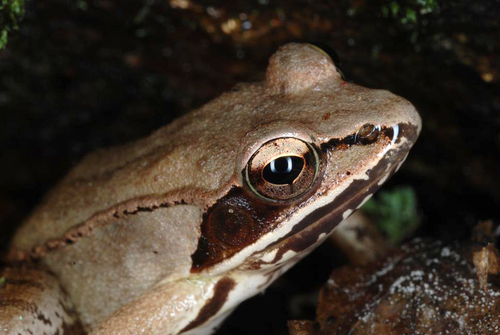
Photographs from iNaturalist · photographer credits
About from Wikipedia
Description
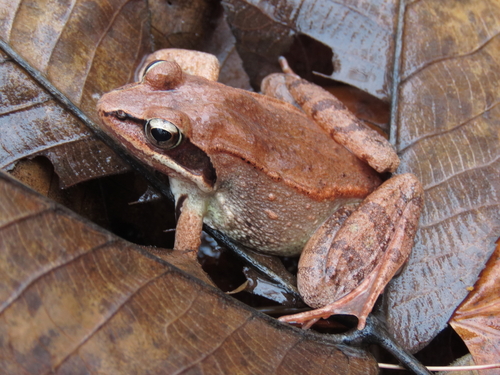
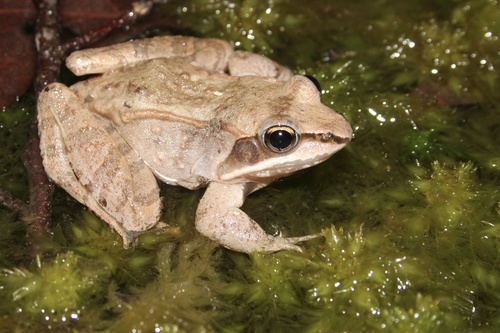
Wood frogs range from 51 to 70 mm (2.0 to 2.8 in) in length. Females are larger than males. Adult wood frogs are usually brown, tan, or rust-colored, and usually have a dark eye mask. Individual frogs are capable of varying their color; Conant (1958) depicts one individual which was light brown and dark brown at different times. The underparts of wood frogs are pale with a yellow or green cast; in northern populations, the belly may be faintly mottled. Their body colour may change seasonally; exposure to sunlight causes darkening.
Range & habitat
Wood frogs are forest-dwelling organisms that breed primarily in ephemeral, freshwater wetlands: woodland vernal pools. They are nonarboreal and spend most of their time on the forest floor. Long-distance migration plays an important role in their life history. Individual wood frogs range widely (hundreds of metres) among their breeding pools and neighboring freshwater swamps, cool-moist ravines, and/or upland habitats. Genetic neighborhoods of individual pool breeding populations extend more than a kilometre away from the breeding site. Thus, conservation of this species requires a landscape (multiple habitats at appropriate spatial scales) perspective. They also can be camouflaged with their surroundings. A study was done on wood frogs dispersal patterns in 5 ponds at the Appalachian Mountains where they reported adult wood frogs were 100% faithful to the pond of their first breeding but 18% of juveniles dispersed to breed in other ponds. Adult wood frogs spend summer months in moist woodlands, forested swamps, ravines, or bogs. During the fall, they leave summer habitats and migrate to neighboring uplands to overwinter. Some may remain in moist areas to overwinter. Hibernacula tend to be in the upper organic layers of the soil, under leaf litter. By overwintering in uplands adjacent to breeding pools, adults ensure a short migration to thawed pools in early spring. Wood frogs are mostly diurnal and are rarely seen at night, except maybe in breeding choruses. They are one of the first amphibians to emerge for breeding right when the snow melts, along with spring peepers.
Adapted from Wood frog on Wikipedia, used under CC BY-SA 4.0.