Photographs
what it really looks like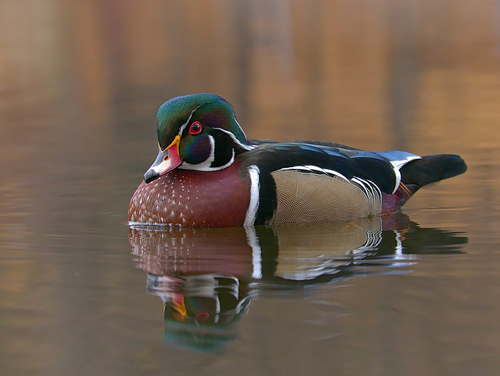
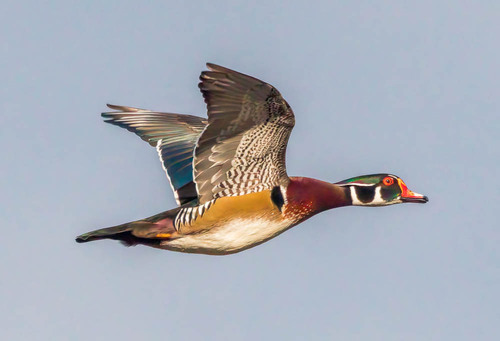

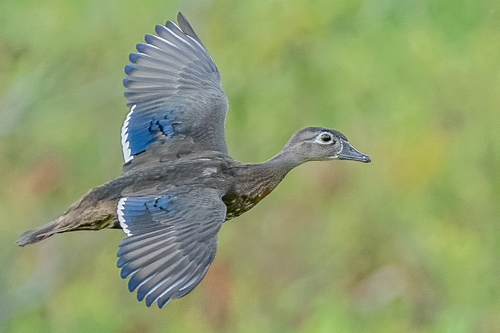
Photographs from iNaturalist · photographer credits
About from Wikipedia
Description
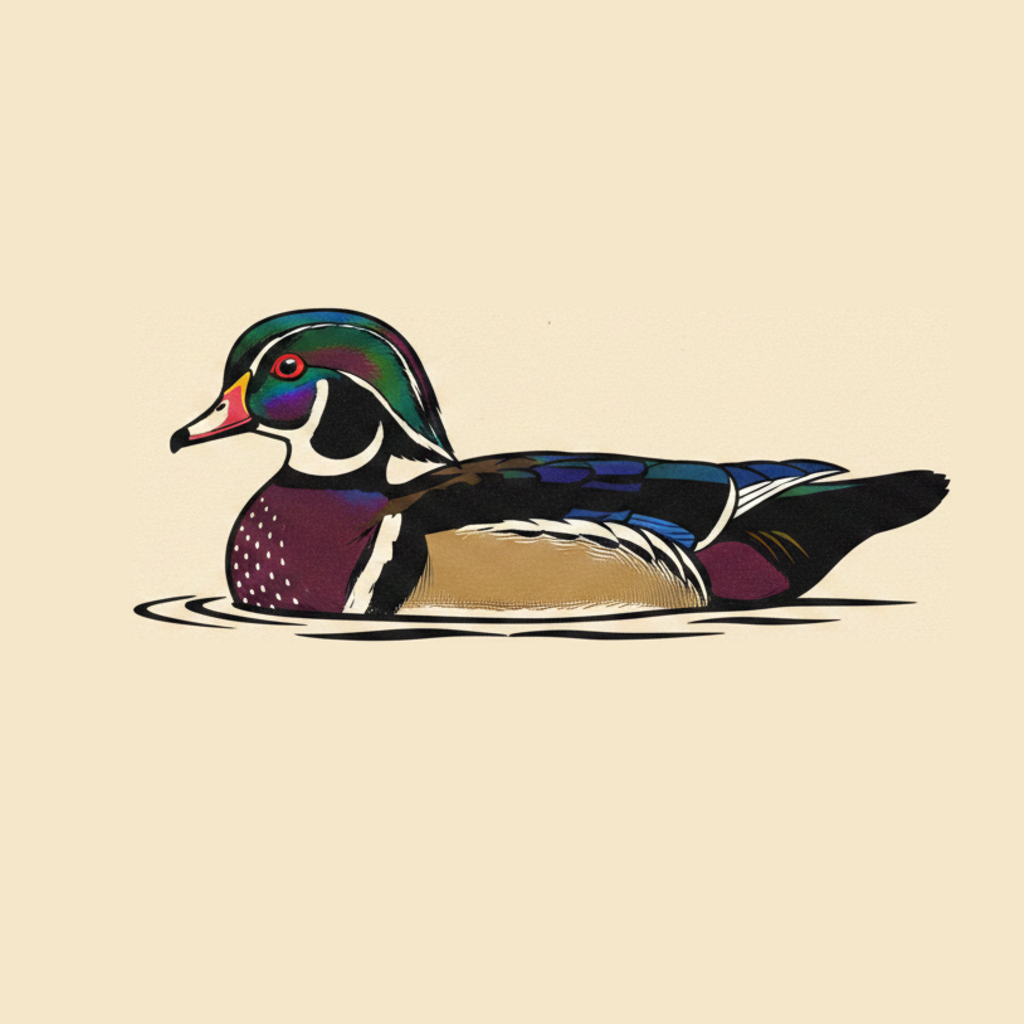
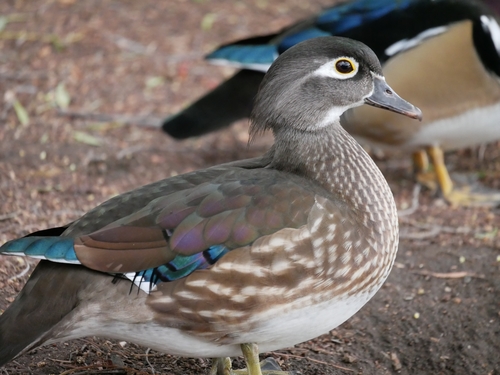
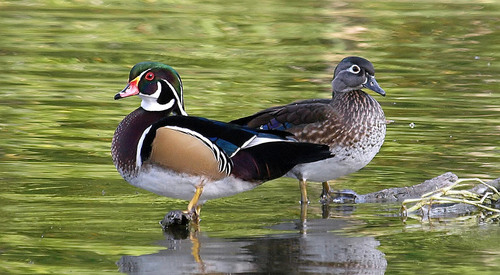
The wood duck is a medium-sized perching duck. A typical adult is from 47 to 54 cm (19 to 21 in) in length with a wingspan of between 66 and 73 cm (26 and 29 in). The wood duck's weight ranges from 454–862 grams (16.0–30.4 oz). This is about three-quarters the length of an adult mallard. It shares its genus with the Asian mandarin duck (Aix galericulata). The adult male has stunning multicolored iridescent plumage and red eyes, with a distinctive white flare down the neck. The female, less colorful, has a white eye-ring and a whitish throat. Both adults have crested heads. The speculum is iridescent blue-green with a white border on the trailing edge. The male's call is a rising whistle, jeeeeee; the females utter a drawn-out, rising squeal, do weep do weep, when flushed, and a sharp cr-r-ek, cr-e-ek for an alarm call.
Range & habitat
The birds are year-round residents in parts of its southern range, but the northern populations migrate south for the winter. They overwinter in the southern United States near the Atlantic Coast. 75% of the wood ducks in the Pacific Flyway are non-migratory. Due to their attractive plumage, they are also popular in waterfowl collections and as such are frequently recorded in Great Britain as escapees—populations have become temporarily established in Surrey in the past, but are not considered to be self-sustaining in the fashion of the closely related mandarin duck. Along with the mandarin duck, the wood duck is considered an invasive species in England and Wales, and it is illegal to release them into the wild. Given its native distribution, the species is also a potential natural vagrant to Western Europe and there have been records in areas such as Cornwall, Scotland and the Isles of Scilly, which some observers consider may relate to wild birds; however, given the wood duck's popularity in captivity, it would be extremely difficult to prove their provenance.
Adapted from Wood duck on Wikipedia, used under CC BY-SA 4.0.