Photographs
what it really looks like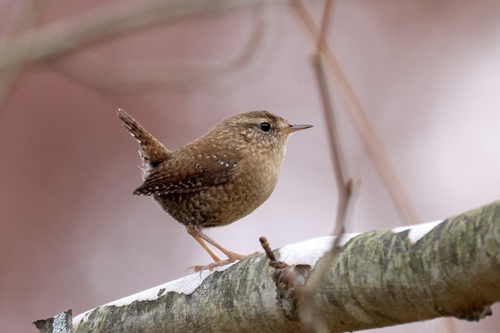

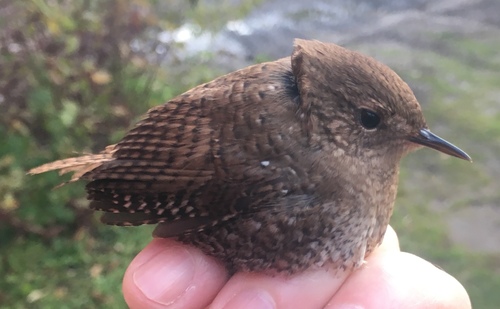
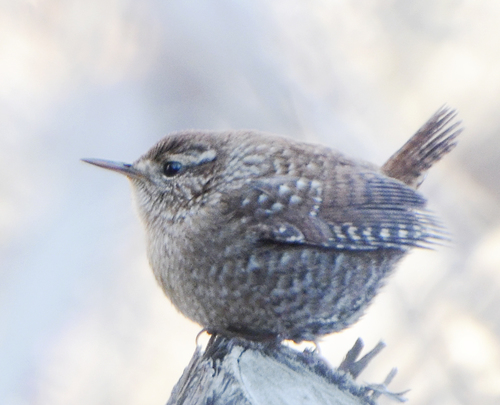
Photographs from iNaturalist · photographer credits
About from Wikipedia
Description
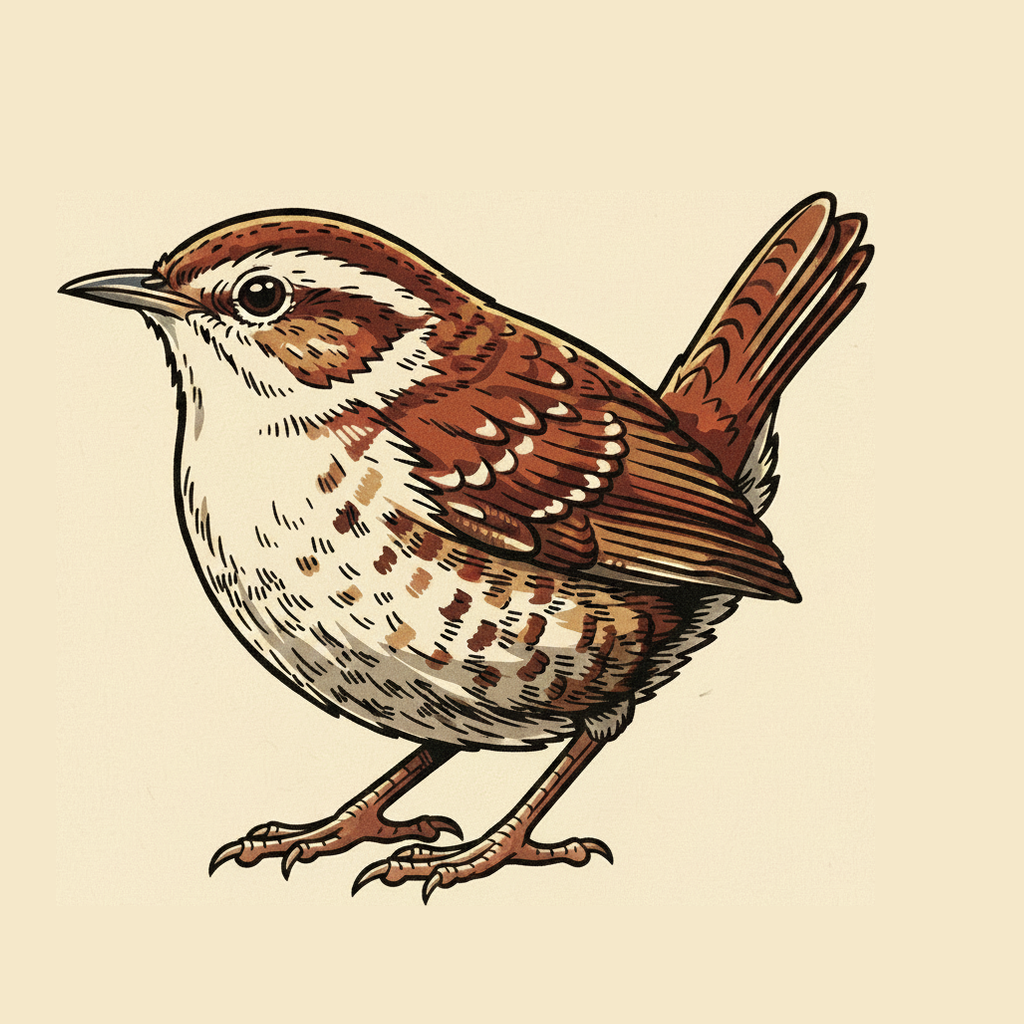
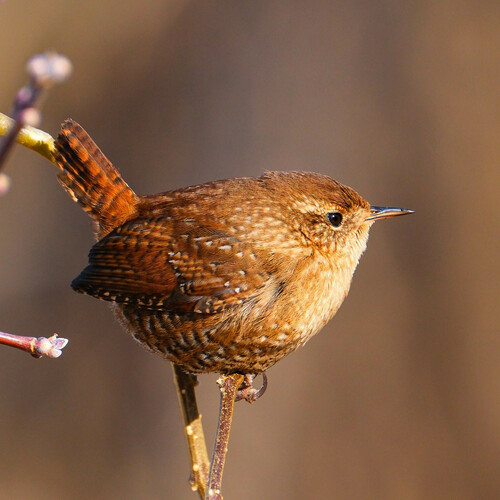
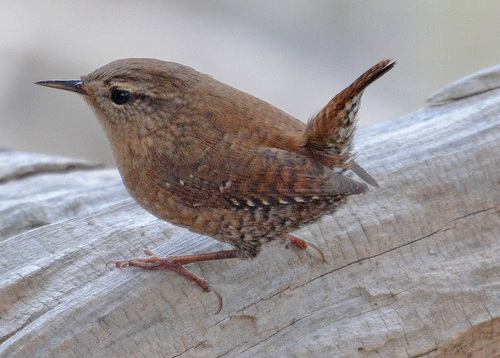
Small tail is often cocked above its back, and short neck gives the appearance of a small brown ball. Rufous brown above, grayer below, barred with darker brown and gray, even on wings and tail. The bill is dark brown, and the legs are pale brown. Young birds are less distinctly barred. Most are identifiable by the pale "eyebrows" over their eyes. Measurements: Length: 8–12 cm (3.1–4.7 in) Weight: 8–12 g (0.28–0.42 oz) Wingspan: 12–16 cm (4.7–6.3 in)
Range & habitat
The winter wren nests mostly in coniferous forests, especially those of spruce and fir, where it is often identified by its long and exuberant song. Although it is an insectivore, it can remain in moderately cold and even snowy climates by foraging for insects on substrates such as bark and fallen logs. Its movements as it creeps or climbs are incessant rather than rapid; its short flights swift and direct but not sustained, its tiny round wings whirring as it flies from bush to bush. At night, usually in winter, it often roosts, true to its scientific name, in dark retreats, snug holes and even old nests. In hard weather it may do so in parties, either consisting of the family or of many individuals gathered together for warmth.
Adapted from Winter wren on Wikipedia, used under CC BY-SA 4.0.