Photographs
what it really looks like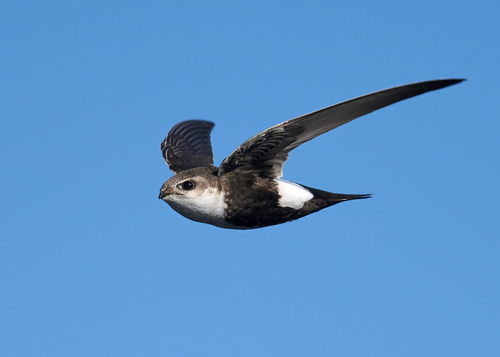
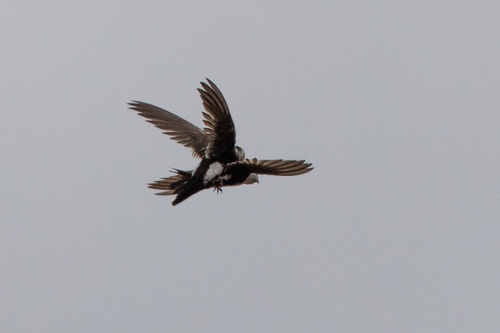
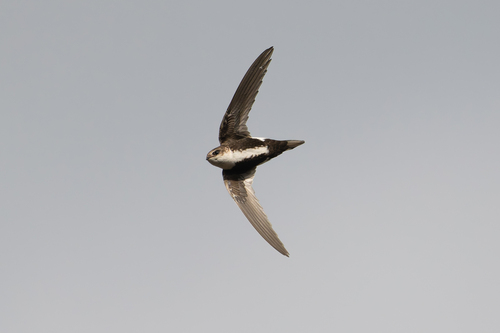
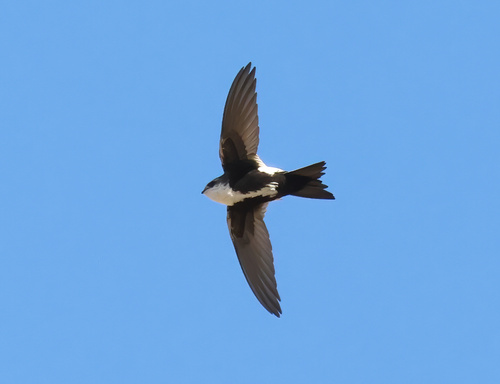
Photographs from iNaturalist · photographer credits
About from Wikipedia
Description
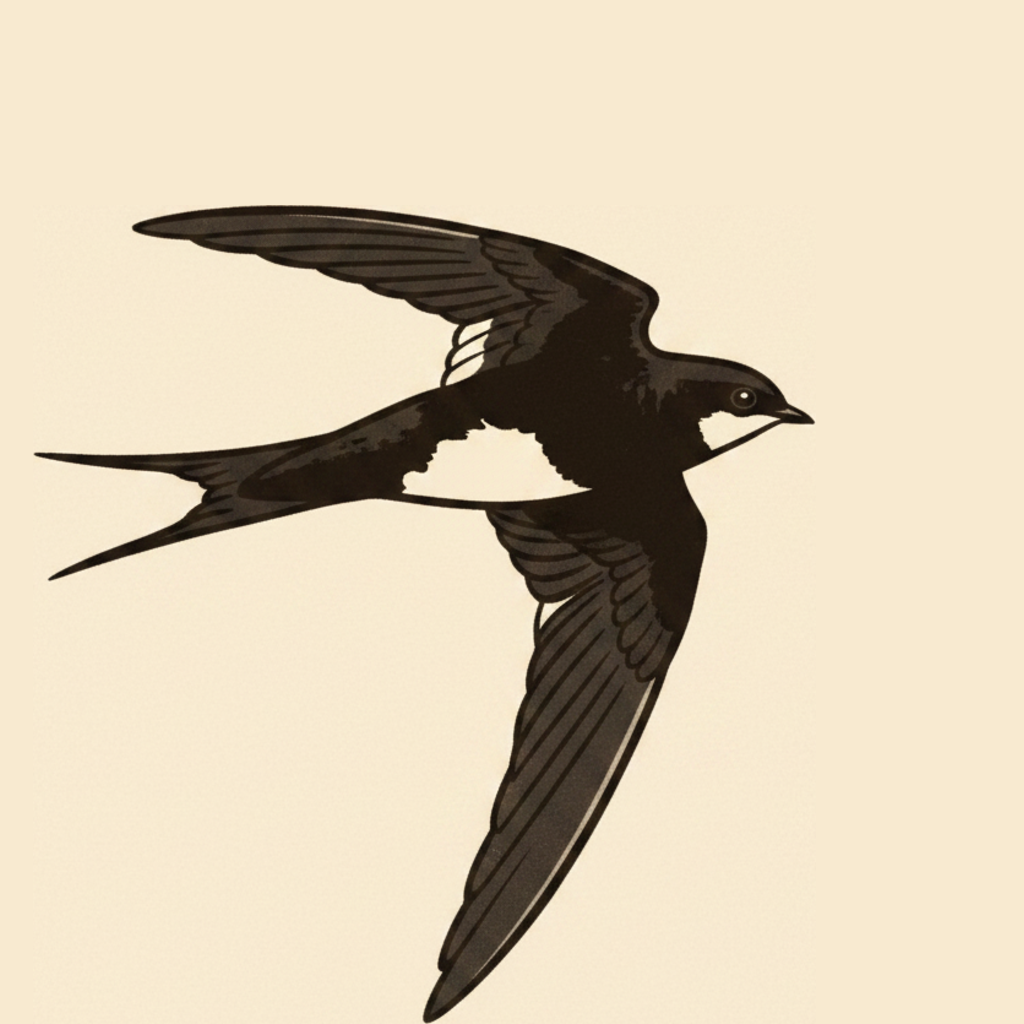
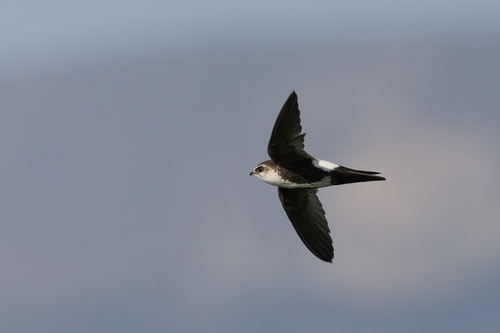
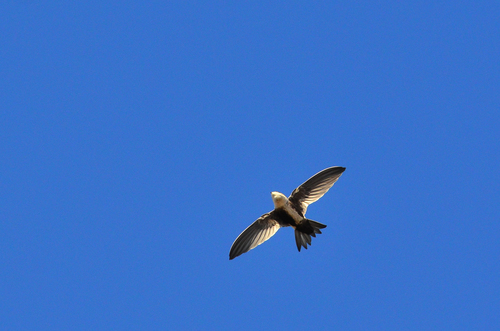
The white-throated swift is medium-sized bird that is primarily black and white. Its back and wings are blackish-brown or black, and its breast, belly, chin, and throat are white. In newly molted adults, the dark feathers may have a slight greenish sheen, though this is rarely observable in the field. Sexes cannot be distinguished by plumage. Juvenile (first basic) plumage is similar to adult (definitive basic) plumage, but with the feathers on juveniles' heads and necks appearing duller and paler. Adults are generally 15–18 centimeters in length, and have a tail with a relatively shallow 10 millimeter-deep notch. Adult swifts weigh between 28 and 36 grams, with a mean weight recorded as 32.5 grams, and there is no difference in size between males and females. The white-throated swift has a wingspan of 35.5 cm. White-throated swifts can appear similar to American black swifts and Vaux's swifts, which also occur in western North America, but they can be distinguished by their white underparts which both other species lack.
Range & habitat
White-throated swifts are year-round residents of coastal and southern California, southern Arizona, southern New Mexico, western Texas, central Mexico, and the Sierra Madre Occidental and Oriental mountains. Migratory breeding populations can be found from Arizona and New Mexico north to southern British Columbia, and from central California east to eastern Colorado and Wyoming. In the southern part of its migratory range, birds arrive in mid-March and depart in mid-October, while in the northern portion, they do not arrive until mid-April to early-May and depart in late-August to mid-September. There are two main areas in which non-breeding wintering populations can be found: the first includes southwestern California, eastern Arizona, the Texas Panhandle, while the second is in El Salvador, Guatemala, Honduras, and the Mexican state of Chiapas.
Behaviour
White-throated swifts are rapid fliers who rarely land except to roost. Swifts usually fly 10–100 meters above the ground, and can be observed taking advantage of wind currents and updrafts to gain speed. White-throated swifts usually leave their roosts in the morning, and will remain flying and foraging all day until late afternoon or evening. While in flight, swifts can sometimes be observed bathing by hitting the surface of the water with their underside, which is followed by airborne preening. Occasionally, they will fight with one another while in flight, and may chase or strike other white-throated swifts or violet-green swallows (Tachycineta thalassina).
Adapted from White-throated swift on Wikipedia, used under CC BY-SA 4.0.