Photographs
what it really looks like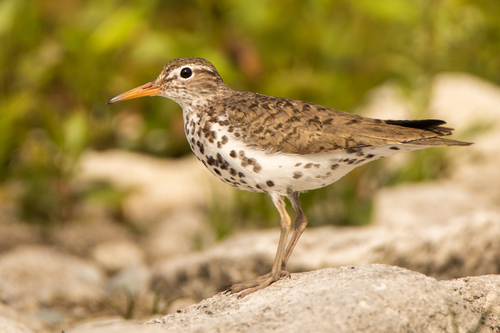
Photographs from iNaturalist · photographer credits
About from Wikipedia
Description
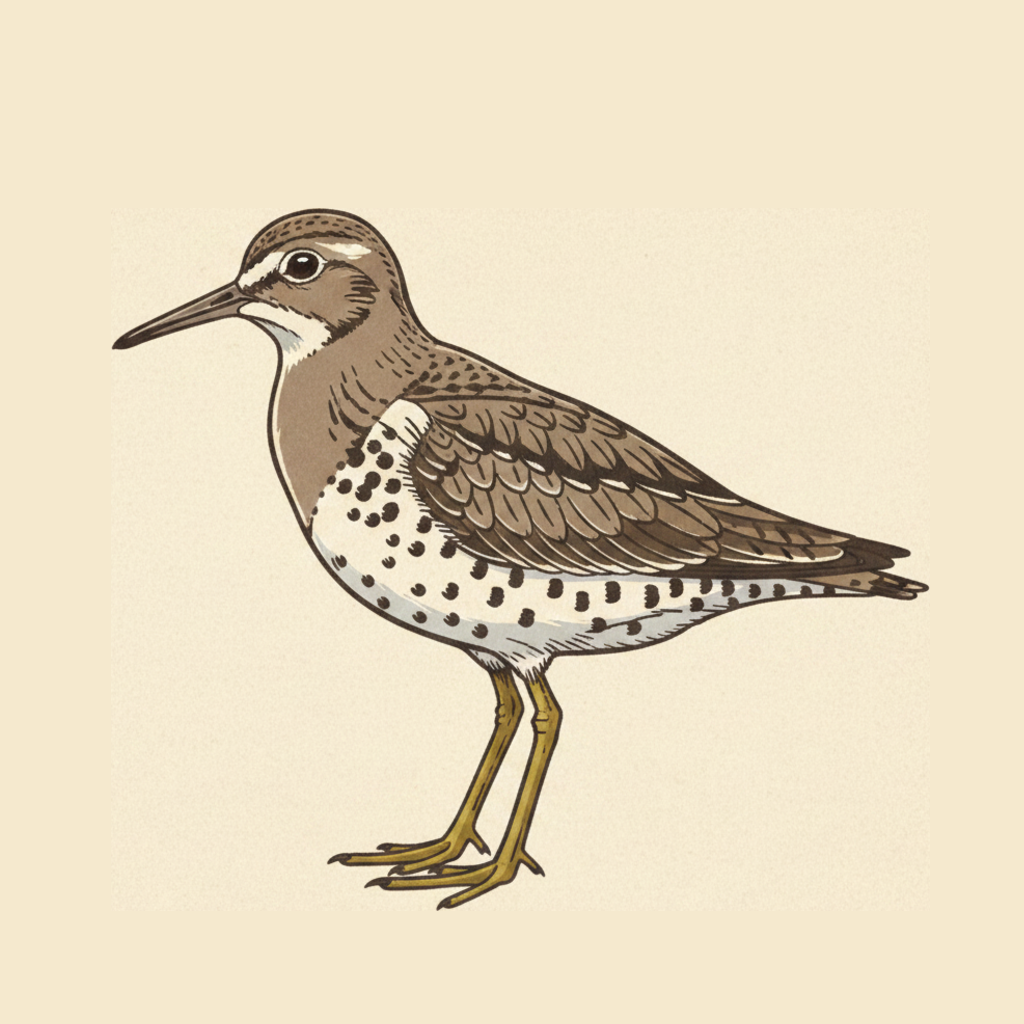
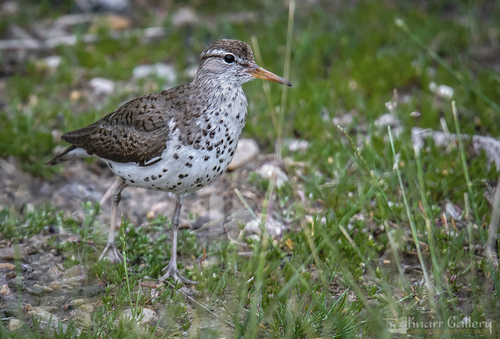
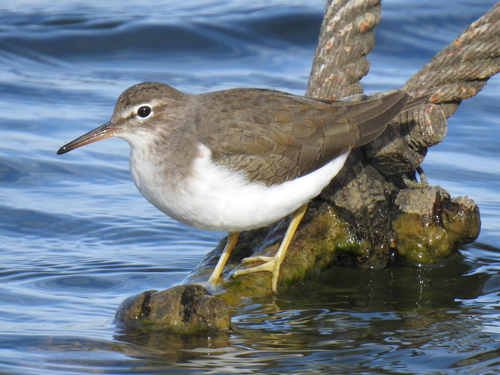
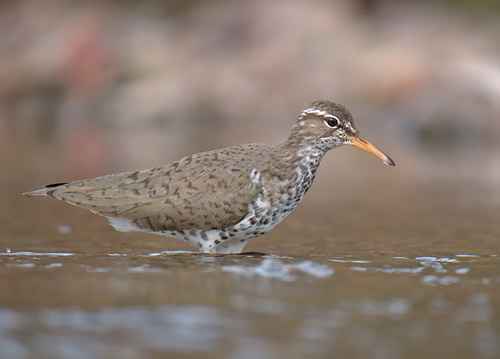
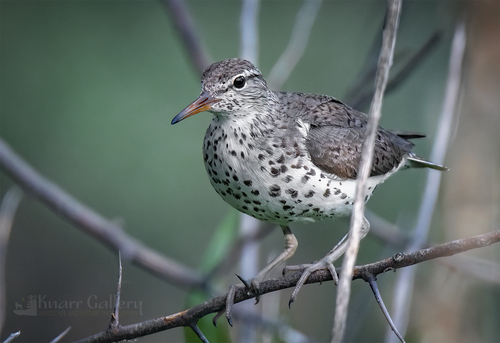
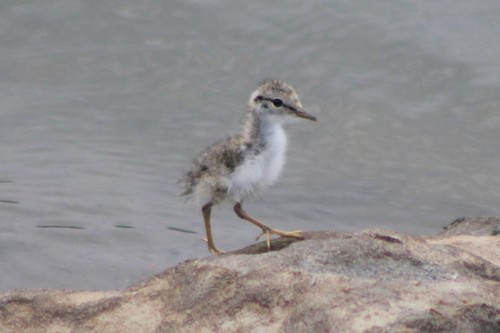
Adults have short yellowish legs and an orange bill with a dark tip. The body is brown on top and white underneath with black spots. These spots vary in degree over the course of spotted sandpipers' lives, becoming especially prevalent around the breeding season. The overall health of spotted sandpipers may be suggested by the "spottiness" of an individual. Generally, females with more "spottiness" were healthier than those who did not have as many spots. The condition of males based on the amount of spots they exhibit is yet to be determined. Additionally, spot size gets smaller and the spot shape becomes more irregularly shaped as age increases. Spotted sandpipers also feature a white supercilium. Non-breeding birds, depicted below, do not have the spotted underparts, and are very similar to the common sandpiper of Eurasia; the main difference is the more washed-out wing pattern visible in flight and the normally light yellow legs and feet of the spotted sandpiper. The Actitis species have a distinctive stiff-winged flight low over the water. They also have a distinctive walk in which their tails bob up and down. Males and females exhibit similar physical measurements, but differ in weight; females tend to be about 20-25% heavier than males. Measurements: Length: 7.1-7.9 in (18–20 cm) Weight: 1.2-1.8 oz (34-50 g) Wingspan: 14.6-15.8 in (37–40 cm)
Range & habitat
Spotted sandpipers are a philopatric species. Their breeding habitat is near fresh water across most of Canada and the United States. They migrate to the southern United States, the Caribbean, and South America, and are very rare vagrants to western Europe. These are not gregarious birds and are seldom seen in flocks. Spotted sandpipers are the most widespread species of their kind in North America due to their high breeding rates and their ability to adapt to various environmental pressures.
Adapted from Spotted sandpiper on Wikipedia, used under CC BY-SA 4.0.