Photographs
what it really looks like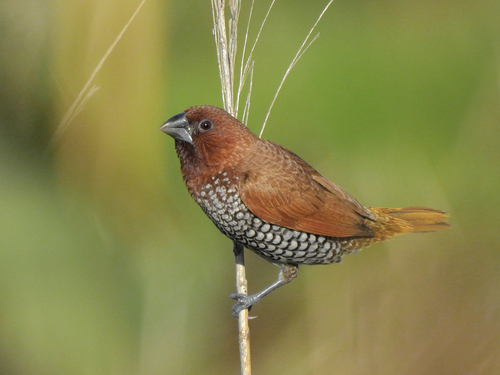

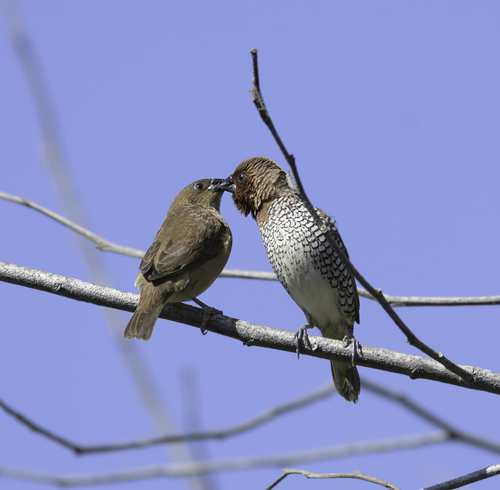
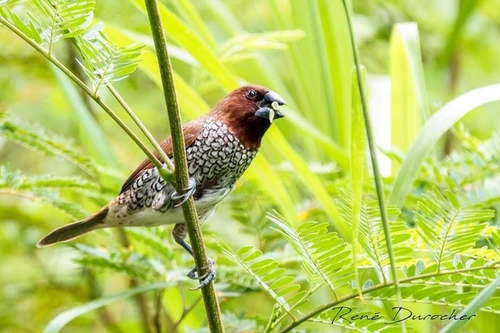
Photographs from iNaturalist · photographer credits
About from Wikipedia
Description
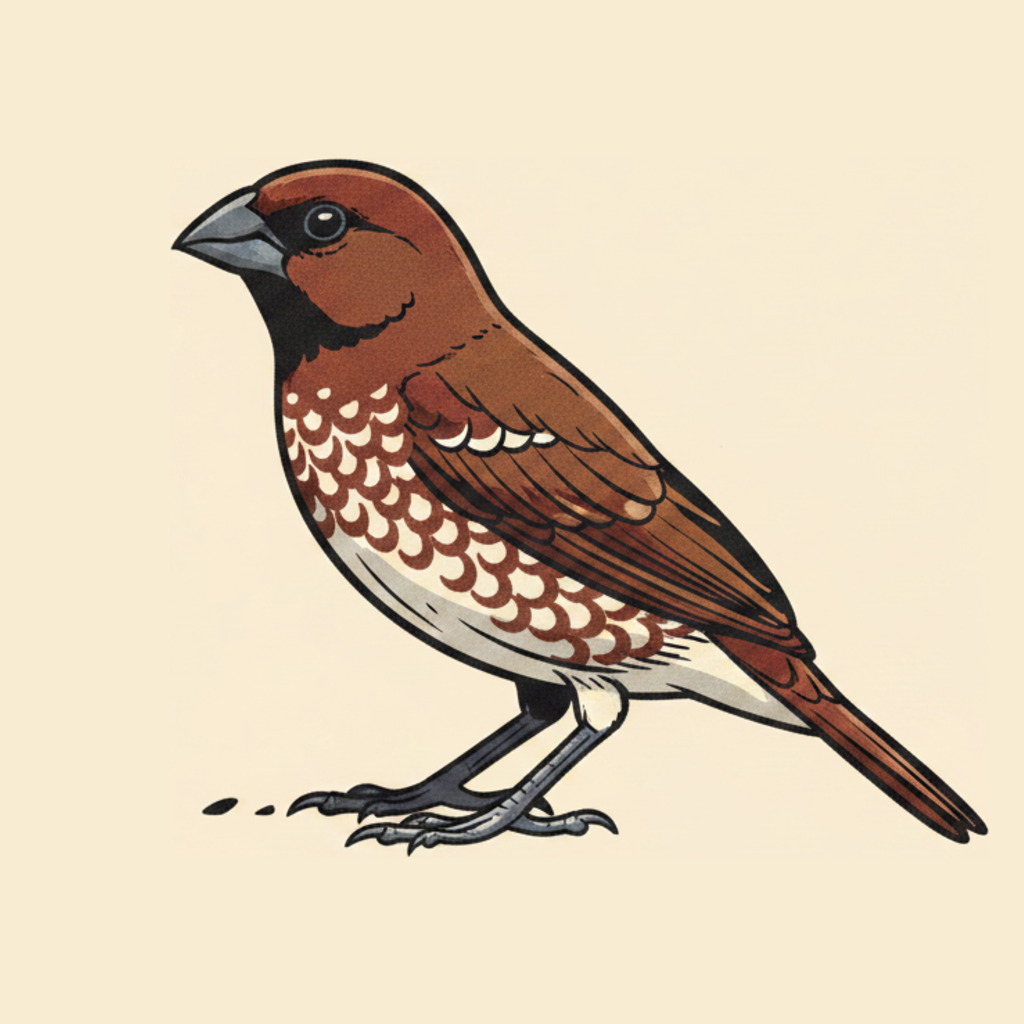
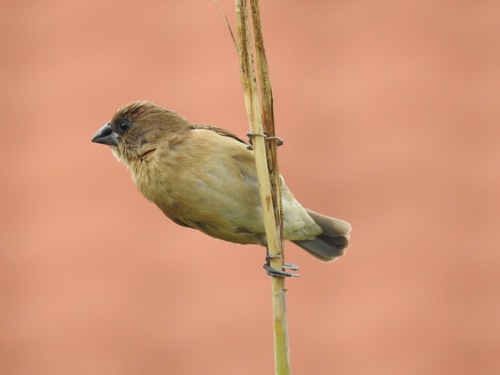
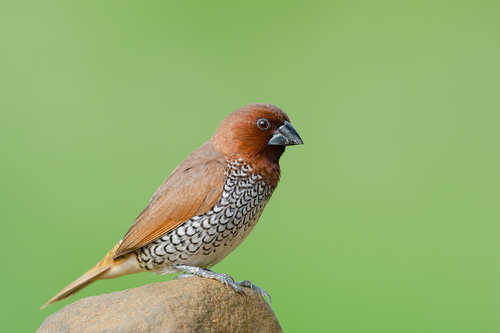
The scaly-breasted munia is about 11–12 centimetres (4.3–4.7 in) long and weighs 12–16 grams (0.026–0.035 lb). The adult has a stubby dark bill typical of grain eating birds, brown upperparts and a dark brown head. The underparts are white with dark scale markings. The sexes are similar, although males have darker markings on the underside and a darker throat than females. Immature birds have pale brown upperparts, lack the dark head found in adults, and have uniform buff underparts that can be confused with juveniles of other munia species such as the tricoloured munia (Lonchura malacca) across the Asian and island populations and the black-throated munia (Lonchura kelaarti) in parts of India or Sri Lanka.
Range & habitat
Scaly-breasted munias are found in a range of habitats but are usually close to water and grassland. In India, they are especially common in paddy fields where they are considered a minor pest on account of their feeding on grain. They are found mainly on the plains, but can be observed in the foothills of the Himalayas, in which they may be present at altitudes near 2,500 m (1.6 mi), and in the Nilgiris, where they are found at altitudes up to 2,100 m (6,900 ft) during the summer. In Pakistan, they are restricted to a narrow region from Swat in the west to Lahore, avoiding the desert zone, and then occurring again in India east of an area between Ludhiana and Mount Abu. The species has also been observed in Kashmir, though this is rare. Outside their native range, escaped birds frequently establish themselves in areas with a suitable climate and can then colonise new areas nearby. Escaped cagebirds established in the wild and such populations have been recorded in the West Indies (Puerto Rico since 1971), Hawaii (since 1883), Japan and southern United States, mainly in Florida and California. In Oahu, Hawaii, they compete for habitats with the tricoloured munia and tend to be rare where this competitor is present. The species has been introduced to other parts of the world due to its popularity as a cage bird and populations have established in the wild.
Adapted from Scaly-breasted munia on Wikipedia, used under CC BY-SA 4.0.