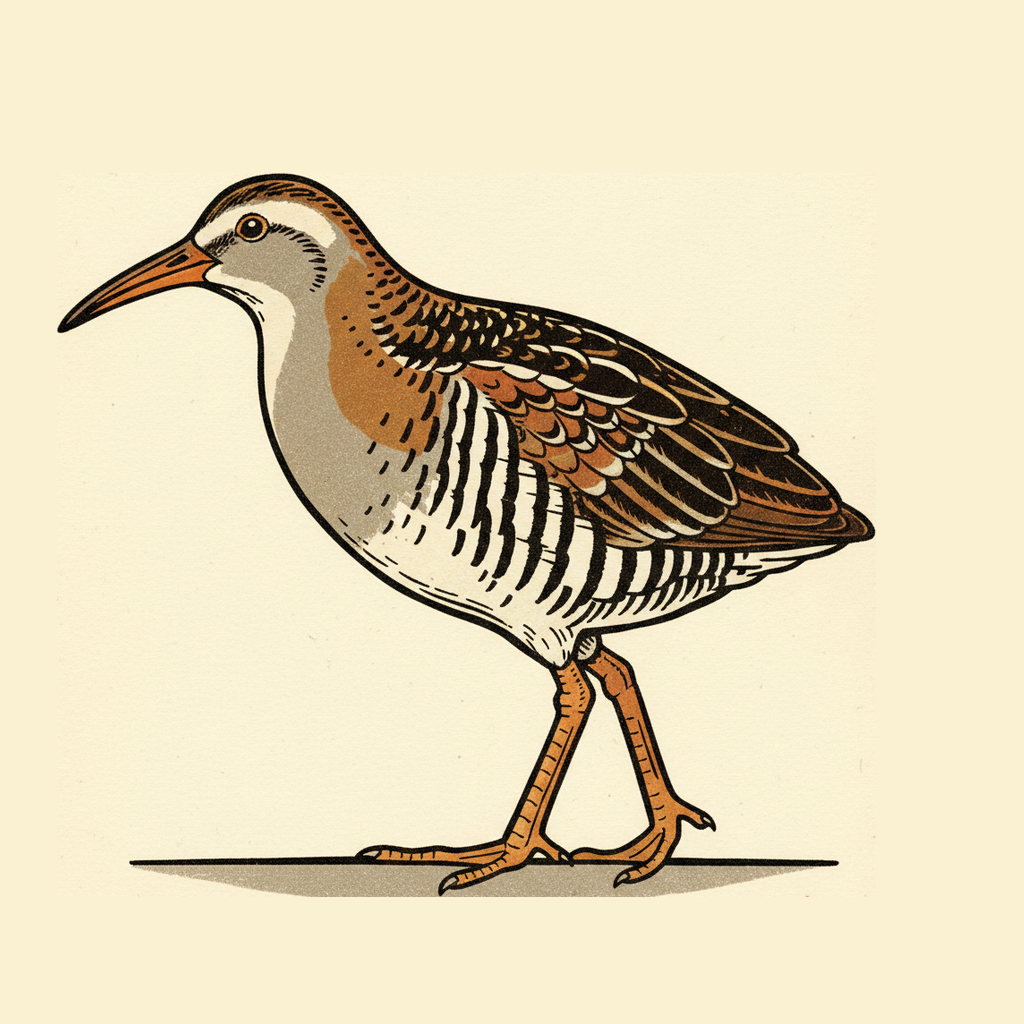
Photographs
what it really looks like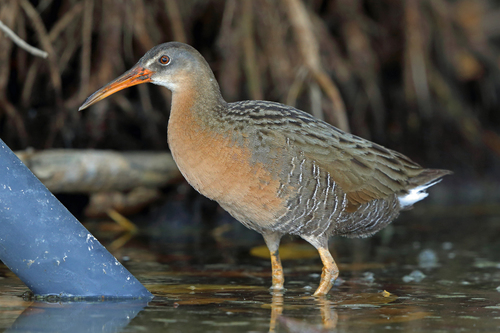
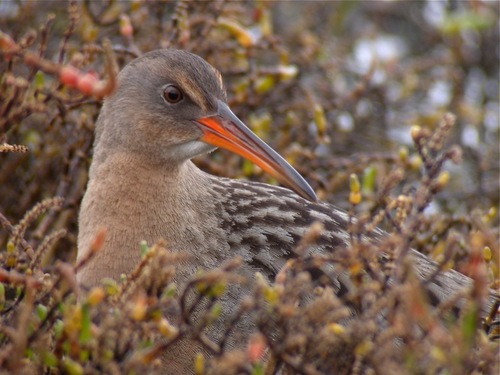
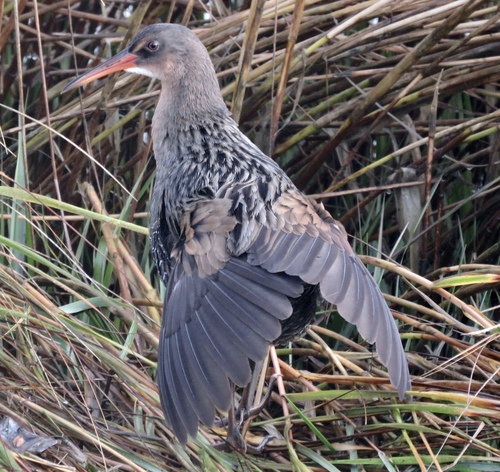
Photographs from iNaturalist · photographer credits
About from Wikipedia
Description
Typically cinnamon-brown in color, it is darker in coloration on the back. Adult coloration is variable, with several color morphs. The total length in adults is 32–41 cm (13–16 in), and weight ranges 160–470 g (5.6–16.6 oz). Males are about 20% larger than females. Size can vary by geographical location. Hatchlings are covered in black downy feathers.
Range & habitat
Ridgway's rail forages along the ecotone between mudflat and higher vegetated zones and in tidal sloughs. Mussels, clams, arthropods, snails, worms and small fish are its preferred foods, which it retrieves by probing and scavenging the surface while walking. The bird will only forage on mudflats or very shallow water where there is taller plant material nearby to provide protection at high tide. At such high tides it may also prey upon mice, and has been known to scavenge dead fish. One of the largest populations of Ridgway's rails is in San Francisco Bay, where about 1,100 are resident. In the past, however, its geographic range spanned more than 90% of the range of the San Francisco Bay. Other frequent sightings of this species around the San Francisco Bay include the Napa Sonoma Marsh, Bothin Marsh in Mill Valley, Gallinas Creek in San Rafael, Arrowhead Marsh and Damon Marsh in Oakland, the Palo Alto baylands, Charleston Slough in Mountain View, Seal Slough in San Mateo and Belmont Slough. For cover, Ridgway's rail seeks out emergent wetland dominated by pickleweed and cordgrass, or brackish emergent wetland with those two plants plus bulrush. It is not clear whether it requires any source of fresh water. Although not migratory in coastal wetlands, this species disperses juveniles into freshwater wetlands in late August through October. Ridgway's rail has been observed to forage in or near relatively disturbed areas, leading one to deduce the importance of protecting even numeral marsh areas; for example this species was seen foraging in a small mudflat area within Seal Slough in San Mateo, three miles from the nearest known breeding area in Belmont.
Adapted from Ridgway's rail on Wikipedia, used under CC BY-SA 4.0.