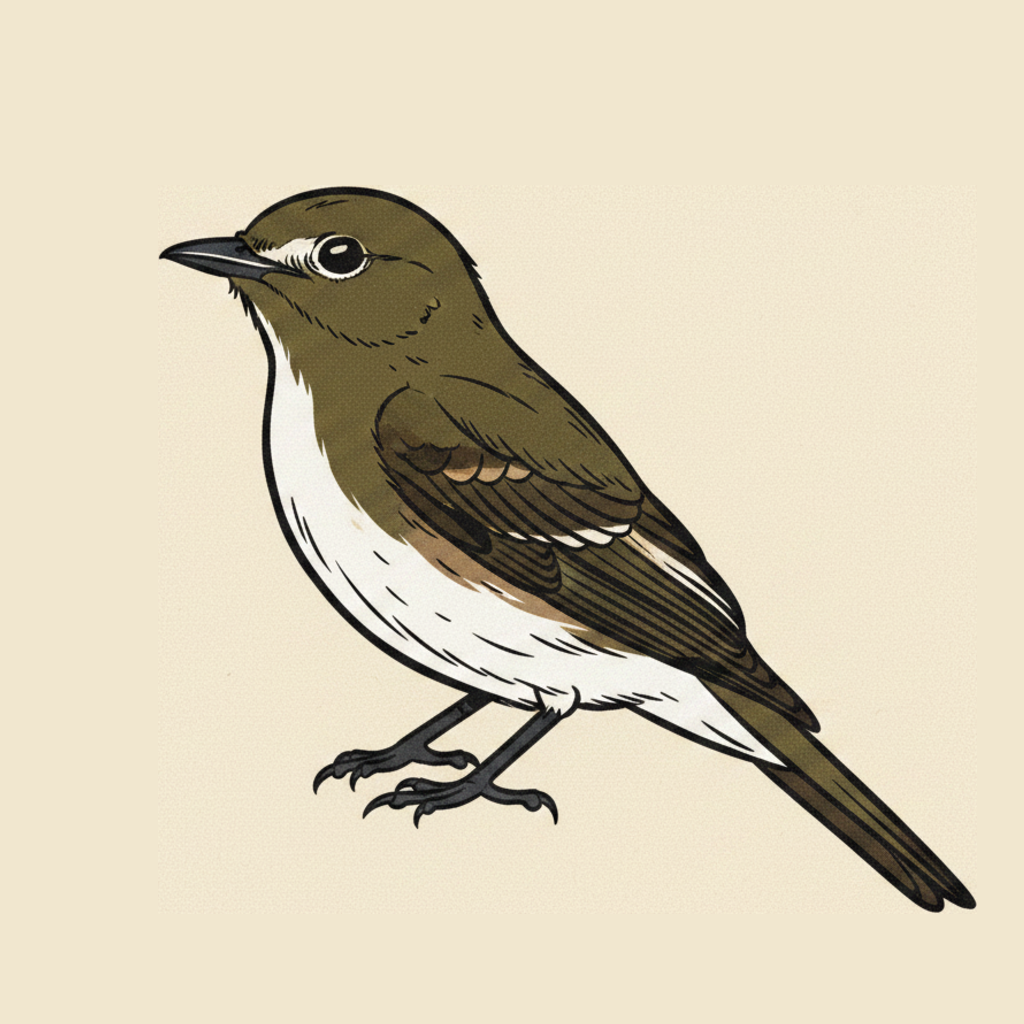
Photographs
what it really looks like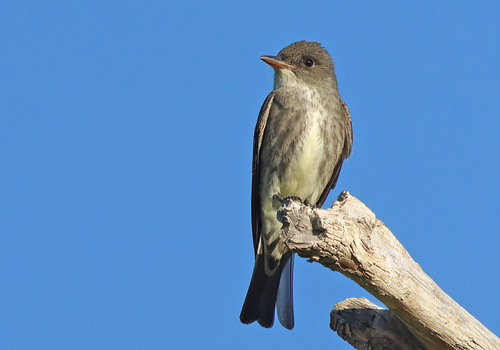
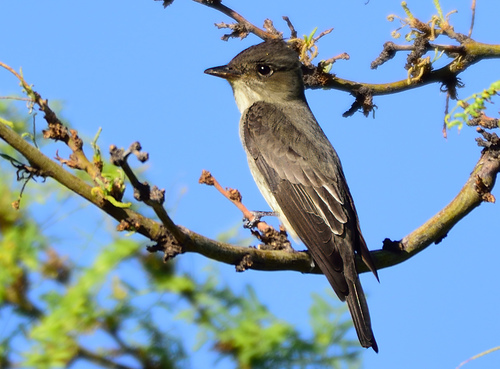
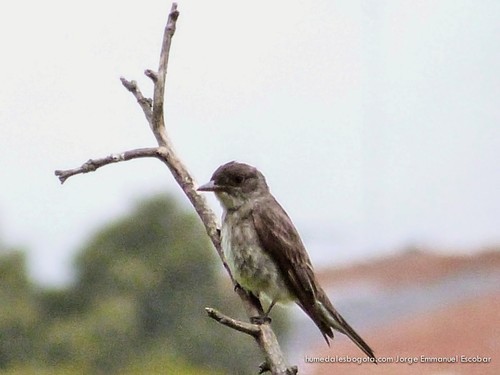
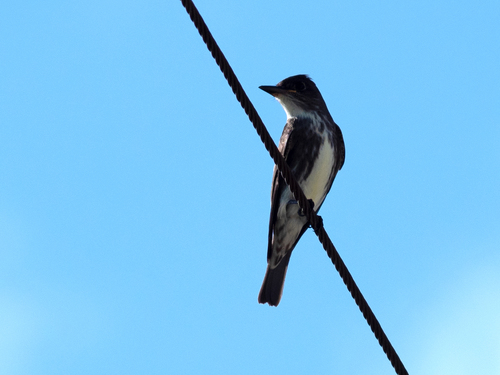
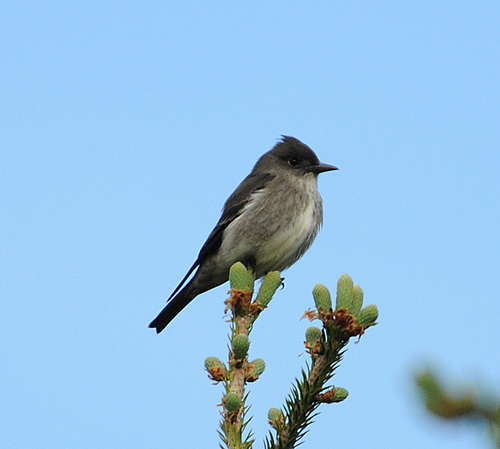
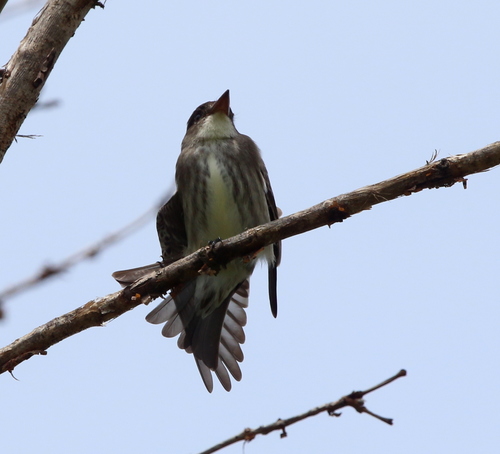
Photographs from iNaturalist · photographer credits
About from Wikipedia
Description
The olive-sided flycatcher is a small to medium-sized passerine, smaller than an American robin, but bigger than sparrows. It can be identified by its olive-grey or grey-brownish plumage above with a white mid-breast section and throat. The olive tones on its back and wings are seen mainly in optimal light and when the feathers are freshly moulted. The sides of the breast area are grey and make the bird look like it is wearing a vest. It has a relatively long bill and long wings for its size. Sometimes, some of its head feathers can be raised, which make it look like it has a small crest. Male and female look similar. Olive-sided flycatchers perch in upright positions on top of dead branches or trees.
Range & habitat
The olive-sided flycatcher is distributed throughout North and South America. Its breeding habitat ranges from California and New Mexico all the way up to central Alaska, then across Canada (except for most of the Northwest Territories and Nunavut) and through a portion of northeastern US. Its non-breeding habitat is mainly in the northern part of South America and a small area in Central America. Their breeding habitat is mainly in open areas or edges of boreal, coniferous forests or temperate western forests, in areas up to 10,000 feet in elevation (e.g., in the Rockies), and always near water. They can also nest in cities or on farms. In their non-breeding habitat, olive-sided flycatchers use similar habitats as their breeding habitats, such as open areas and forest edges, but do not need water proximity as much as in their breeding habitat. They are also associated with habitats with very tall trees. Two forest habitats used by olive-sided flycatchers in the winter are tropical montane and tropical lowland evergreen forests.
Adapted from Olive-sided flycatcher on Wikipedia, used under CC BY-SA 4.0.