Photographs
what it really looks like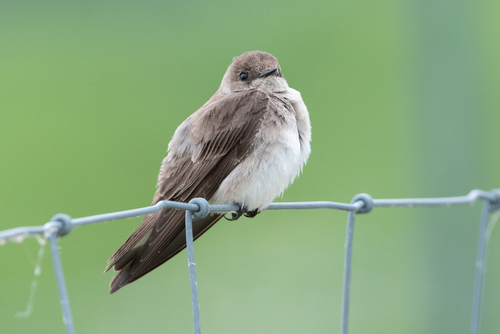
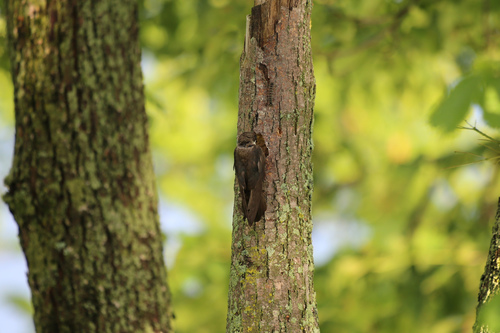
Photographs from iNaturalist · photographer credits
About from Wikipedia
Description
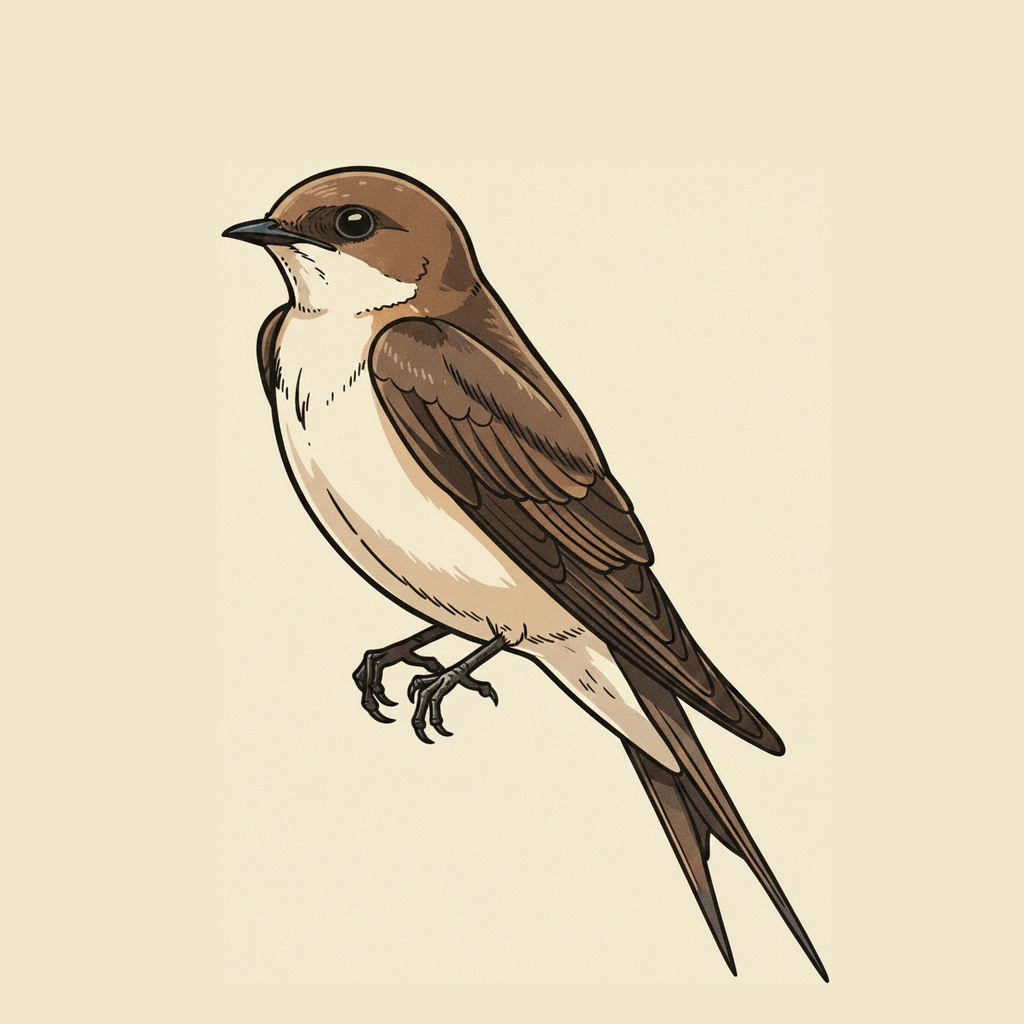
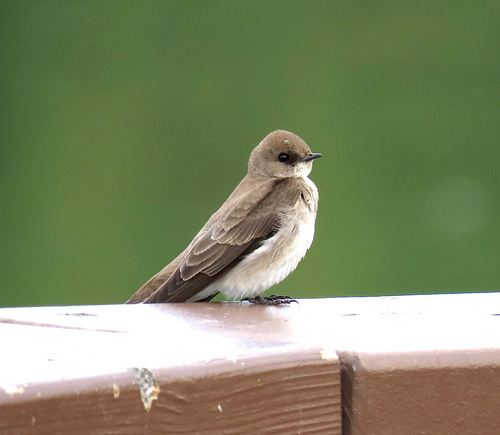
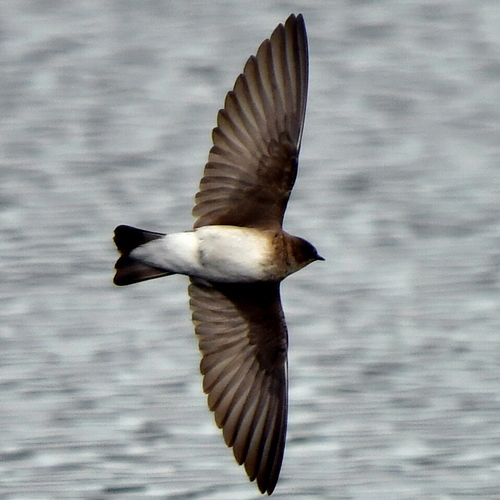
Adults are 13–15 cm (5.1–5.9 in) in length, brown above with white underparts, a small bill, and a forked tail. Their throat is white with a brownish-grey wash, and below the throat are white underparts. The adults have a wingspan of 27–30 cm (11–12 in) and a weight of 10–18 g (0.35–0.63 oz). The males' undertail coverts are longer and broader than those of the females. The males also have hooked barbs on the outer web of their outer primary wings. The barbs on the females are shorter and straighter than those of the males. Juveniles can be distinguished from adults by their reddish-brown wing-bars. They are similar in appearance to the bank swallow, but have a dusky throat and breast. They are closely related and very similar to the southern rough-winged swallow, Stelgidopteryx ruficollis, but that species has a more contrasting rump, and the ranges do not quite overlap.
Range & habitat
The northern rough-winged swallow is native to Bahamas, Belize, Canada, Cayman Islands, Costa Rica, Cuba, El Salvador, Guatemala, Haiti, Honduras, Jamaica, Mexico, Nicaragua, Panama, Puerto Rico, Saint Pierre and Miquelon, Turks and Caicos Islands, and the United States. They are vagrant to Aruba, Barbados, Bonaire, Sint Eustatius and Saba, Curaçao, Dominican Republic, Guadeloupe, and Sint Maarten. The populations in the US and Canada have been found to winter in the southernmost US and further south. While this is true, the populations in Mexico and further south seem to be non-migratory, although local post-breeding movements do occur. This swallow has been found to occur as high as 2,500 m (8,200 ft) in Costa Rica.
Adapted from Northern rough-winged swallow on Wikipedia, used under CC BY-SA 4.0.