Photographs
what it really looks like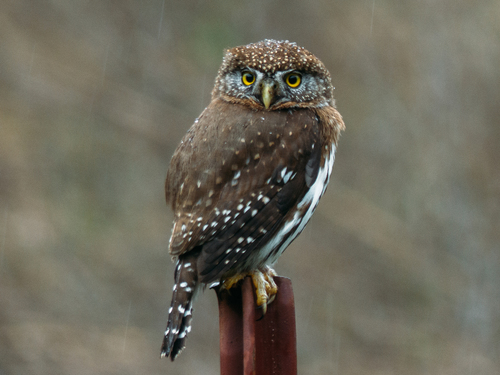
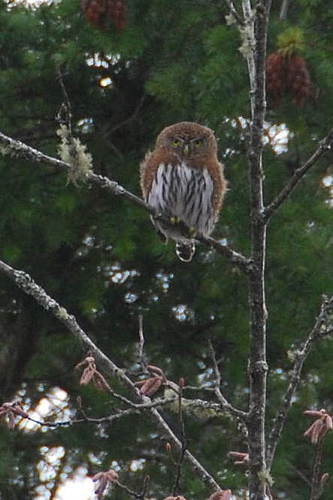
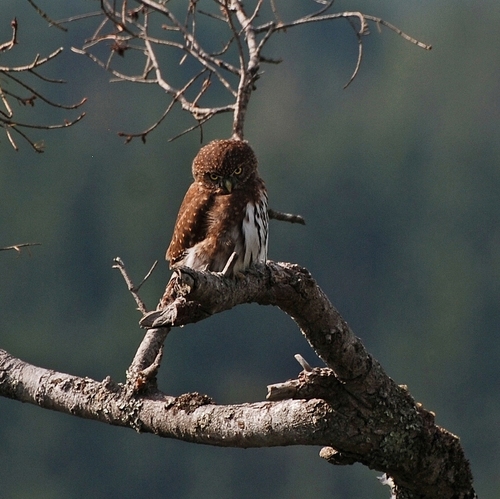
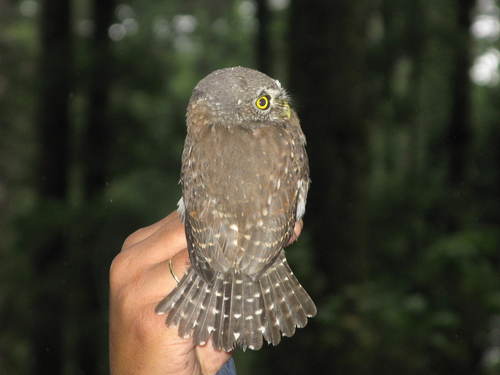
Photographs from iNaturalist · photographer credits
About from Wikipedia
Description
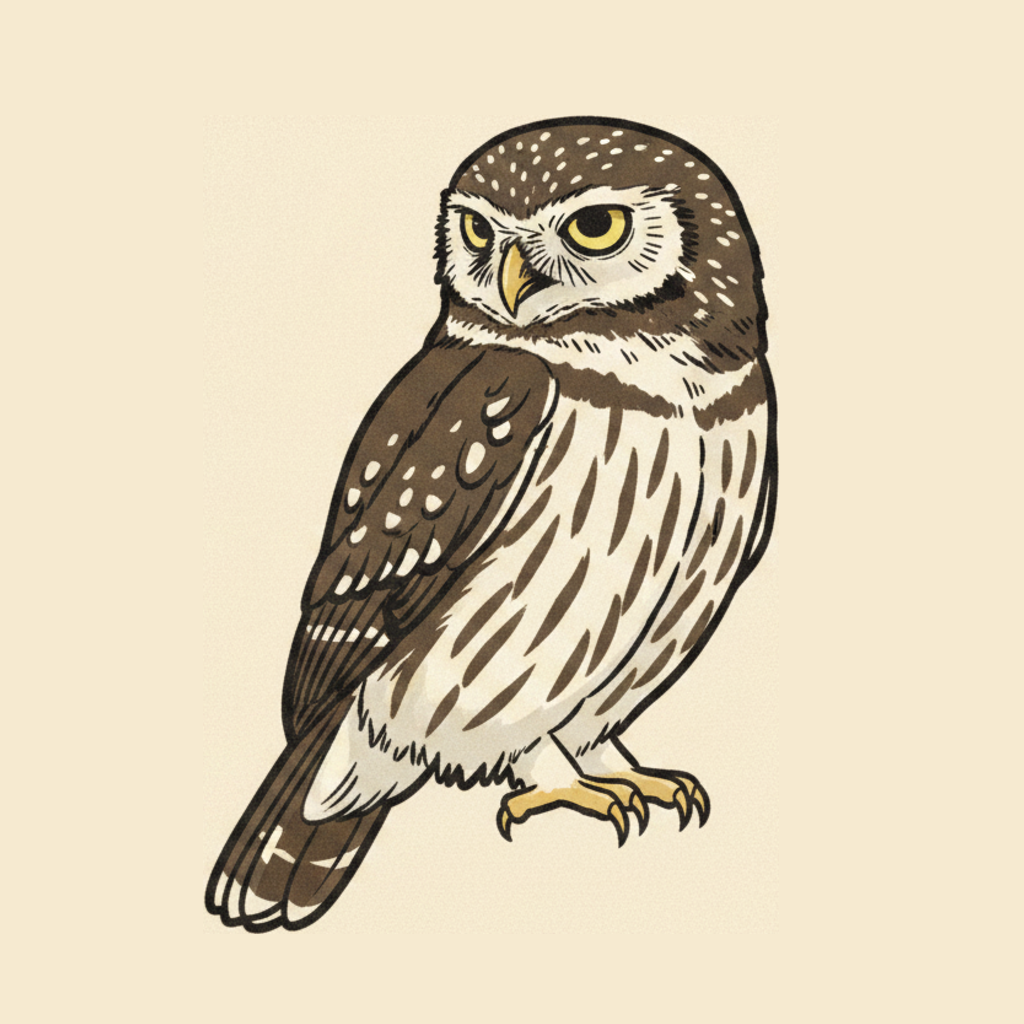
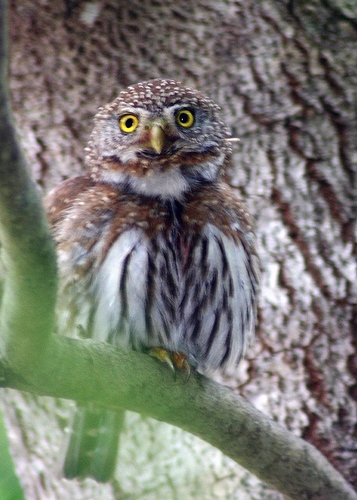
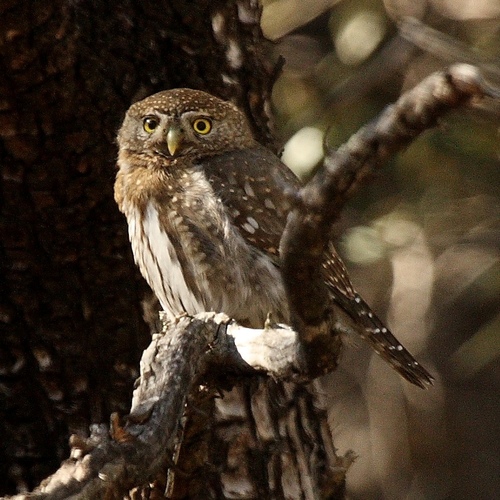
The adult mountain pygmy owl is approximately 15–17 cm (5.9–6.7 in) in length. Males weigh from 48 to 54 g (1.7–1.9 oz); however, reverse sexual dimorphism indicates that adult females are larger in mass reaching 60 to 73 g (2.1–2.6 oz). The wing length of a male is 86–89 mm (3.4–3.5 in) and that of a female is 87–98 mm (3.4–3.8 in), while the tail of both sexes can reach 61–66 mm (2.1–2.6 in). Adult plumage color is similar to that of most pygmy owls. The chest and throat are white, while the face is a deeper brown. The color of the facial disk is a pale brownish-red (rufous), containing flecks of cream. In addition, their eyebrows are thin in shape and white in color. The head, neck, wings and tail have a pale rufous base color, with a cream spotted pattern. The exterior of the tail has 5 to 6 alternating bands of white and rufous. Visible on the underside of the tail are 3 to 4 alternating bars. The chest and underside are white with vertical, broken streaks of red-brown. The iris colour is yellow, similar to the colour of the feet and bill. The plumage of nestlings (chicks) consists of whitish natal down feathers. Within a few weeks, their second layer of down feathers starts to appear. The fledgling (juvenile) plumage resembles that of the adult pygmy owl. However, the crown (top of head) is grey, with minimal spotting on the forehead. Moreover, the eyebrows are white, thicker and more prominent than that of the adult.
Range & habitat
The mountain pygmy owl resides in tropical and subtropical forests of oak, pine and evergreens; located in mountainous terrain at elevations from 1,500 to 3,500 m. Although, forests primarily composed of Ponderosa pines are preferential, as the reduced forest understory facilitates their hunting behaviors. The species is distributed from southern Arizona and New Mexico to Oaxaca in southern Mexico.
Behaviour
Individuals within the northern pygmy owl complex demonstrate similar behaviors; they are known to be aggressive, and relatively unsocial when compared to other owl species. They prefer to live alone, when not engaging in breeding pairs.
Adapted from Mountain pygmy owl on Wikipedia, used under CC BY-SA 4.0.