Photographs
what it really looks like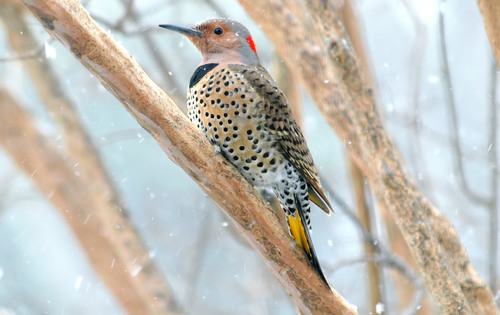
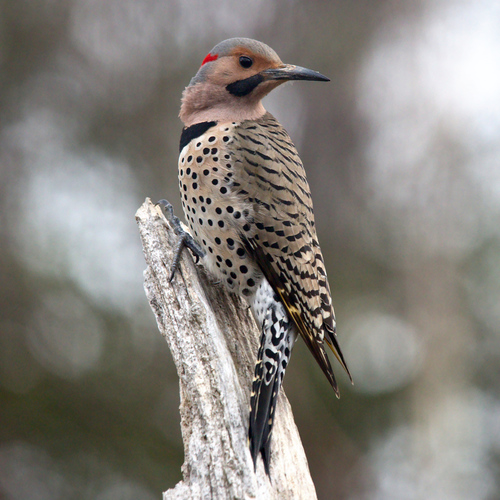
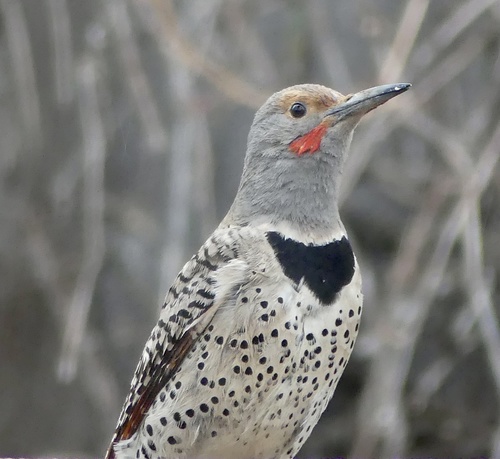
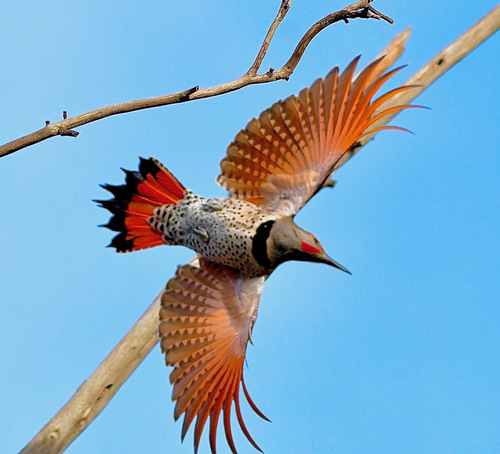
Photographs from iNaturalist · photographer credits
About from Wikipedia
Description
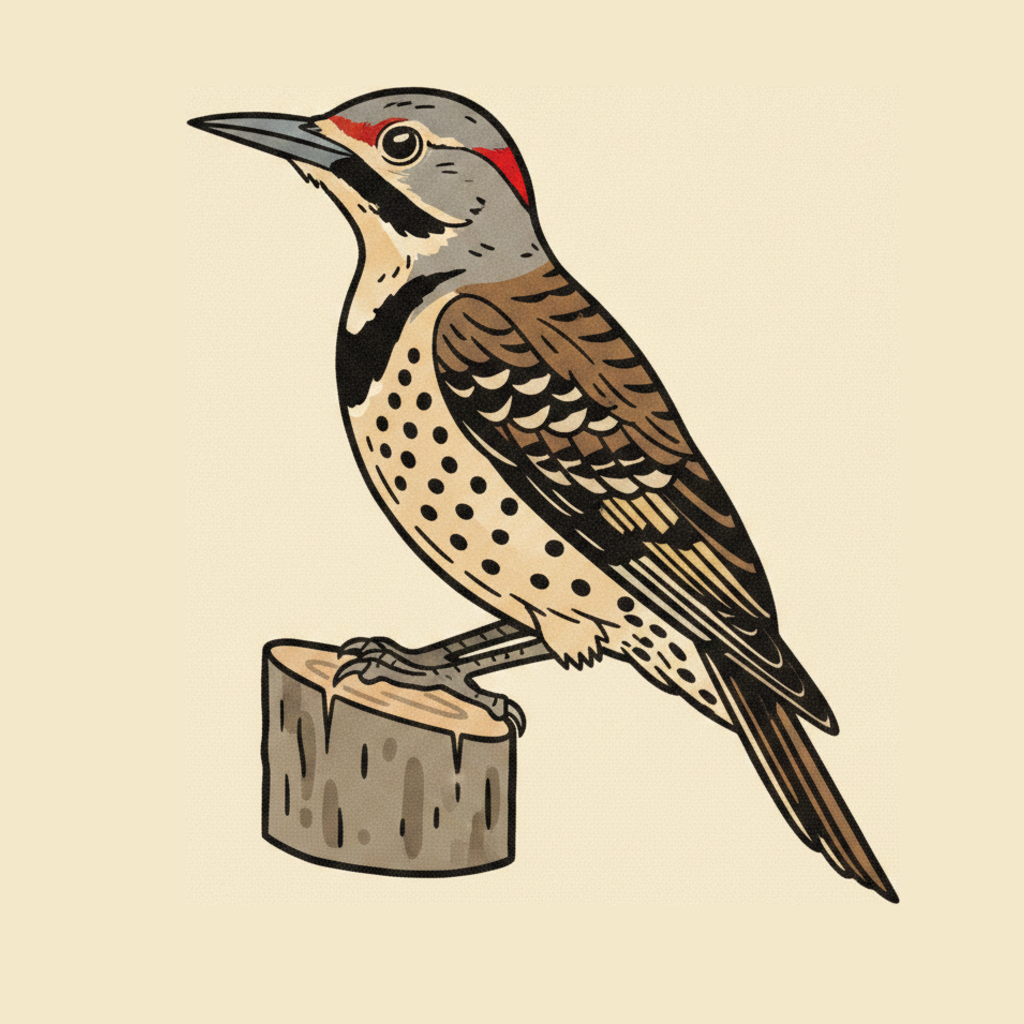
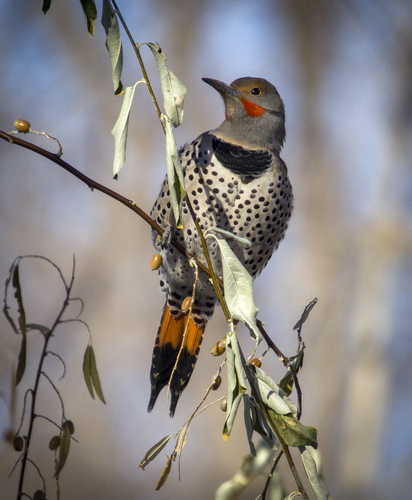
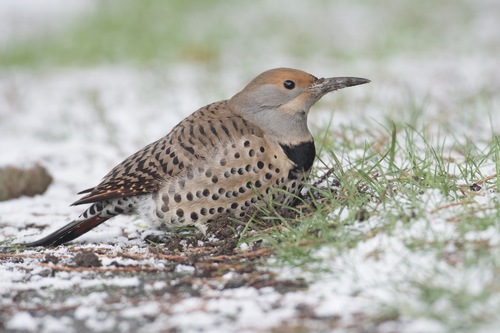
Adults are brown with black bars on the back and wings. A mid- to large-sized northern flicker measures 28–36 cm (11–14 in) in length and 42–54 cm (16+1⁄2–21+1⁄2 in) in wingspan. The body mass can vary from 86 to 167 g (3 to 5+7⁄8 oz). Among standard scientific measurements, the wing bone measures 12.2–17.1 cm (4+13⁄16–6+3⁄4 in), the tail measures 7.5–11.5 cm (3–4+1⁄2 in), the bill measures 2.2–4.3 cm (7⁄8–1+11⁄16 in) and the tarsus measures 2.2–3.1 cm (7⁄8–1+1⁄4 in). The largest-bodied specimens have been found within the species' northern range at the latitudes of Alaska and Labrador, while the smallest specimens have been recorded being found in Grand Cayman. A necklace-like black patch occupies the upper breast, while the lower breast and belly are beige with black spots. Males can be identified by a black (in the eastern part of the species' range) or red (in the western part) mustachial stripe at the base of the beak, while females lack this stripe. The tail is dark on top, transitioning to a white rump which is conspicuous in flight. Subspecific plumage is variable.
Range & habitat
The northern flicker may be observed in open habitats near trees, including woodlands, edges, yards, and parks. In the western United States, one can find it in mountain forests all the way up to the tree line. The northern flicker generally nests in holes in trees like other woodpeckers. Occasionally, it has been found nesting in old, earthen burrows vacated by belted kingfishers (Megaceryle alcyon) or sand martins (Riparia riparia). Both sexes help with the nest excavation. The entrance hole is about 8 cm (3 in) in diameter, and the cavity is 33–41 cm (13–16 in) deep. The cavity widens at the bottom to make room for the eggs and the incubating adult. Inside, the cavity is bare except for a bed of wood chips for the eggs and chicks to rest on. Once the nestlings are about 17 days old, they begin clinging to the cavity wall rather than lying on the floor. They can create cavities inside homes, especially homes of stucco or weak wooden siding.
Adapted from Northern flicker on Wikipedia, used under CC BY-SA 4.0.