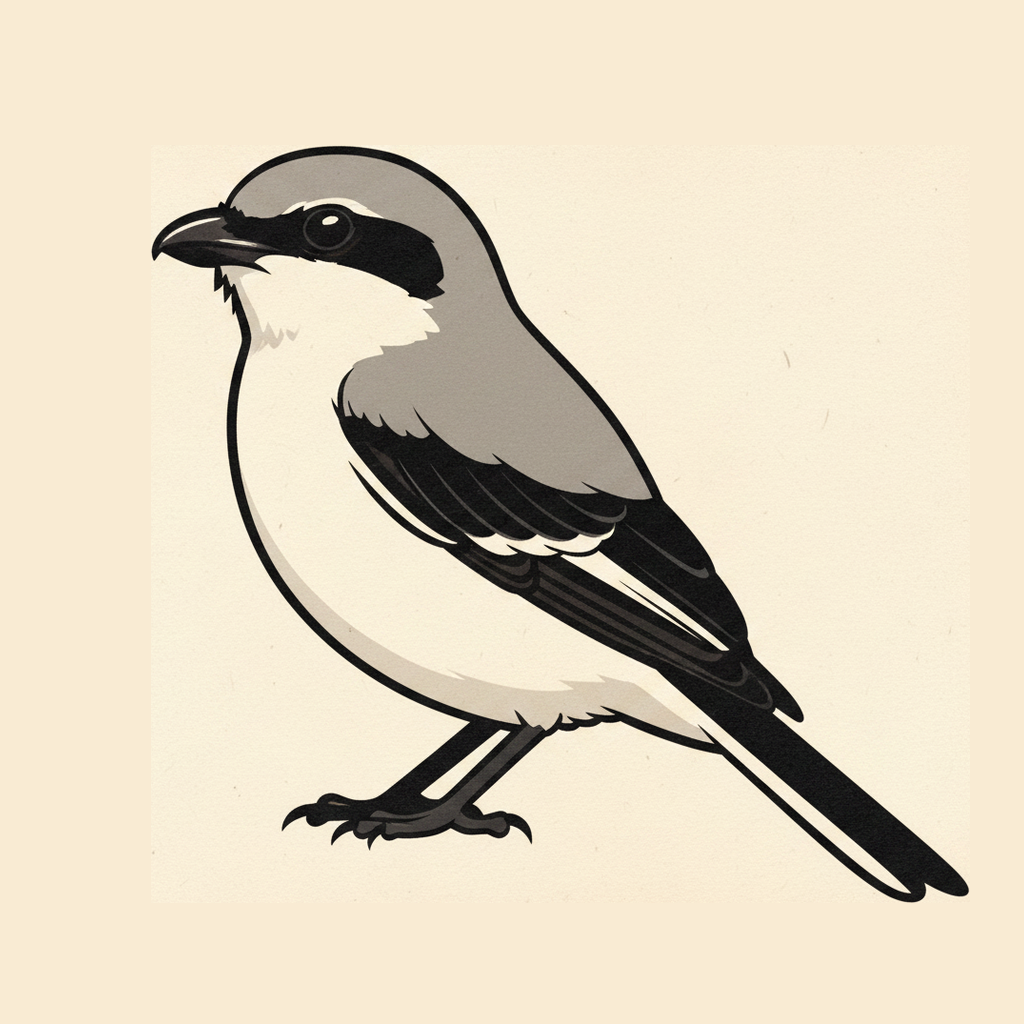
Photographs
what it really looks like
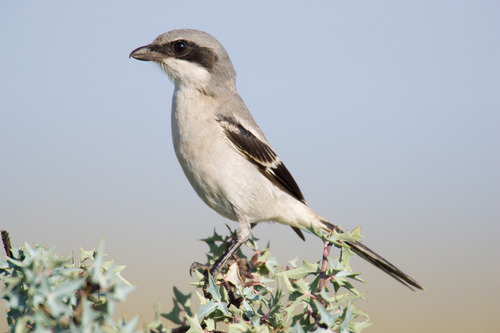
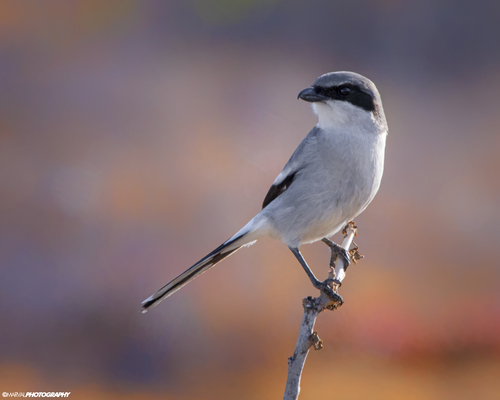
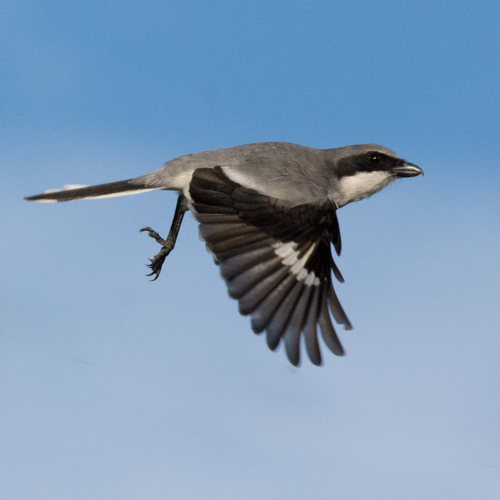

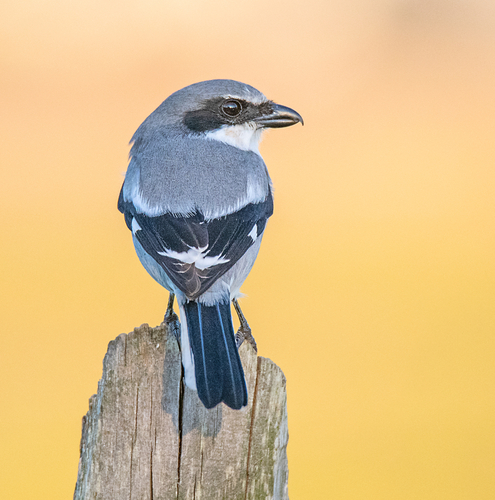
Photographs from iNaturalist · photographer credits
About from Wikipedia
Description
The loggerhead shrike is a medium-sized passerine. "Loggerhead" refers to the relatively large size of the head as compared to the rest of the body. The wing and tail length are about 3.82 in (9.70 cm) and 3.87 in (9.83 cm) long, respectively. It weighs on average 1.8 oz (50 g), with a range of 1.6–2.1 oz (45–60 g) for a healthy adult shrike. Measurement ranges Length: 7.9–9.1 in (20–23 cm) Weight: 1.2–1.8 oz (34–51 g) Wingspan: 11.0–12.6 in (27.9–32.0 cm) The adult plumage of the loggerhead shrike is grey above with a white to pale grey breast and black tarsi and feet. The bird possesses a black mask that extends across the eyes to its bill. The wings are black with a distinct white patch on the primaries. The tail is black edged with white and the irises are brown. The beak is short, black, and hooked, and contains a tomial tooth to help tear into prey. It is difficult to sex an adult loggerhead shrike in the field as they are sexually monochromatic. However, several studies have reported sexual dimorphism in plumage and size traits. Juveniles possess a paler gray plumage that is subtly vermiculated. The loggerhead shrike can be distinguished from the northern shrike by its smaller size, darker grey plumage, and larger black face mask that covers the eye completely. It also has a shorter bill with less prominent hook than the northern shrike. Their calls are similar.
Range & habitat
Loggerhead shrikes were once widely distributed across southern Canada, the contiguous USA and Mexico. However, their populations have heavily declined since the 1960s. Four subspecies reside in southern coastal California: mearnsi, gambeli, grinnelli and anthonyi. L. l. mearnsi is only found on San Clemente Island in California, whereas L. l. gambeli breeds on the mainland and L. l. anthonyi breeds on the Channel Islands. L. l. excubitorides is found in central North America, whereas the non-migrating L. l. ludovicianus resides in southeastern North America. The distribution of L. l. migrans ranges from north to eastern North America; however, its range has been diminishing since the 1940s. The bird requires an open habitat with an area to forage, elevated perches, and nesting sites. They are often found in open pastures or grasslands and appear to prefer red-cedar and hawthorn trees for nesting. The hawthorn's thorns and the cedar's pin-like needles protect and conceal the shrike from predators. It may also nest in fence-rows or hedge-rows near open pastures and requires elevated perches as lookout points for hunting. Open pastures and grasslands with shorter vegetation are preferred by loggerhead shrikes, as they increase the bird's hunting efficiency. Longer vegetation often requires more time and energy to be spent searching for prey, so these birds gravitate towards areas of shorter vegetation.
Adapted from Loggerhead shrike on Wikipedia, used under CC BY-SA 4.0.