Photographs
what it really looks like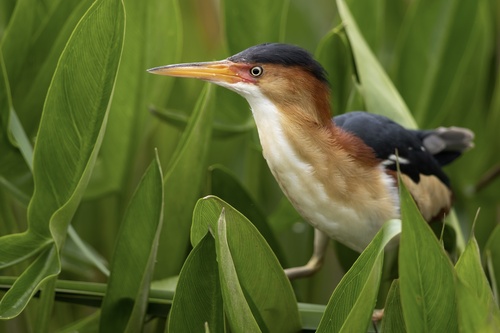



Photographs from iNaturalist · photographer credits
About from Wikipedia
Description
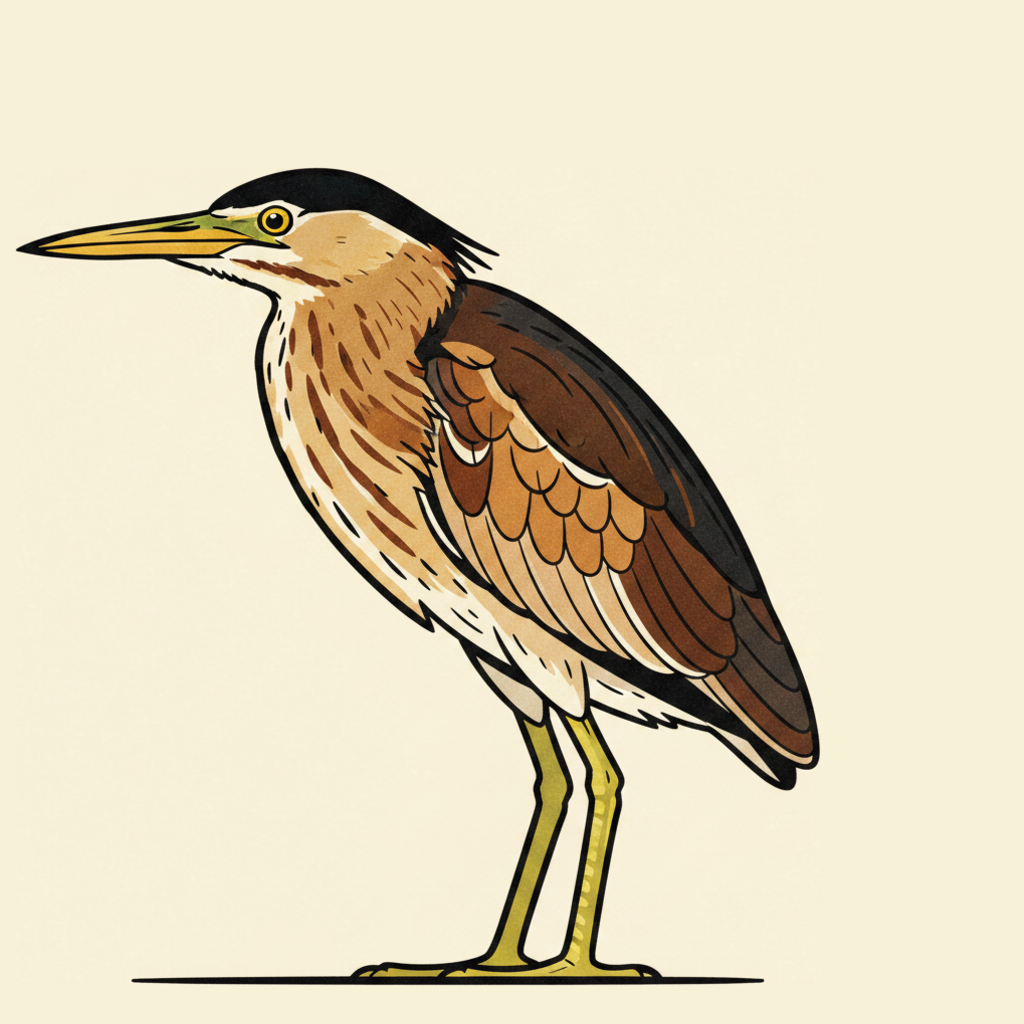
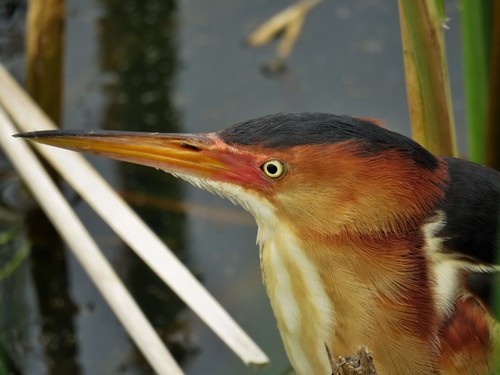
The least bittern is one of the smallest herons in the world, with perhaps only the dwarf bittern and the black-backed bittern averaging smaller in length. It can measure from 28 to 36 cm (11 to 14 in) in length, and the wingspan ranges from 41 to 46 cm (16 to 18 in). Body mass is from 51 to 102 g (1.8 to 3.6 oz), with most least bitterns weighing between 73 and 95 g (2.6 and 3.4 oz), making this perhaps the lightest of all herons. A recent manual of avian body masses cites another species in this genus, the stripe-backed bittern, as having a mean body mass slightly lower than the least bittern, which is credited with a mean mass of 86.3 g (3.04 oz). The bird's underparts and throat are white with light brown streaks. Its face and the sides of the neck are light brown; it has yellow eyes and a yellow bill. The adult male is glossy greenish-black on the back and crown; the adult female is glossy brown on these parts; both have white lines on their shoulders. They show light brown parts (covert feathers) on the wings in flight. These birds make cooing and clucking sounds, usually in the early morning or near dusk.
Behaviour
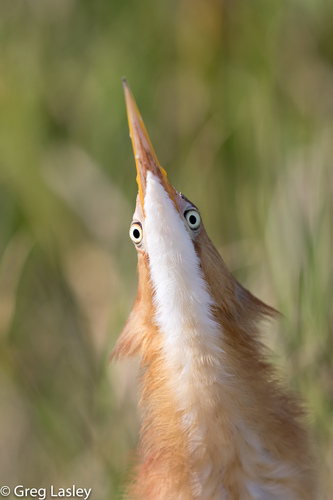
The least bittern is an elusive bird. They spend much time straddling reeds. When alarmed, the least bittern freezes in place with its bill pointing up, turns its front and both eyes toward the source of alarm, and sometimes sways to resemble wind-blown marsh vegetation. This is perhaps a predator-avoidance behaviour, since its small size makes the bittern vulnerable to many potential predators. Thanks to its habit of perching among the reeds, the least bittern can feed from the surface of water that would be too deep for the wading strategy of other herons. The least bittern and much larger and different-looking American bittern often occupy the same wetlands but may have relatively little interaction because of differences in foraging habits, preferred prey, and timing of breeding cycles. The least bittern arrives on its breeding grounds about a month after the American bittern and leaves one or two months earlier. John James Audubon noted that a young captive least bittern was able to walk with ease between two books standing 4 cm (1.6 in) apart. When dead, the bird's body measured 5.7 cm (2.2 in) across, indicating that it could compress its breadth to an extraordinary degree.
Adapted from Least bittern on Wikipedia, used under CC BY-SA 4.0.