Photographs
what it really looks like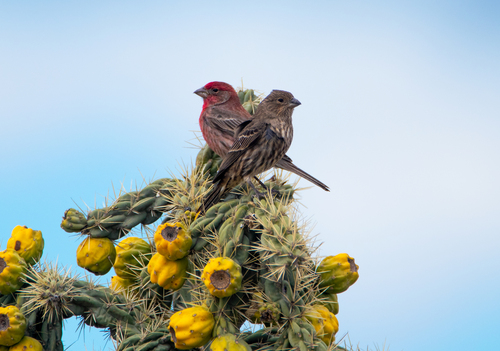
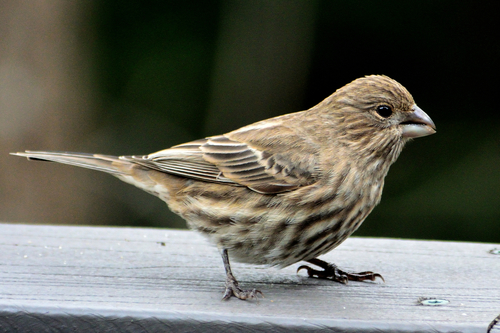
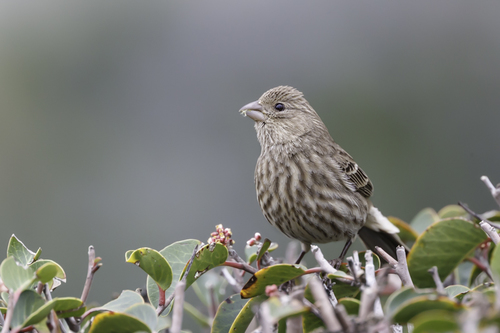
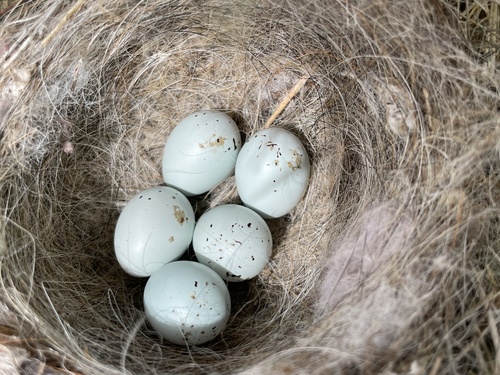
Photographs from iNaturalist · photographer credits
About from Wikipedia
Description
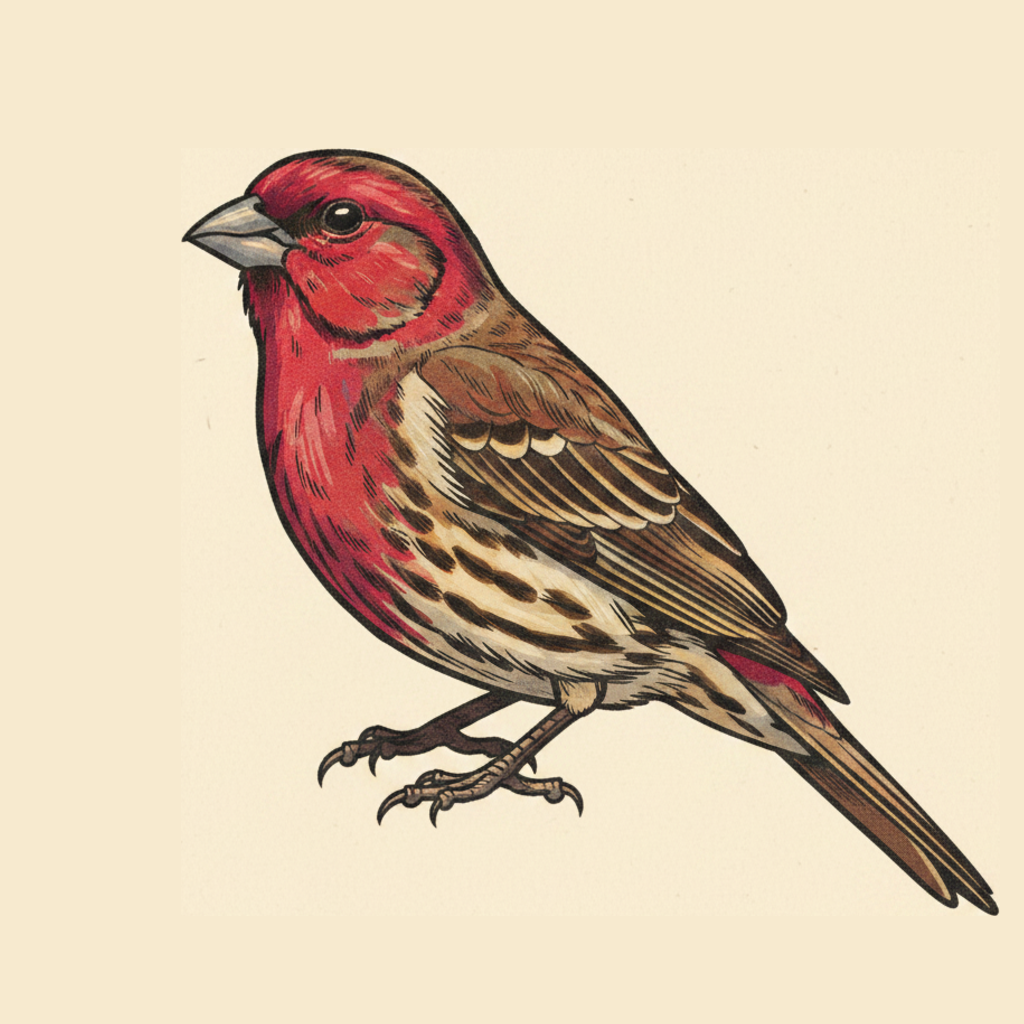
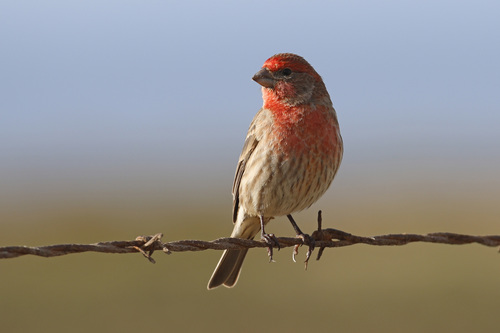
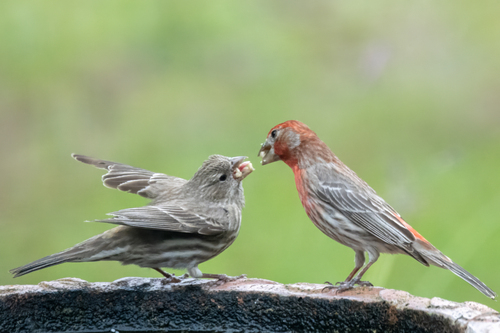
The house finch is a moderate-sized finch, 12.5 to 15 cm (5 to 6 in) long, with a wingspan of 20 to 25 cm (8 to 10 in). Body mass can vary from 16 to 27 g (9⁄16 to 15⁄16 oz), with an average weight of 21 g (3⁄4 oz). Among standard measurements, the wing chord is 7 to 8.4 cm (2+3⁄4 to 3+1⁄4 in), the tail is 5.7 to 6.5 cm (2+1⁄4 to 2+1⁄2 in), the culmen is 0.9 to 1.1 cm (3⁄8 to 7⁄16 in) and the tarsus is 1.6 to 1.8 cm (5⁄8 to 11⁄16 in). Adults have a long, square-tipped brown tail and are a brown or dull-brown color across the back with some shading into deep gray on the wing feathers. Breast and belly feathers may be streaked; the flanks usually are. In most cases, adult males' heads, necks and shoulders are reddish. This color sometimes extends to the belly and down the back, between the wings. Male coloration varies in intensity with the seasons and is derived from the berries and fruits in its diet. As a result, the colors range from pale straw-yellow through bright orange (both rare) to deep, intense red. Adult females have brown upperparts and streaked underparts. The house finch's songs typically consist of a series of high-pitched musical jumbles ending with a distinct high note, wheer. Calls from flight include a soft cheet or wheat, with perched birds giving a more drawn-out version.
Range & habitat
House finches are mainly permanent residents throughout their range; some birds migrate to the south, with adult females moving longer distances than males. Their breeding habitat is urban and suburban areas across North America, as well as various semi-open areas in the west from southern Canada to the Mexican state of Oaxaca; the population in central Chiapas may be descended from escaped cagebirds. Analyses of nest records from house finches in California spanning more than a century found that egg‐laying occurred significantly earlier in warmer springs. Originally only a resident of Mexico and the southwestern United States, house finches were introduced to eastern North America in the 1940s. The birds were sold illegally in New York City as "Hollywood finches", a marketing artifice. To avoid prosecution under the Migratory Bird Treaty Act of 1918, vendors and owners released the birds. They have since become naturalized; in largely unforested land across the eastern U.S. they have displaced the native purple finch and even the non-native house sparrow. Sometime in the 19th century, they were introduced to Hawaiʻi and are now found on all its major islands except Niʻihau and Kahoʻolawe. The species is labeled as invasive by some organizations. According to the Partners in Flight database, there are estimated to be 40 million house finches across North America. Instances of naturalization originating in escapes or releases of cage birds have been recorded in Europe, such as in 2020 in Murcia, (Spain).
Adapted from House finch on Wikipedia, used under CC BY-SA 4.0.