Photographs
what it really looks like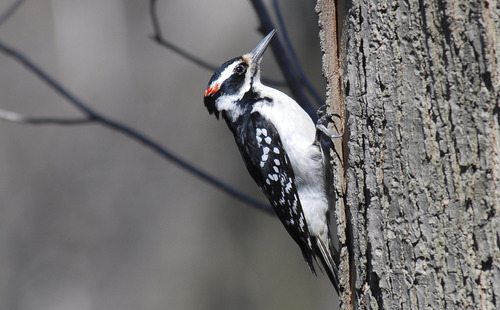
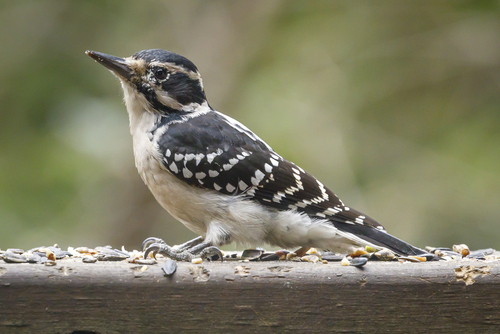
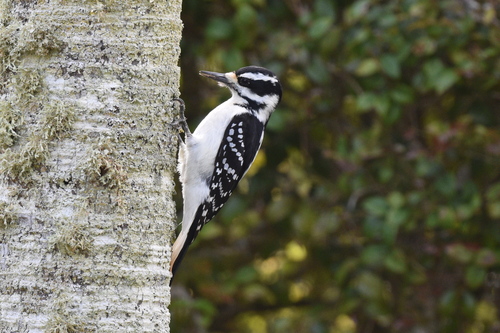
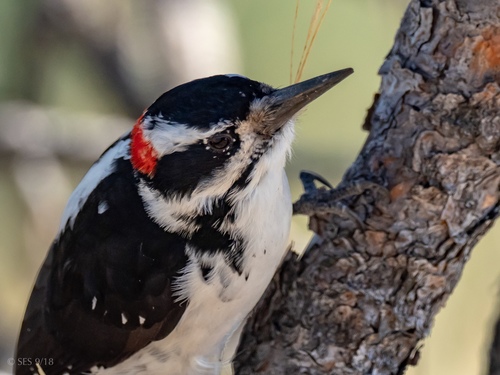
Photographs from iNaturalist · photographer credits
About from Wikipedia
Description
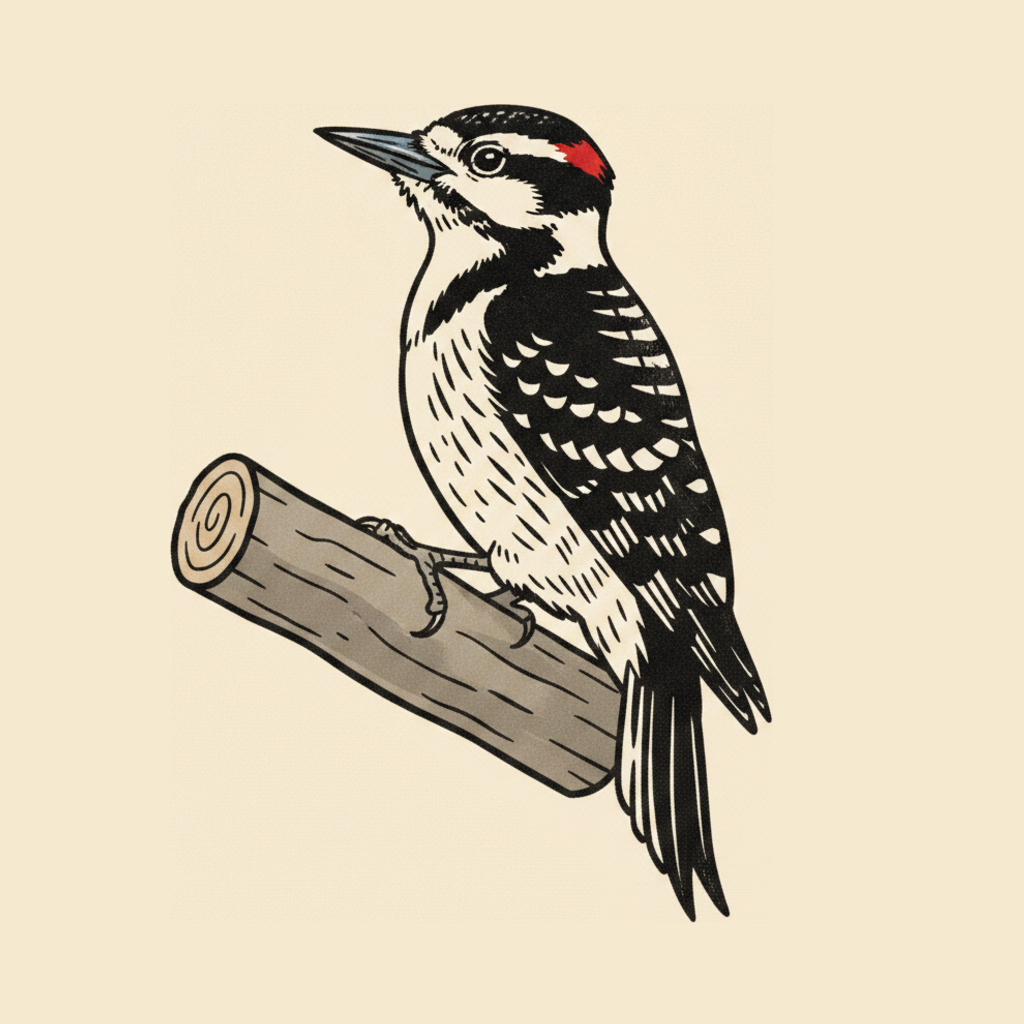
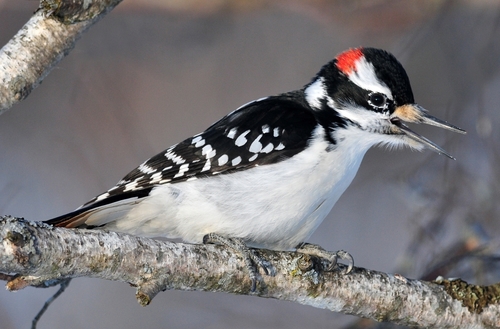
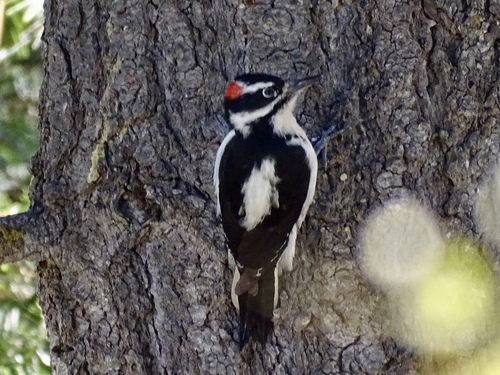
Adults are mainly black on the upper parts and wings, with a white or pale back and white spotting on the wings; the throat and belly vary from white to sooty brown, depending on subspecies. There is a white bar above and one below the eye. They have a black tail with white outer feathers. Adult males have a red patch or two side-by-side patches on the back of the head; juvenile males have red or rarely orange-red on the crown. The hairy woodpecker measures from 18–26 cm (7.1–10.2 in) in length, 33–43 cm (13–17 in) in wingspan and 40–95 g (1.4–3.4 oz) in weight. It is virtually identical in plumage to the smaller downy woodpecker. The downy has a shorter bill relative to the size of its head, which is, other than size and voice, the best way to distinguish them in the field. These two species are not closely related, however, and are likely to be separated in different genera. Another way to tell the two species apart is the lack of spots on its white tail feathers (present in the downy). Their outward similarity is a spectacular example of convergent evolution. As to the reason for this convergence, only tentative hypotheses have been advanced; in any case, because of the considerable size difference, ecological competition between the two species is slight.
Range & habitat
The hairy woodpecker inhabits mature deciduous forests in the Bahamas, Canada, Costa Rica, El Salvador, Guatemala, Honduras, Mexico, Nicaragua, Panama, Saint Pierre and Miquelon, and the United States. It is a vagrant to Puerto Rico and the Turks and Caicos Islands. Mating pairs will excavate a hole in a tree, where they will lay, on average, four white eggs. These birds are mostly permanent residents. Birds in the extreme north may migrate further south; birds in mountainous areas may move to lower elevations.
Behaviour
These birds forage on trees, often turning over bark or excavating to uncover insects. They mainly eat insects, but also fruits, berries and nuts, as well as sometimes tree sap. They are a predator of the European corn borer, a moth that costs the US agriculture industry more than $1 billion annually in crop losses and population control.
Adapted from Hairy woodpecker on Wikipedia, used under CC BY-SA 4.0.