Photographs
what it really looks like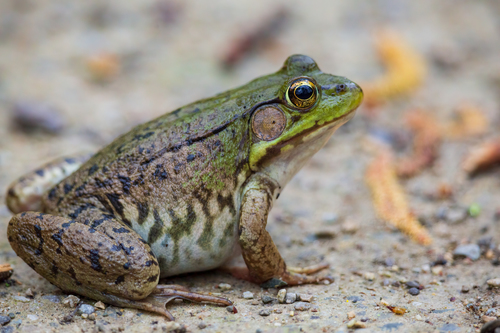
Photographs from iNaturalist · photographer credits
About from Wikipedia
Description
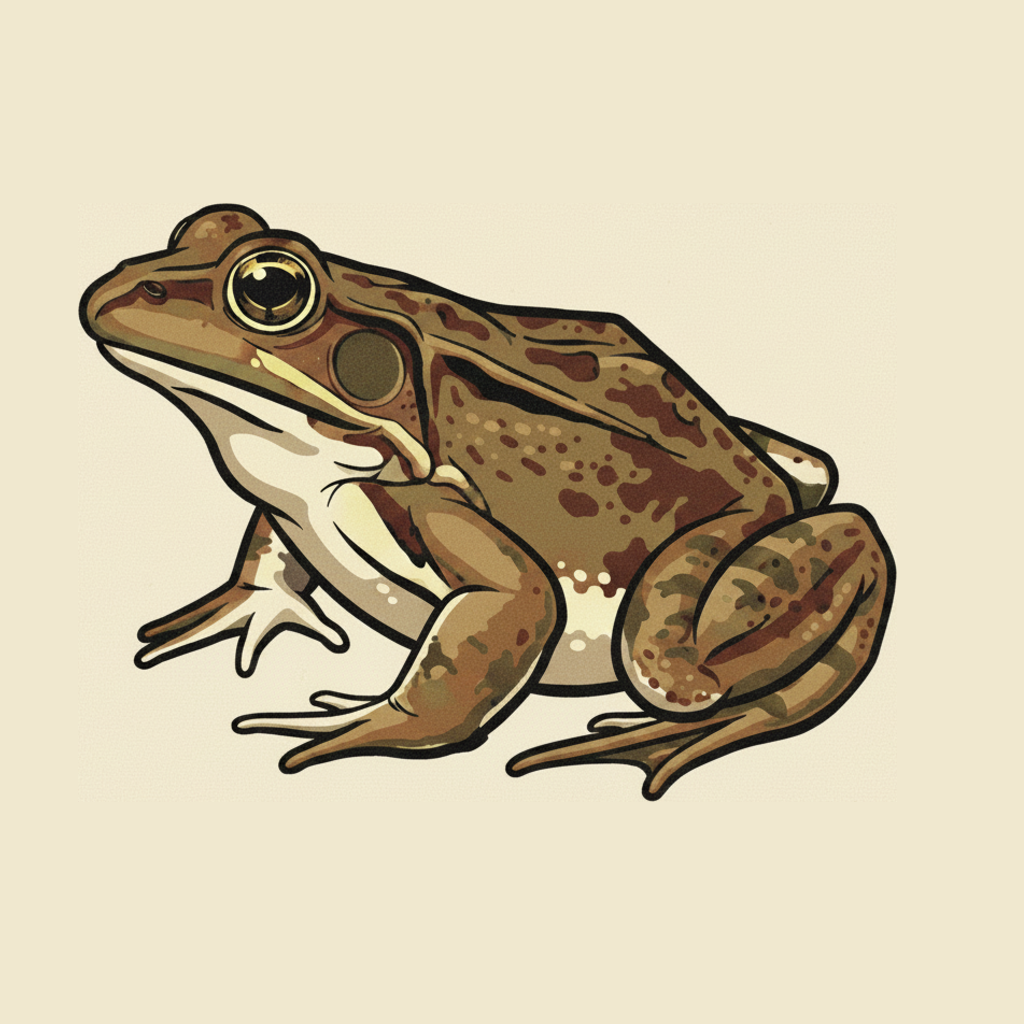
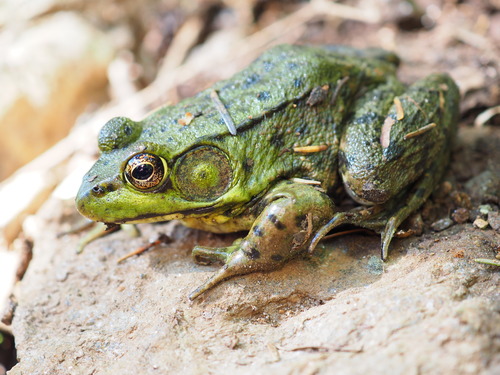
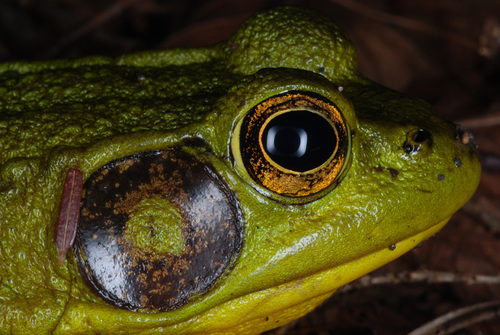
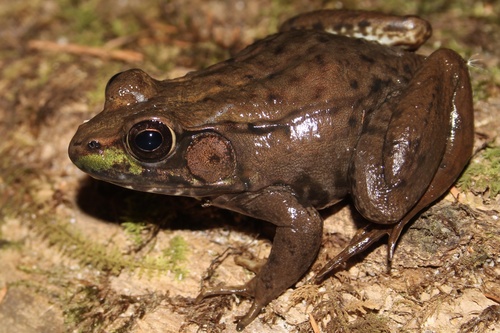
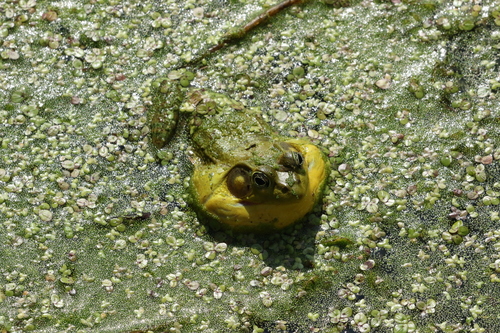
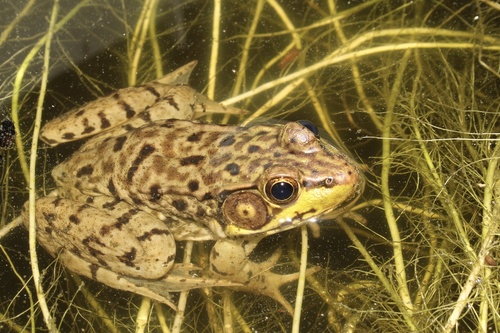
This species is a mid-sized true frog. Adult green frogs range from 5–10 cm (2.0–3.9 in) in body length (snout to vent, excluding the hind legs). The typical body weight of this species is from 28 to 85 g (0.99 to 3.00 oz). The sexes are sexually dimorphic in a few ways: mature females are typically larger than males, the male tympanum is twice the diameter of the eye, whereas in females, the tympanum diameter is about the same as that of the eye, and males have bright yellow throats. The dorsolateral ridges, prominent, seam-like skin folds that run down the sides of the back, distinguish the green frog from the bullfrog, which entirely lacks them. Green frogs usually have green heads while the body is brown, gray, or dark green. The green head can be more or less prominent on certain individuals, with some frogs only having green on the side of their heads while other frogs are green all the way down their back. The belly is white with black mottling. Male green frogs in breeding condition have yellow throats. Green frogs are darker colored on colder days to help absorb heat. Green frogs can sometimes be blue due to a genetic mutation known as axanthism that prevents the frog from producing yellow pigments (yellow and blue pigments together make the color green). Green frog tadpoles are olive green and iridescent creamy-white below. Metamorphosis can occur within the same breeding season or tadpoles may overwinter to metamorphose the next summer.
Range & habitat
Green frogs are associated with bodies of water and have been found in a variety of habitats, living at the margins of shallow freshwater ponds, road-side ditches, lakes, swamps, and streams, and of vernal pools and other temporary bodies of water though less so than other frogs. They maintain small home ranges around these water sources and spend about a third of their time foraging for resources (especially in regions of abundant leaf litter and dense vegetation), returning to the water for refuge. Their habitat has also been impacted by human interaction via the development of roads, buildings, and other infrastructure and agriculture which involves the destruction of their habitat. However, if there is abundant and quality habitat nearby, green frogs have the capability to flee from deforestation and are also somewhat tolerant of said destruction. When attempting to flee from the destruction of their habitat, Green frogs tend to move primarily among three distinct types of aquatic habitats: ephemeral wetland, stream, and swamp. Additionally, green frogs select for increased soil moisture, fine woody debris, and fewer trees with water cover being the most important factor emphasizing the fact that they tend to inhabit areas near water and with open environments in order to survive. The green frog is a widespread species native to North America, mainly occurring throughout eastern North America from the St. Lawrence River Valley in southeastern Canada to Northern Florida and Eastern Texas.
Adapted from Lithobates clamitans on Wikipedia, used under CC BY-SA 4.0.