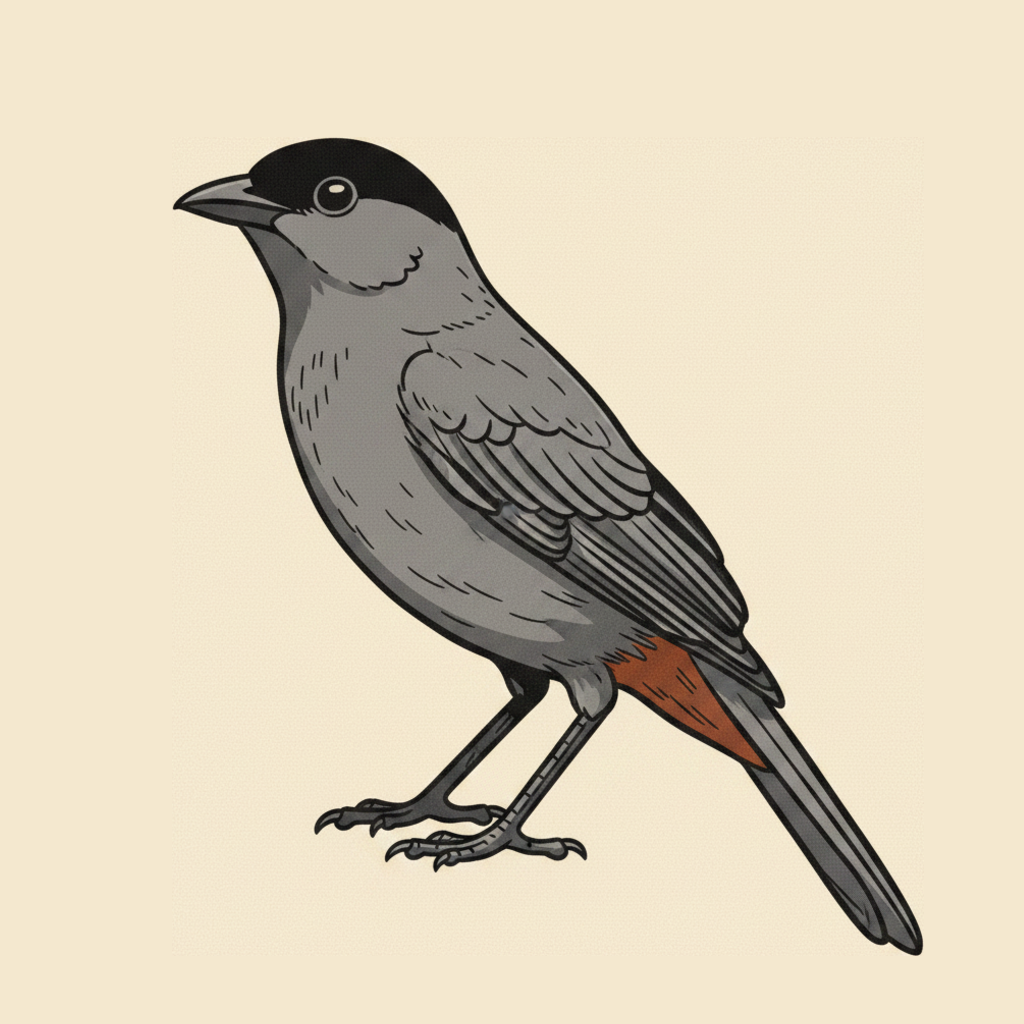
Photographs
what it really looks like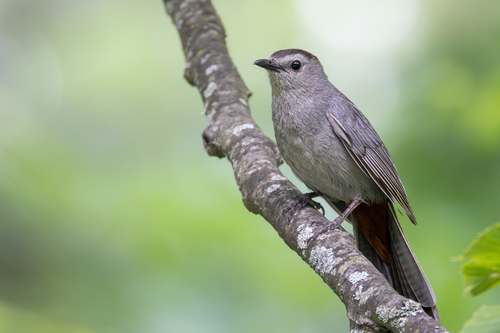
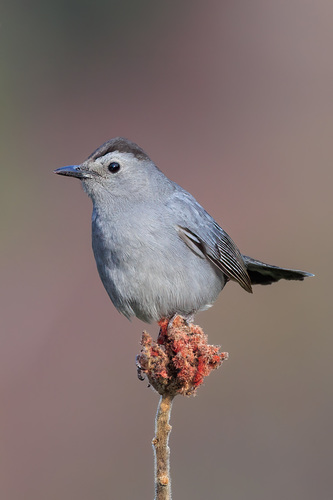
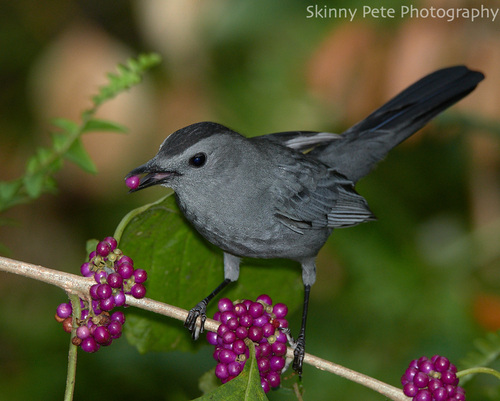
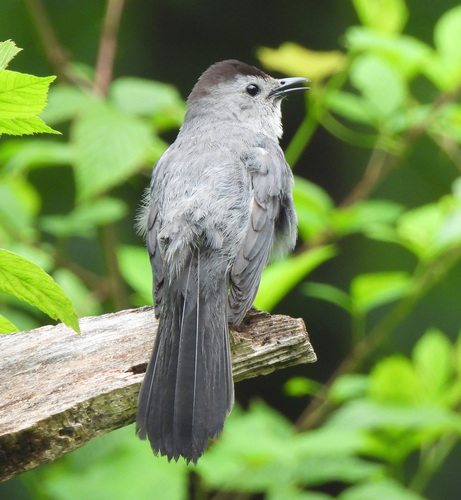
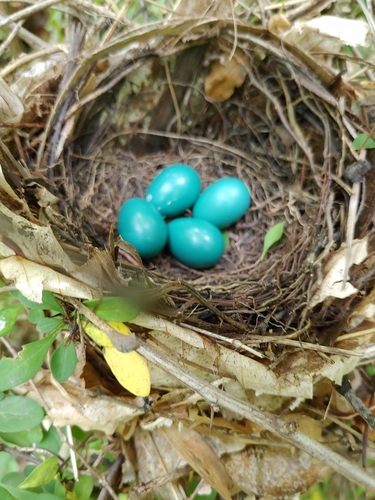
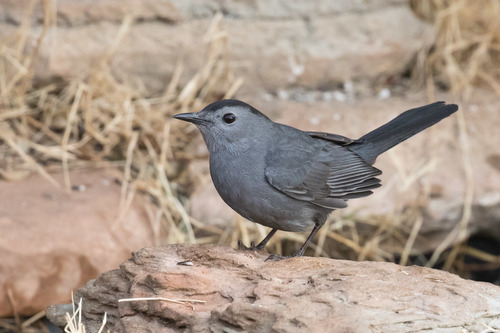
Photographs from iNaturalist · photographer credits
About from Wikipedia
Description
Adults weigh from 23.2 to 56.5 g (0.8 to 2.0 oz), with an average of 35–40 g (1.2–1.4 oz) They range in length from 20.5 to 24 cm (8.1 to 9.4 in) and span 22 to 30 cm (8.7 to 11.8 in) across the wings. Among standard measurements, the wing chord is 8.4 to 9.8 cm (3.3 to 3.9 in), the tail is 7.2 to 10.3 cm (2.8 to 4.1 in), the culmen is 1.5 to 1.8 cm (0.6 to 0.7 in) and the tarsus is 2.7 to 2.9 cm (1.1 to 1.1 in). Gray catbirds are plain lead gray almost all over. The top of the head is darker. The undertail coverts are rust-colored, and the remiges and rectrices are black, some with white borders. The slim bill, the eyes, and the legs and feet are also blackish. Males and females cannot be distinguished by their looks; different behaviours in the breeding season is usually the only clue to the observer. Juveniles are even plainer in coloration, with buffy undertail coverts.
Range & habitat
Native to most of temperate North America east of the Rocky Mountains, gray catbirds migrate to the southeastern United States, Mexico, Central America, and the Caribbean in winter; except for the occasional vagrant they always stay east of the American Cordillera. They are extremely rare vagrants to western Europe. Normally present on the breeding grounds by May, most leave for winter quarters in September/October; as it seems, this species is increasingly extending its stay in the summer range, with some nowadays remaining until mid-winter as far north as Ohio. The gray catbird is a migratory species. Spring migration ranges from March to May, and in the fall ranges from late August to November. The catbird tends to avoid dense, unbroken woodlands, and does not inhabit coniferous, pine woodland. Catbirds prefer a dense vegetative substrate, especially if thorny vegetation is present. Scrublands, woodland edges, overgrown farmland and abandoned orchards are generally among the preferred locations of the catbird. In Bermuda, its preferred habitats are scrub and myrtle swamp. During the winter season, the catbird has an affinity for berry-rich thickets, especially within proximity of water sources.
Adapted from Gray catbird on Wikipedia, used under CC BY-SA 4.0.