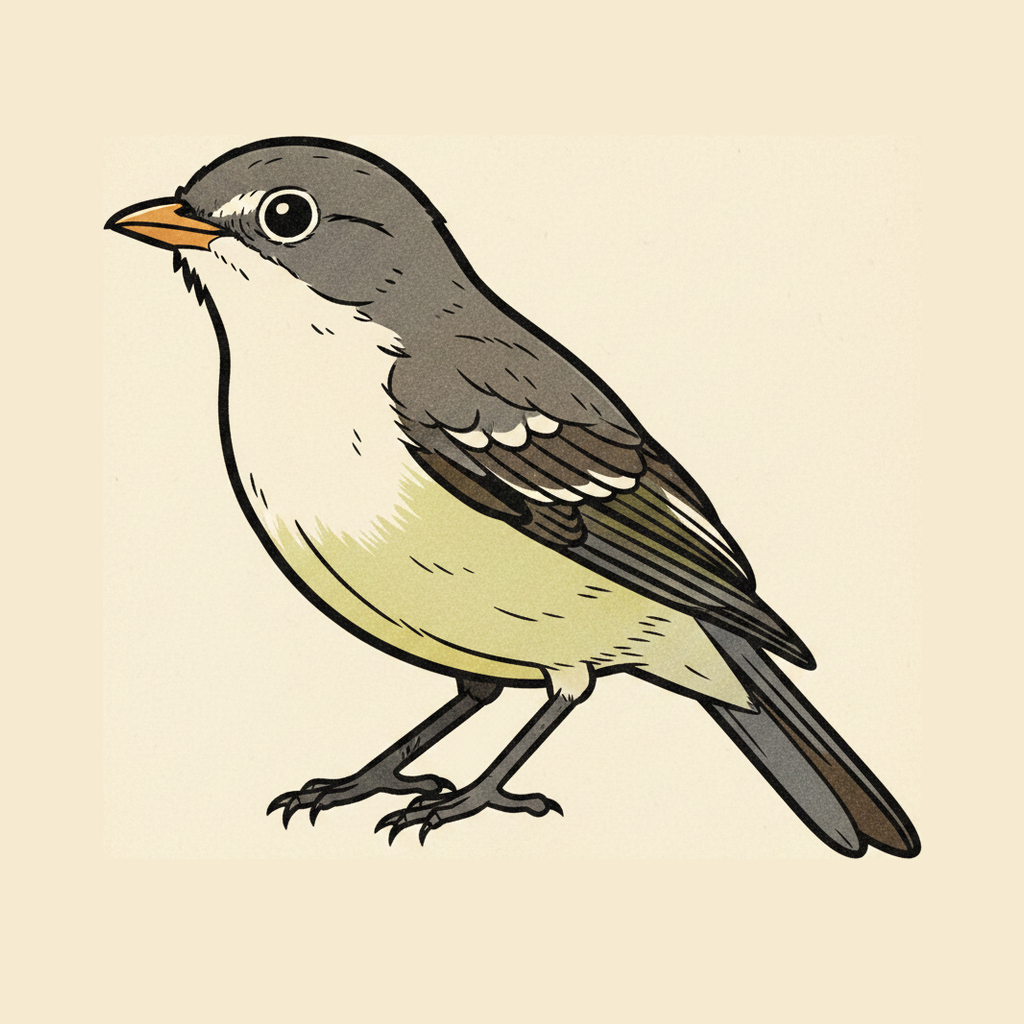
Photographs
what it really looks like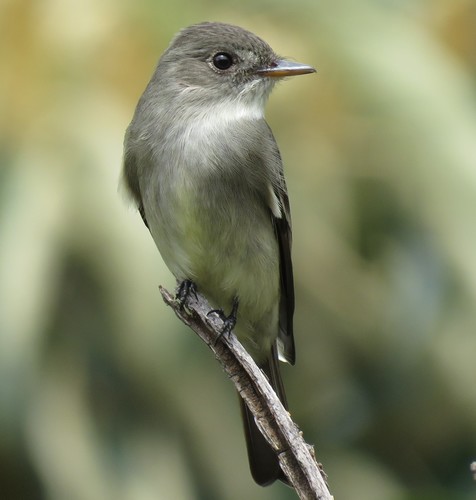
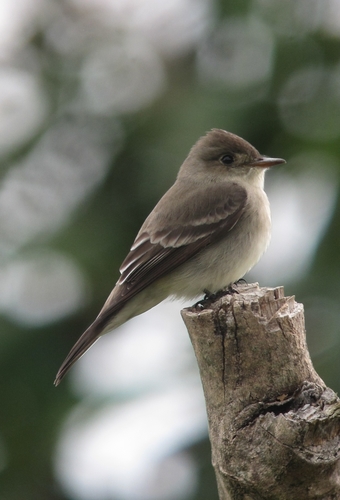
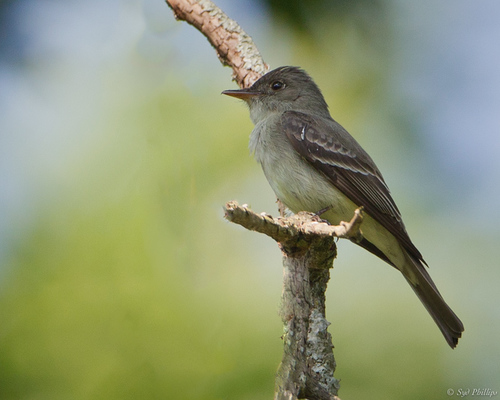
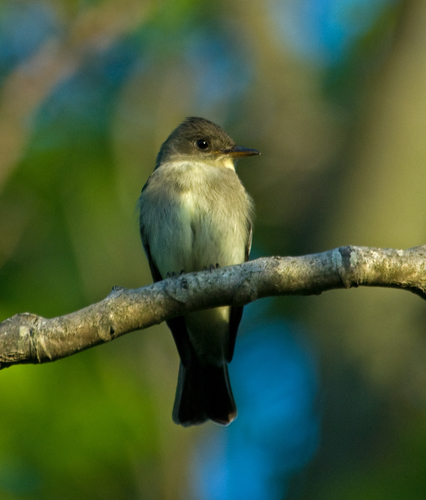
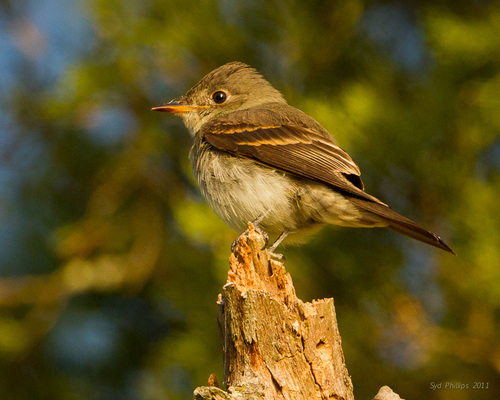
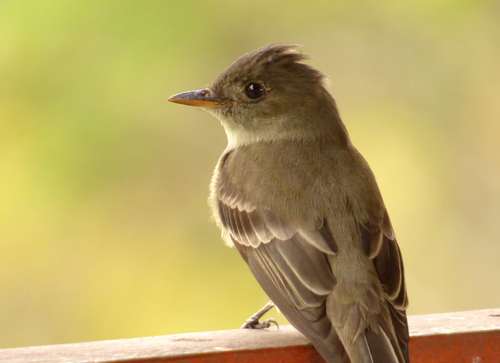
Photographs from iNaturalist · photographer credits
About from Wikipedia
Description
The eastern wood pewee is 13.5–15 cm (5.3–5.9 in) in length and weighs around 14 g (0.49 oz). Wingspan ranges 9.1–10.2 in (23–26 cm). The sexes are alike. The adult is gray-olive on the upperparts with light underparts, washed with olive on the breast. Each wing has two pale wing bars, and the primary remiges are long, giving the wingtip a slim and very pointed appearance. The upper part of the bill is dark, the lower part is yellowish. The songs are basically a mournful whistled pee-a'wee given in a series, which gave this bird its name, and a "pe-wee" with a rising note at the end.
Range & habitat
Their breeding habitat is deciduous, mixed woods, or pine plantations in eastern North America. They migrate to Central America, the Caribbean, and in the Andes region of northern South America. They feed on insects and other arthropods. Wood pewees wait on a perch at a middle height in a tree and fly out to catch prey in flight, sometimes hovering to pick it from vegetation. Eastern wood pewees arrive relatively late on breeding grounds (e.g., 18 May to 5 June in southern Ontario). They are rarely seen on their breeding grounds before the last days of April further south. They migrate south at a more usual time, leaving sometimes in late August but most often in September. Migration times have stayed the same in the last 100 years. They migrate quickly for most of the journey, dispersing and moving at a slower speed when approaching breeding or wintering range. For example, in the Cayman Islands which are offshore the winter quarters, the species is only rarely and briefly encountered, but passes through on its way north as early as mid-late February.
Adapted from Eastern wood pewee on Wikipedia, used under CC BY-SA 4.0.