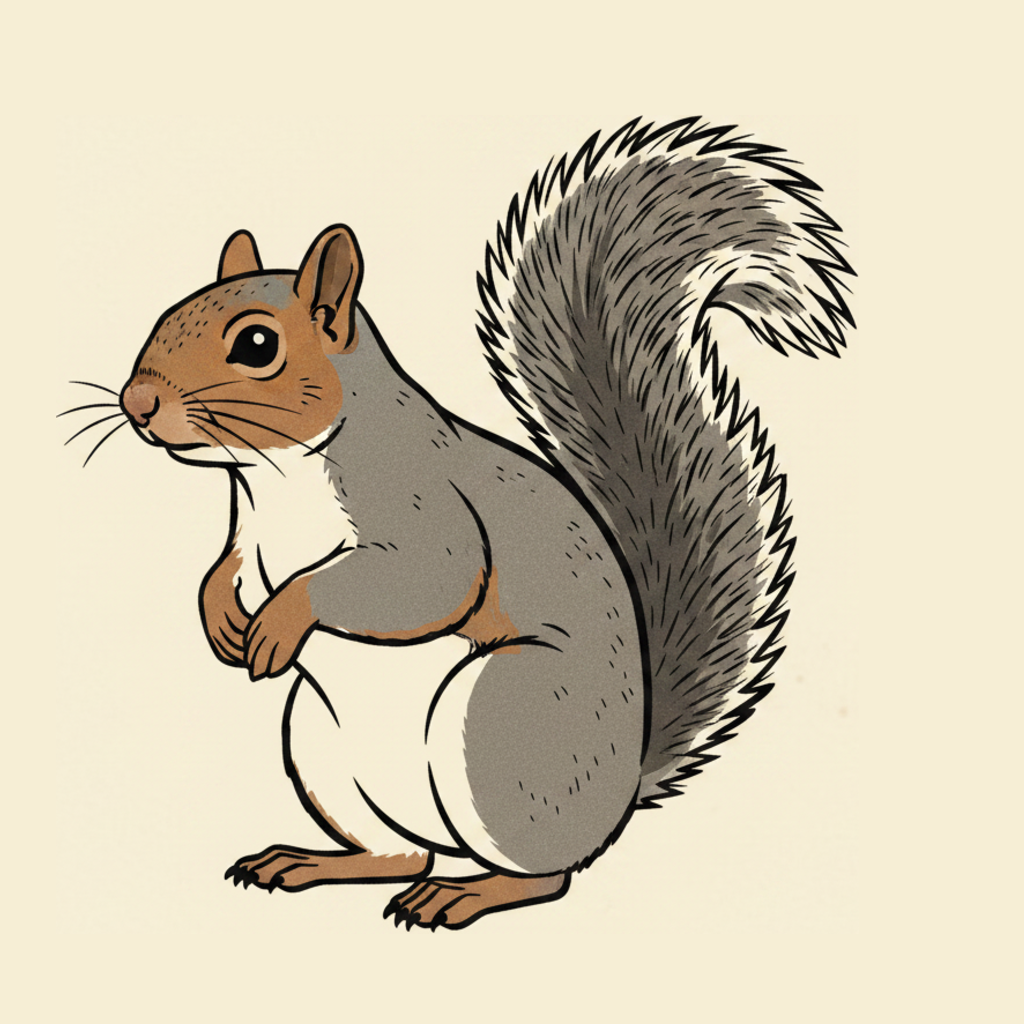
Photographs
what it really looks like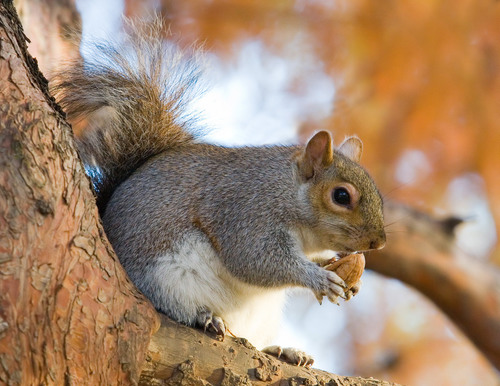
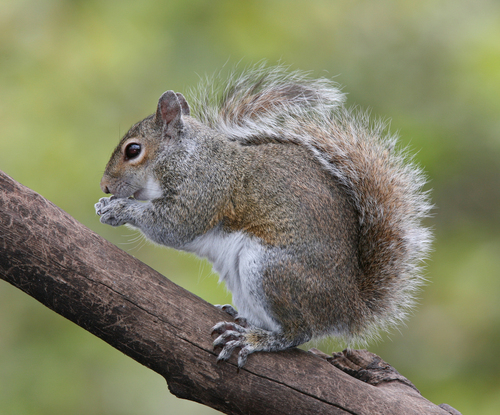
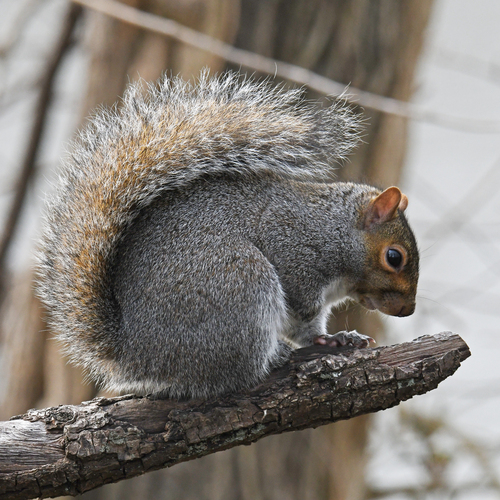
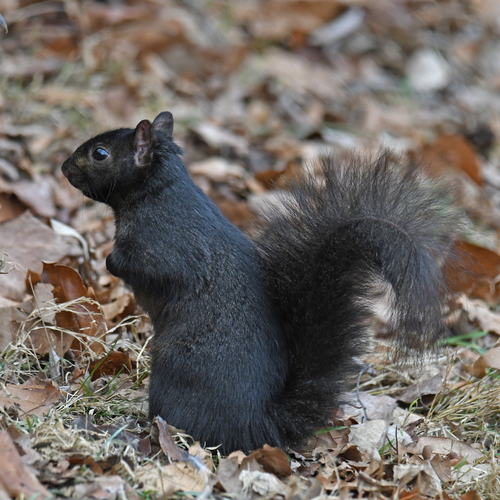
Photographs from iNaturalist · photographer credits
About from Wikipedia
Range & habitat
Sciurus carolinensis is native to the eastern and midwestern United States, and to the southerly portions of the central provinces of Canada. In the mid-1800s the population in the midwestern United States was described as being "truly astonishing," but human predation and habitat destruction through deforestation resulted in drastic population reductions, to the point that the animal was almost absent from Illinois by 1900. The native range of the eastern gray squirrel overlaps with that of the fox squirrel (Sciurus niger), with which it is sometimes confused, although the core of the fox squirrel's range is slightly more to the west. The eastern gray squirrel is found from New Brunswick, through southwestern Quebec and throughout southern Ontario plus in southern Manitoba, south to East Texas and Florida. Breeding eastern gray squirrels are found in Nova Scotia, but whether this population was introduced or came from natural range expansion is not known. A prolific and adaptable species, the eastern gray squirrel has also been introduced to, and thrives in, several regions of the western United States. In 1966, this squirrel was introduced onto Vancouver Island in Western Canada in the area of Metchosin, where it is considered highly invasive and a threat to both the local ecosystem and the native squirrel, the American red squirrel. Overseas, eastern gray squirrels in Europe are a concern because they have displaced some of the native squirrels there. For example, in Britain, they have largely displaced the red squirrel; in Ireland, they compete with the Eurasian red squirrel. They have also been introduced into Italy, South Africa, and Australia (where they were extirpated by 1973).
Behaviour
The eastern gray squirrel is one of very few mammalian species that can descend a tree head-first. It does this by turning its feet so the claws of its hind paws are backward-pointing and can grip the tree bark. Eastern gray squirrels build a type of nest, known as a drey, in the forks of trees, consisting mainly of dry leaves and twigs. The dreys are roughly spherical, about 30 to 60 cm in diameter and are usually insulated with moss, thistledown, dried grass, and feathers to reduce heat loss. Males and females may share the same nest for short times during the breeding season, and during cold winter spells. Squirrels may share a drey to stay warm. They may also nest in the attic or exterior walls of a house, where they may be regarded as pests, as well as fire hazards due to their habit of gnawing on electrical cables. In addition, squirrels may inhabit a permanent tree den hollowed out in the trunk or a large branch of a tree. Eastern gray squirrels exhibit diurnal or crepuscular behavior depending on the season, and tend to avoid the heat in the middle of a summer day. They do not hibernate.
Adapted from Eastern gray squirrel on Wikipedia, used under CC BY-SA 4.0.