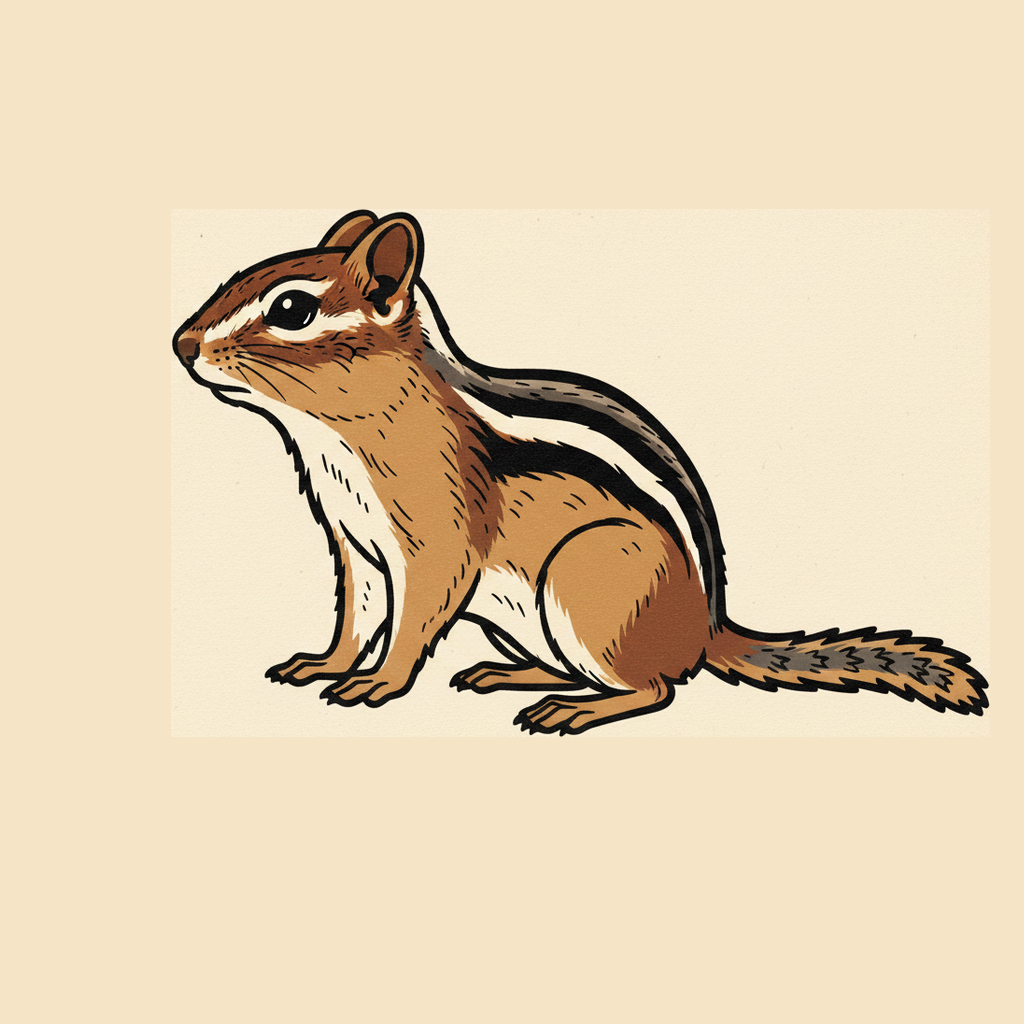
Photographs
what it really looks like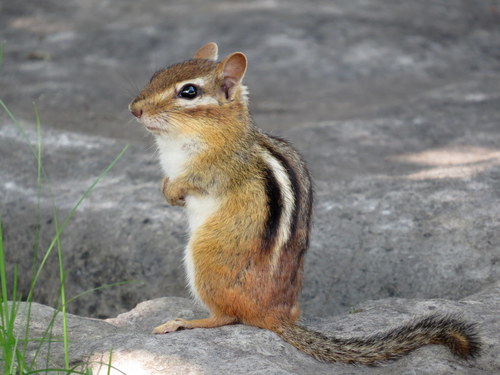
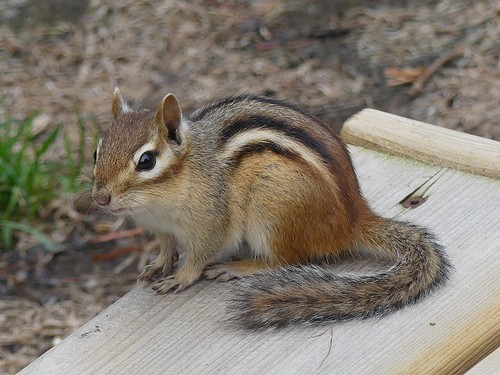
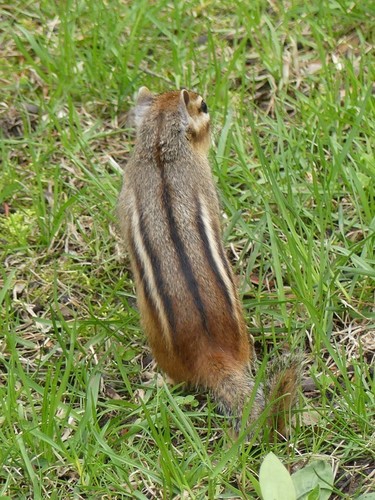
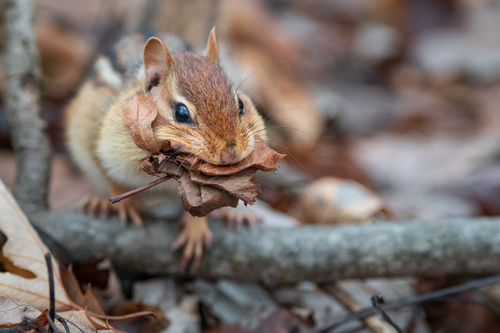
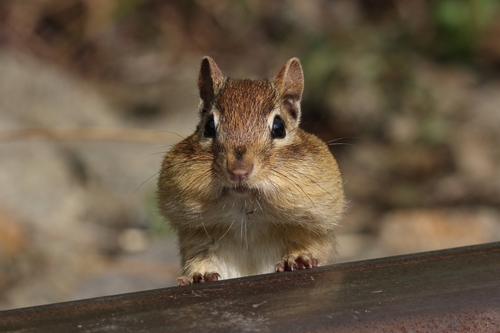
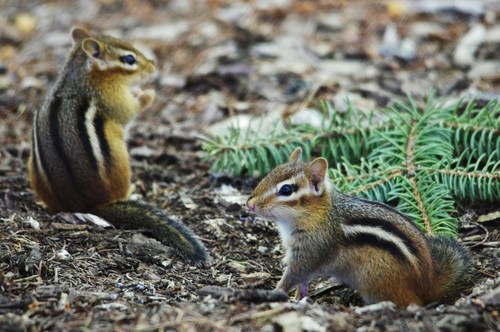
Photographs from iNaturalist · photographer credits
About from Wikipedia
Description
A small species, it reaches about 30 cm (12 in) in length including the tail, and a weight of 66–150 g (2.3–5.3 oz). It has reddish-brown fur on its upper body and five dark brown stripes contrasting with light brown stripes along its back, ending in a dark tail. It has lighter fur on the lower part of its body. It has a tawny stripe that runs from its whiskers to below its ears, and light stripes over its eyes. It has two fewer teeth than other chipmunks and four toes each on the front legs, but five toes on the hind legs. The chipmunk's appearance remains consistent throughout life. There is no external difference in appearance between the sexes except the obvious anatomical characteristics of the genitalia during periods of fertility. Molt occurs once or twice annually, during May or June and sometimes again in October. Both albino and melanistic specimens have been observed, but without geographical regularity."
Range & habitat
The eastern chipmunk lives in deciduous wooded areas and urban parks throughout the eastern United States and southern Canada. It prefers locations with rocky areas, brush or log piles, and shrubs to provide cover.
Behaviour
The eastern chipmunk can climb trees well, but constructs underground nests with extensive tunnel systems, often with several entrances. To hide the construction of it(s) burrow, the eastern chipmunk is argued by some to carry soil to a different location in its cheek pouches. However, recorded observations of chipmunks carrying soil in their cheek pouches are extremely limited. John Burroughs is noted as having written that "I used to think that the chipmunk carried away the soil in his cheek pouches, and have so-stated in one of my books [Riverby, 1894], but I am now certain that he does not—only his food stores are thus carried." Chipmunks also line their burrows with leaves, rocks, sticks, and other material, making the burrows even harder to see. "The vocal repertoire of the chipmunk consists of five more or less stereotyped sounds: the chip, the chuck, the trills, the whistle or squeal, and chatter." The chipmunks' trilling has been measured to occur at the rate of 130 trills per minute.
Adapted from Eastern chipmunk on Wikipedia, used under CC BY-SA 4.0.