Photographs
what it really looks like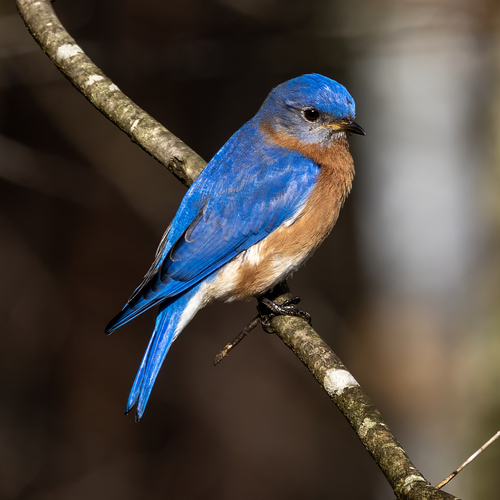
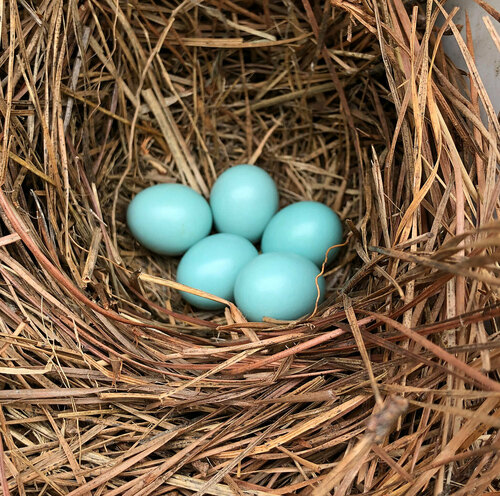
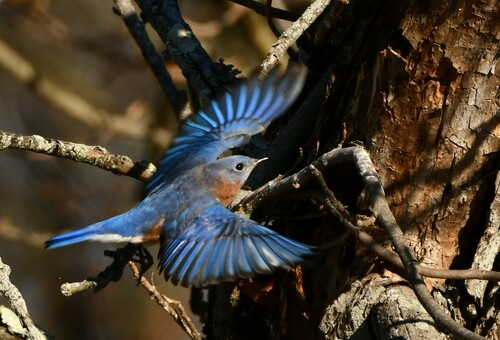
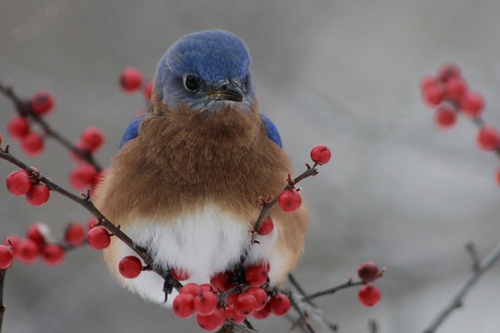
Photographs from iNaturalist · photographer credits
About from Wikipedia
Description
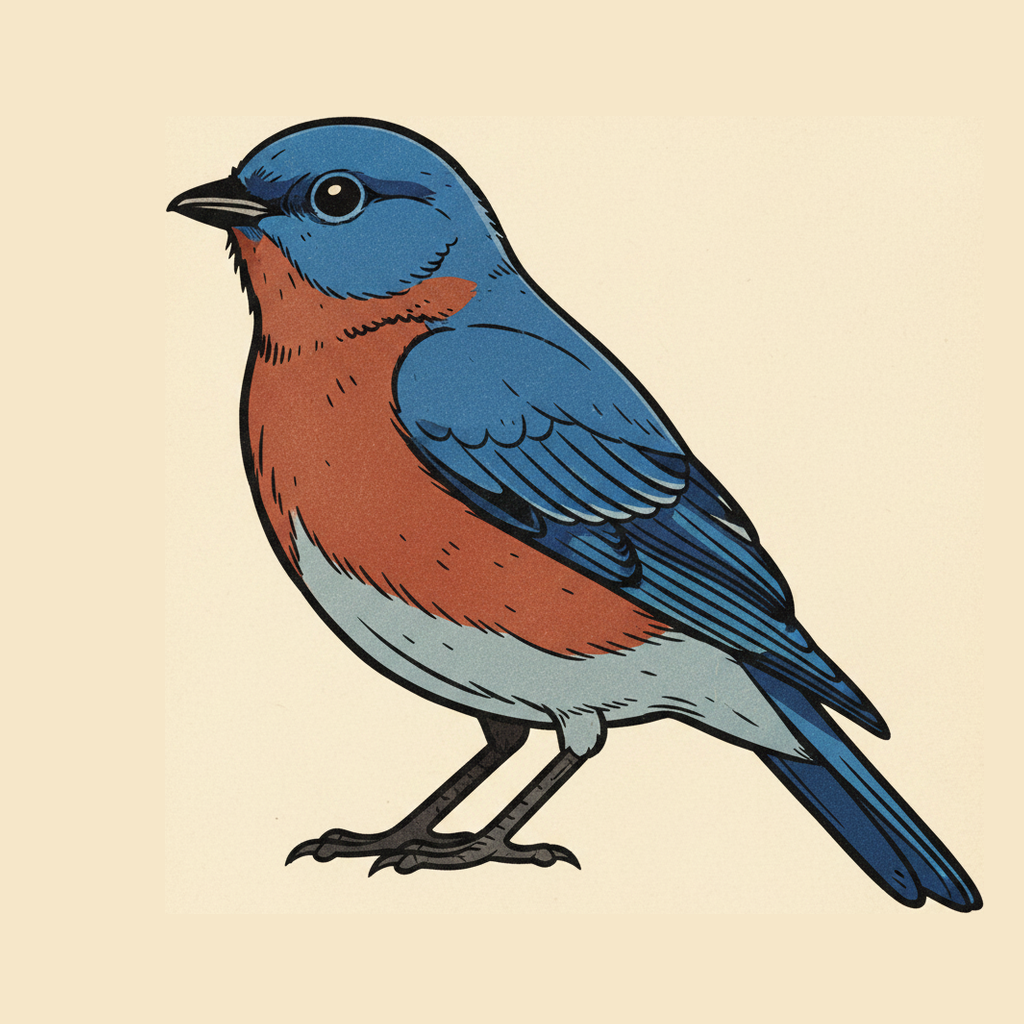
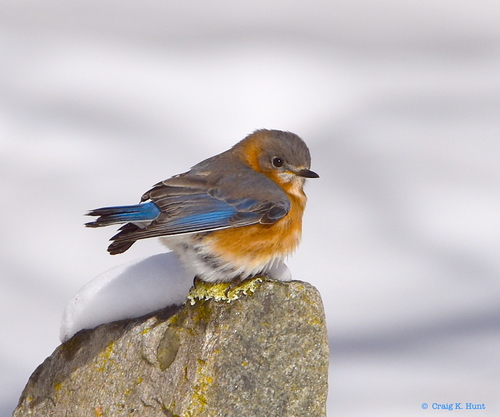
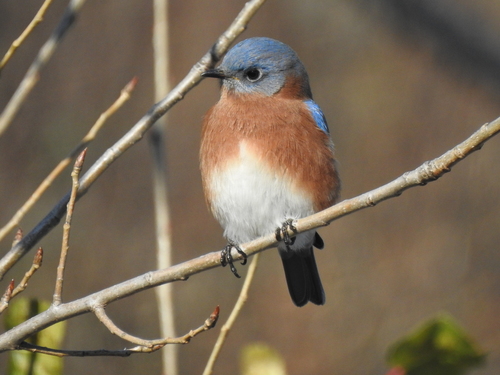
Eastern bluebirds measure 16–21 cm (6.3–8.3 in) long, span 25–32 cm (9.8–12.6 in) across the wings, and weigh 27–34 g (0.95–1.20 oz). Male bluebirds have a bright head, back, and wings. Their breast is a brownish red. Females are lighter with gray on the head and back and some blue on their wings and tail. In females, the breast is usually lighter in color than in males, and is more orange.
Range & habitat
The eastern bluebird is found east of the Rockies, southern Canada to the Gulf states, and southeastern Arizona to Nicaragua. The increase in trees throughout the Great Plains during the past century due to fire suppression and tree planting facilitated the western range expansion of the species. as well as range expansions of many other species of birds. From 1966–2015 the eastern bluebird experienced a greater than 1.5% annual population increase throughout most of its breeding and year-round ranges, with exceptions including southern Florida and the Ohio River valley. Bluebirds tend to live in open country around trees, but with little understory and sparse ground cover. Original habitats probably included open, frequently burned pine savannas, beaver ponds, mature but open woods, and forest openings. Today, they are most common along pastures, agricultural fields, suburban parks, backyards, and even golf courses. Populations also occur across eastern North America and south as far as Nicaragua. Birds that live farther north and in the west of the range tend to lay more eggs than eastern and southern birds. An isolated, insular subspecies of the eastern bluebird is found on Bermuda, and has a distinctive, brighter blue coloration compared to mainland populations. This population was formerly thought to have predated the colonization of the islands (making it one of only three extant, resident pre-colonization Bermuda landbirds, alongside the Bermuda white-eyed vireo and gray catbird). However, analysis of fossil strata found no evidence for the existence of bluebirds on the islands prior to European colonization. Using simulations and molecular evidence, a 2013 study found that the Bermuda bluebirds likely descend from very small founder population from a single colonization event during the 1600s. This colonization event could either be a natural one by migratory individuals or an anthropogenic introduction by early settlers, who are known to have introduced several other eastern North American birds like the northern cardinal (Cardinalis cardinalis) to Bermuda very shortly after colonization. It is likely that the alteration to the islands' ecosystem due to the clearing of native forest facilitated this colonization by providing optimal bluebird feeding habitat, along with a lack of predators.
Behaviour
Eastern bluebirds are social, and will sometimes gather in flocks of over a hundred. However, they are territorial during the breeding season and may continue to defend a feeding area throughout the winter.
Adapted from Eastern bluebird on Wikipedia, used under CC BY-SA 4.0.