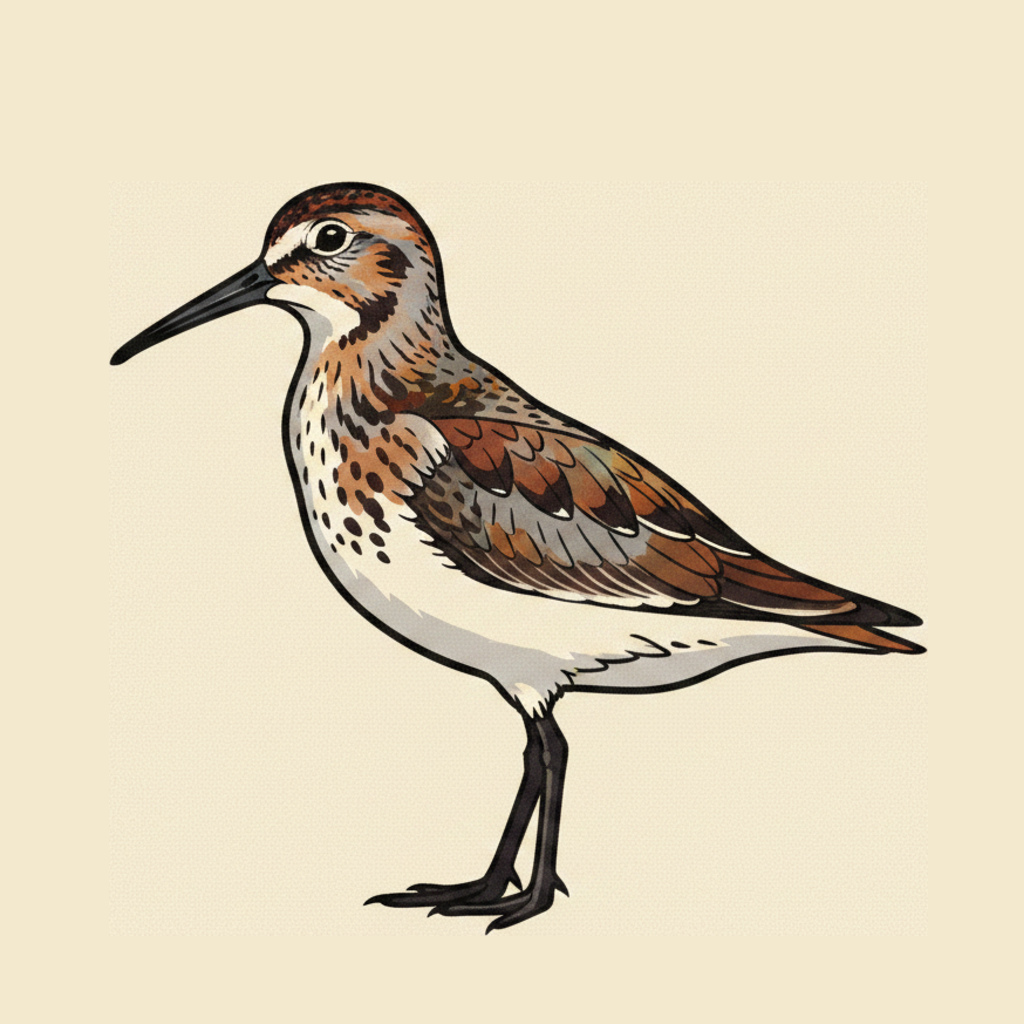
Photographs
what it really looks like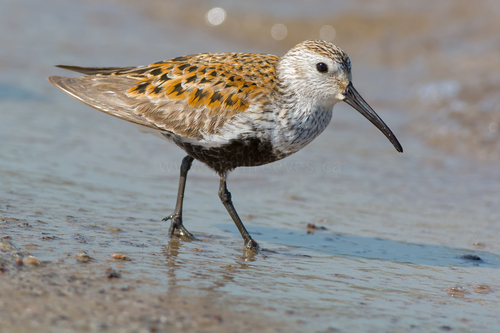
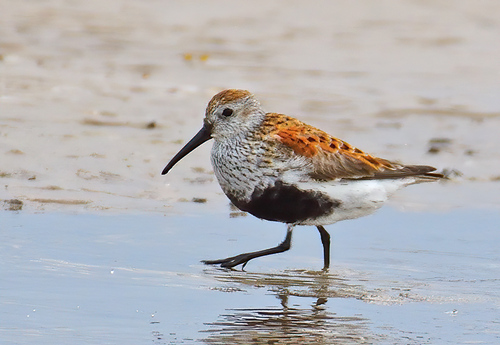
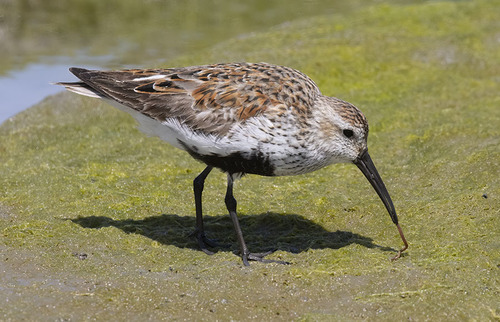
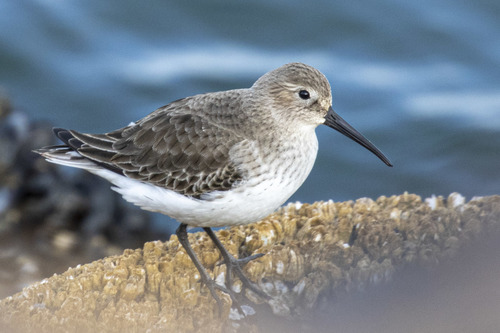
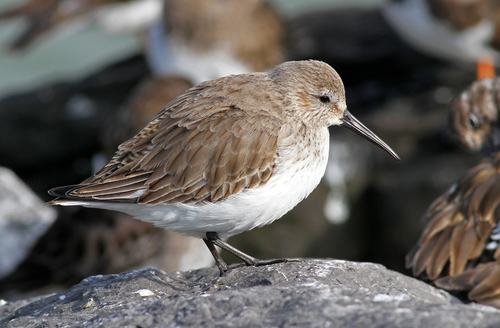
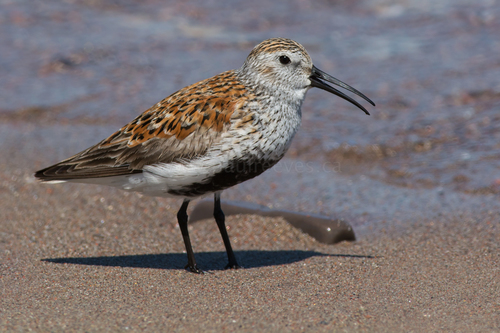
Photographs from iNaturalist · photographer credits
About from Wikipedia
Description
Measurements: Length: 16–20 cm (6.3–7.9 in) Weight: 34–77 g (1+1⁄4–2+3⁄4 oz) Wingspan: 38–43 cm (15–17 in) An adult dunlin in breeding plumage shows the distinctive black belly which no other similar-sized wader possesses. In winter, dunlins are greyish-brown above and white below. Juveniles are brown above with two weak whitish "V" shapes on the back, though less obvious than the same feature on little stint and some other species in the genus. They usually have black marks on the flanks or belly. All ages show a narrow white wingbar in flight. The legs and slightly decurved bill are black. The subspecies differ mainly in the extent of rufous plumage and the size of the black belly patch in the breeding season, and the bill length; in winter there are no subspecific distinctions in the plumage, with only the bill length providing a limited guide. Bill length varies between sexes, the females having longer bills than the males, further complicating winter subspecies identification. On the tip of the Dunlin's bill is a soft covering that fills with blood and with many nerve endings, forming a sensitive probe that is used to locate invertebrate prey in mud and sand. Although the bill can look sharp-pointed in dead specimens, in life it is blunt. The call is a typical sandpiper "chreep", and the display song a harsh trill.
Range & habitat
Dunlin are small migratory waders, however they show strong philopatry with individuals of the southern subspecies Calidris alpina schinzii in Sweden and Finland returning to, or very close to, their natal patches. Habitat fragmentation has reduced the availability of habitat patches to these birds through reducing patch size and increasing patch isolation. This reduced connectivity between patches has reduced the movements of Dunlin leaving them more susceptible to inbreeding in these locations.
Behaviour
The dunlin is highly gregarious in winter, sometimes forming large flocks on coastal mudflats or sandy beaches. Large numbers can often be seen swirling in synchronized flight on stop-overs during migration or on their winter habitat. This bird is one of the most common waders throughout its breeding and wintering ranges, and it is the species with which other waders tend to be compared. At 17–21 cm (6.7–8.3 in) length and with a 32–36 cm (13–14 in) wingspan, it is similar in size to a common starling, but stouter, with a longer, thicker bill. The dunlin moves along the coastal mudflat beaches it prefers with a characteristic "sewing machine" feeding action, methodically picking small food items. Insects, particularly Diptera, form the main part of the dunlin's diet on the nesting grounds; it eats molluscs, worms and crustaceans in coastal areas.
Adapted from Dunlin on Wikipedia, used under CC BY-SA 4.0.