Photographs
what it really looks like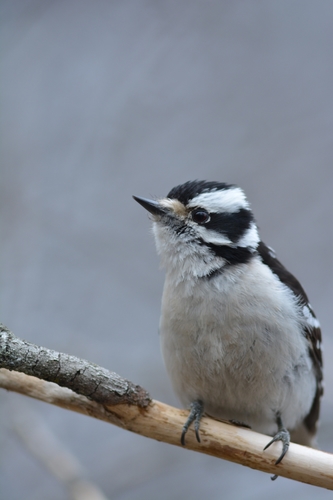
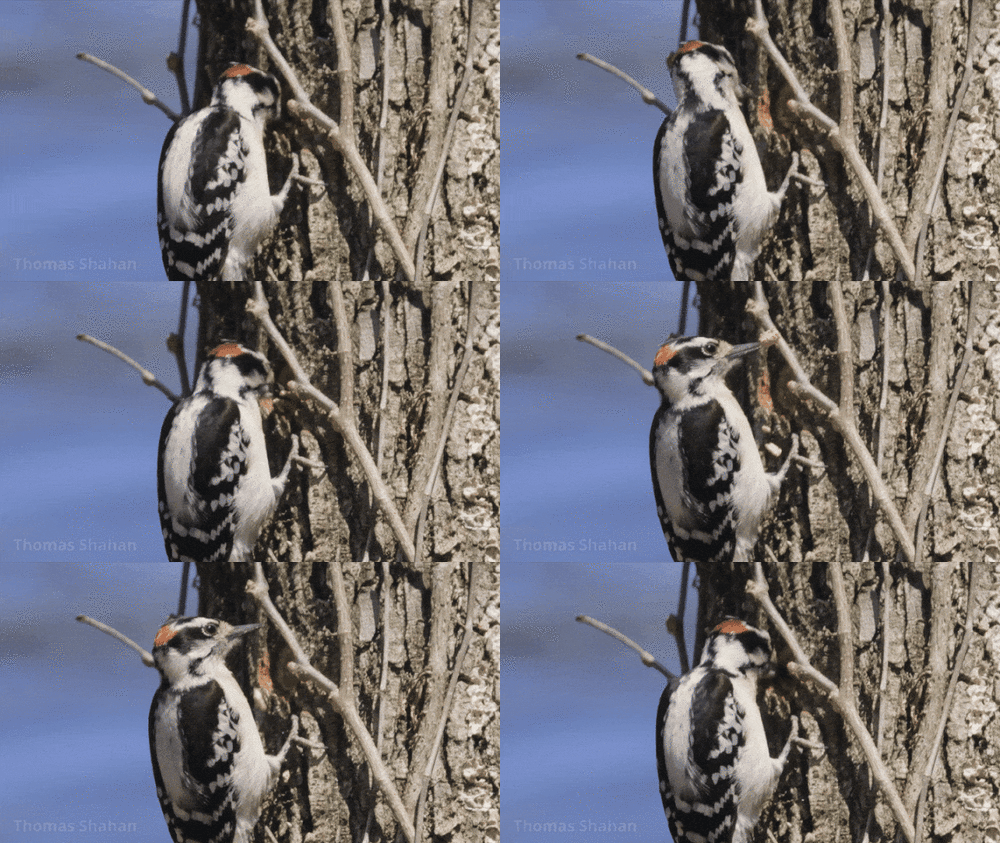
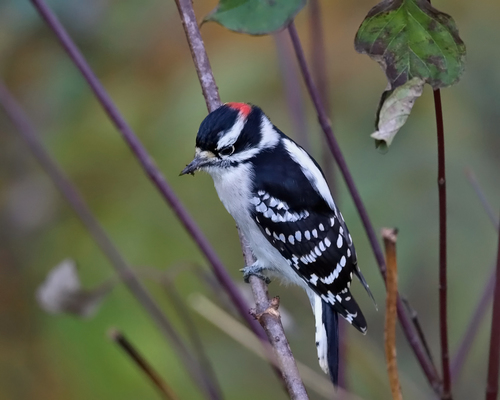
Photographs from iNaturalist · photographer credits
About from Wikipedia
Description
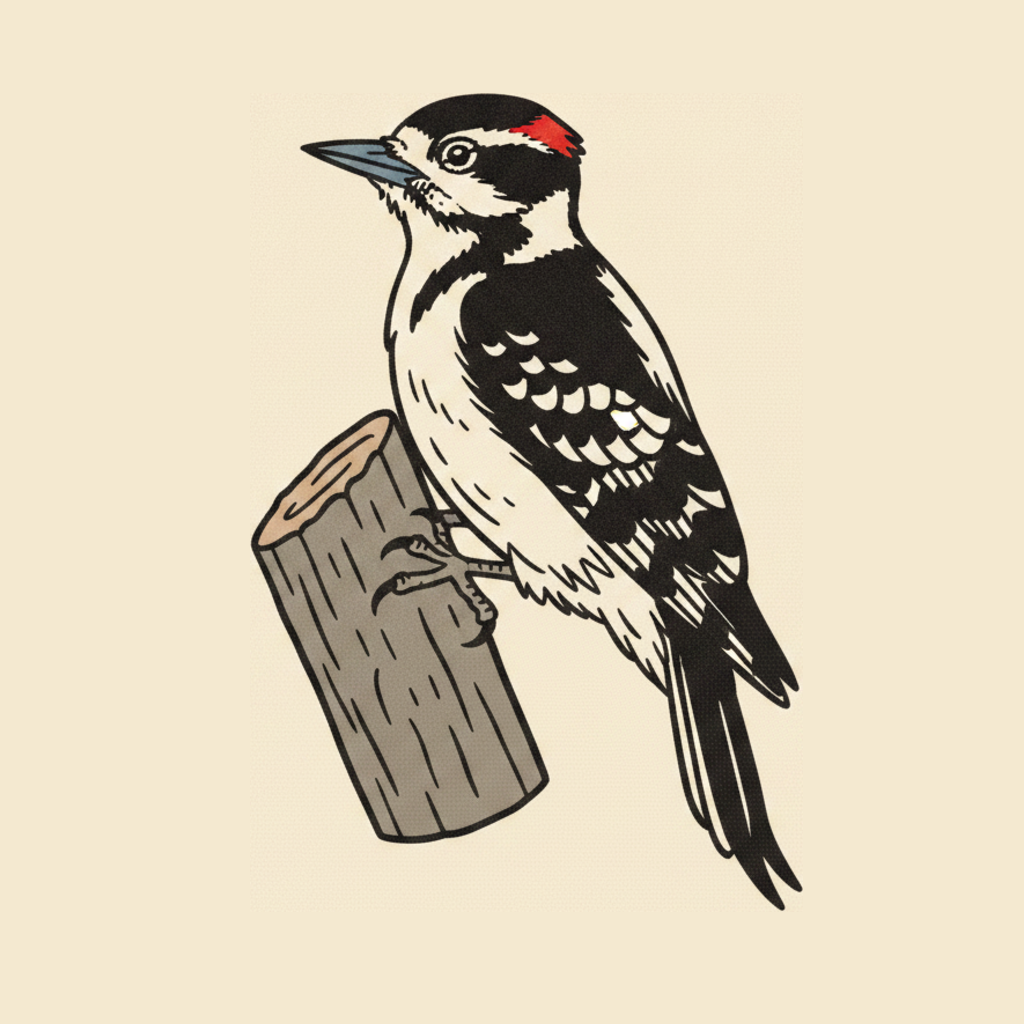
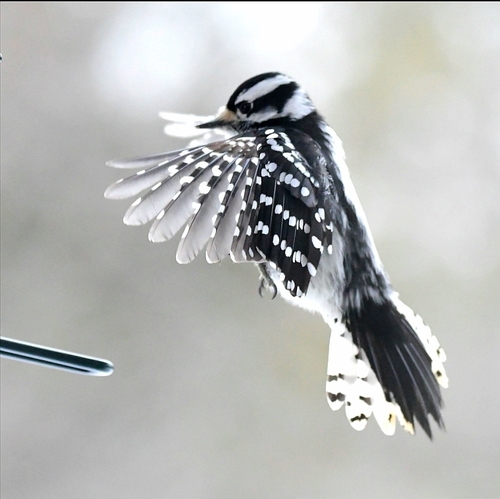
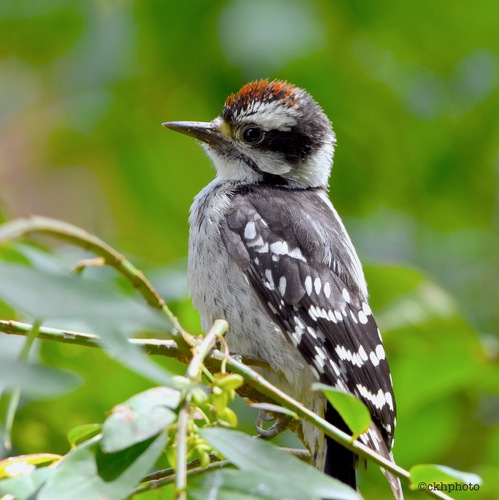
Adult downy woodpeckers are the smallest of North America's woodpeckers, but there are many smaller species elsewhere, especially the piculets. The total length of the species ranges from 14 to 18 cm (5.5 to 7.1 in) and the wingspan from 25 to 31 cm (9.8 to 12.2 in). Body mass ranges from 20 to 33 g (0.71 to 1.16 oz). Standard measurements are as follows: the wing chord is 8.5–10 cm (3.3–3.9 in), the tail is 4–6 cm (1.6–2.4 in), the bill is 1–1.8 cm (0.39–0.71 in) and the tarsus is 1.1–1.7 cm (0.43–0.67 in). The downy woodpecker is mainly black on the upperparts and wings, with a white back, throat and belly and white spotting on the wings. There is one white bar above the eye, and one below. They have a black tail with white outer feathers barred with black. Adult males have a red patch on the back of the head whereas juvenile males display a red cap. The downy woodpecker is virtually identical in plumage pattern to the larger hairy woodpecker, but it can be distinguished from the hairy by the presence of black spots on its white tail feathers and the length of its bill. The downy woodpecker's bill is shorter than its head, whereas the hairy woodpecker's bill is approximately equal to head length.
Range & habitat
Downy woodpeckers are native to forested areas, mainly deciduous, of North America. Their range consists of most of the United States and Canada, except for the deserts of the southwest and the tundra of the north. Mostly permanent residents, northern birds may migrate further south; birds in mountainous areas may move to lower elevations.
Behaviour
Downy woodpeckers nest in a tree cavity excavated by the nesting pair in a dead tree or limb. In the winter, they roost in tree cavities. They tend to nest near soft snags, where the wood is softer and the inner heartwood of the tree can be accessed more easily. The woodpecker will form a nest cavity in the softer heartwood, and its nest will be protected by the outer portion of the tree. This portion is made up of harder sapwood, which serves as protection from the elements and predators. Heartwood is often softer in dead or decayed trees, as a result, the number of dead trees in a forest and downy woodpeckers habitats are positively correlated in studies. Downy woodpeckers prefer to nest in areas with ample light, leading them to favor trees with broader leaves, such as poplars, birches, and ashes, or forest openings and edges.
Adapted from Downy woodpecker on Wikipedia, used under CC BY-SA 4.0.