Photographs
what it really looks like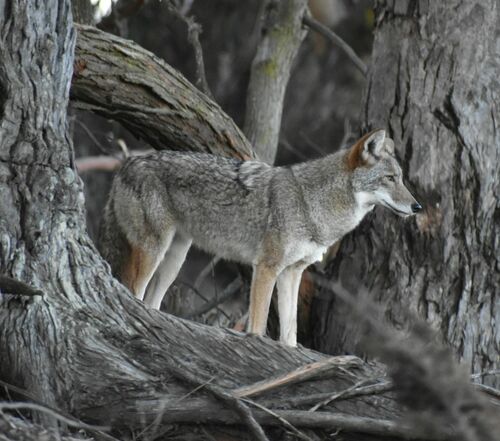
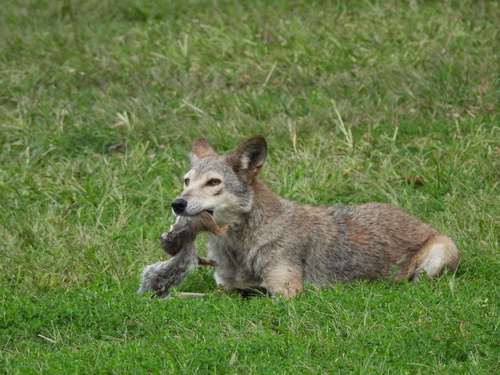
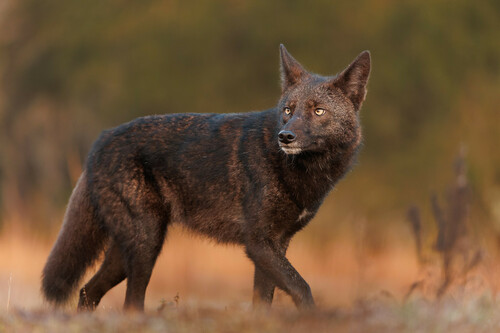
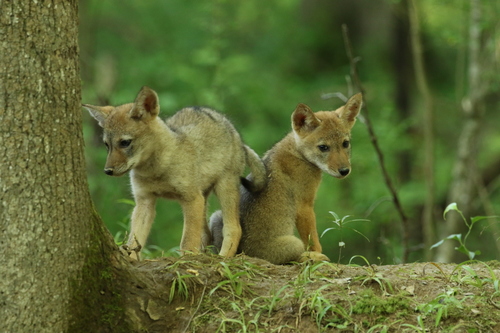
Photographs from iNaturalist · photographer credits
About from Wikipedia
Description
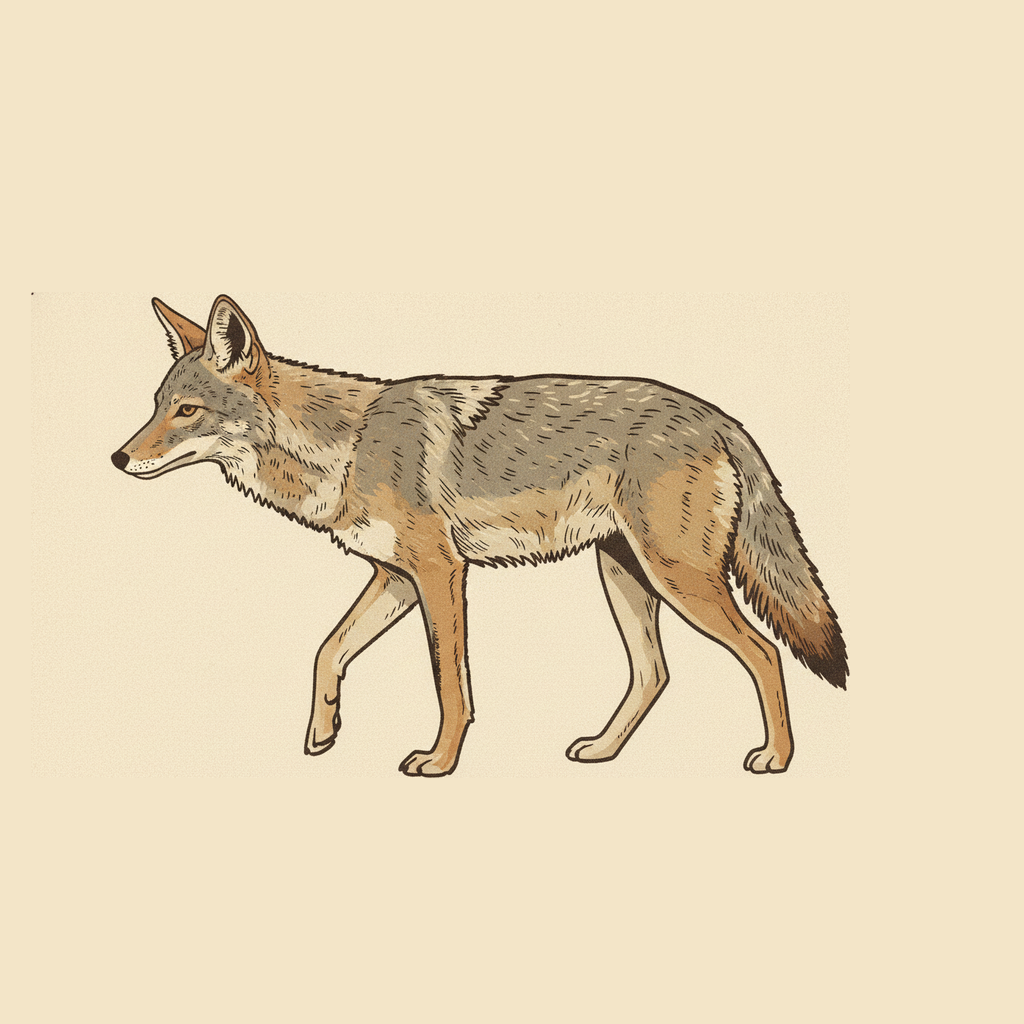
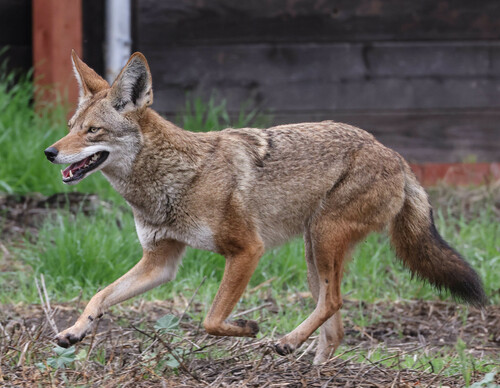
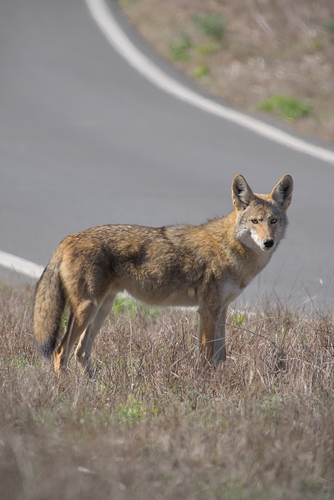
Coyote males average 8 to 20 kg (18 to 44 lb) in weight, while females average 7 to 18 kg (15 to 40 lb), though size varies geographically. Northern subspecies, which average 18 kg (40 lb), tend to grow larger than the southern subspecies of Mexico, which average 11.5 kg (25 lb). Total length ranges on average from 1.0 to 1.35 m (3 ft 3 in to 4 ft 5 in); comprising a tail length of 40 cm (16 in), with females being shorter in both body length and height. The largest coyote on record was a male killed near Afton, Wyoming, on November 19, 1937, which measured 1.5 m (4 ft 11 in) from nose to tail, and weighed 34 kg (75 lb). Scent glands are located at the upper side of the base of the tail and are a bluish-black color. The color and texture of the coyote's fur vary somewhat geographically. The hair's predominant color is light gray and red or fulvous, interspersed around the body with black and white. Coyotes living at high elevations tend to have more black and gray shades than their desert-dwelling counterparts, which are more fulvous or whitish-gray. The coyote's fur consists of short, soft underfur and long, coarse guard hairs. The fur of northern subspecies is longer and denser than in southern forms, with the fur of some Mexican and Central American forms being almost hispid (bristly). Generally, adult coyotes (including coywolf hybrids) have a sable coat color, dark neonatal coat color, bushy tail with an active supracaudal gland, and a white facial mask. Albinism is extremely rare in coyotes. Out of a total of 750,000 coyotes killed by federal and cooperative hunters between March 1938 and June 1945, only two had traits consistent with albinism. The coyote is typically smaller than the gray wolf, but has longer ears and a relatively larger braincase, as well as a thinner frame, face, and muzzle. The scent glands are smaller than the gray wolf's, but are the same color. Its fur color variation is much less varied than that of a wolf. The coyote also carries its tail downwards when running or walking, rather than horizontally as the wolf does. Coyote tracks can be distinguished from those of dogs by their more elongated, less rounded shape. Unlike dogs, the upper canines of coyotes extend past the mental foramina.
Range & habitat
Prior to the near extermination of wolves and cougars, the coyote was most numerous in grasslands inhabited by bison, pronghorn, elk, and other deer, doing particularly well in short-grass areas with prairie dogs, though it was just as much at home in semiarid areas with sagebrush and jackrabbits or in deserts inhabited by cactus, kangaroo rats, and rattlesnakes. As long as it was not in direct competition with the wolf, the coyote ranged from the Sonoran Desert to the alpine regions of adjoining mountains or the plains and mountainous areas of Alberta. With the extermination of the wolf, the coyote's range expanded to encompass broken forests from the tropics of Guatemala and the northern slope of Alaska. Coyotes walk around 5–16 kilometres (3–10 mi) per day, often along trails such as logging roads and paths; they may use iced-over rivers as travel routes in winter. They are often crepuscular, being more active around evening and the beginning of the night than during the day. However, in urban areas coyotes are known to be more nocturnal, likely to avoid encounters with humans. Like many canids, coyotes are competent swimmers, reported to be able to travel at least 0.8 kilometres (0.5 mi) across water. In 2026, a coyote swam to the southern edge of Alcatraz Island, over one mile from the nearest land in San Francisco.
Adapted from Coyote on Wikipedia, used under CC BY-SA 4.0.