Photographs
what it really looks like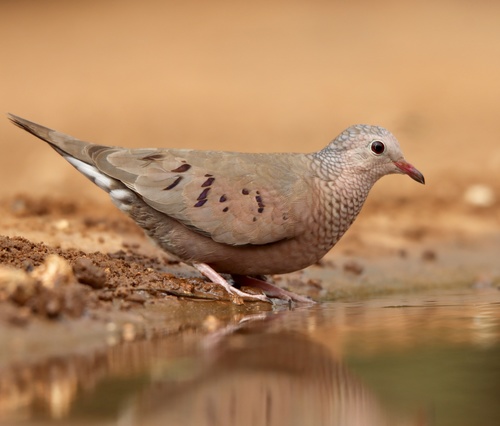
Photographs from iNaturalist · photographer credits
About from Wikipedia
Description
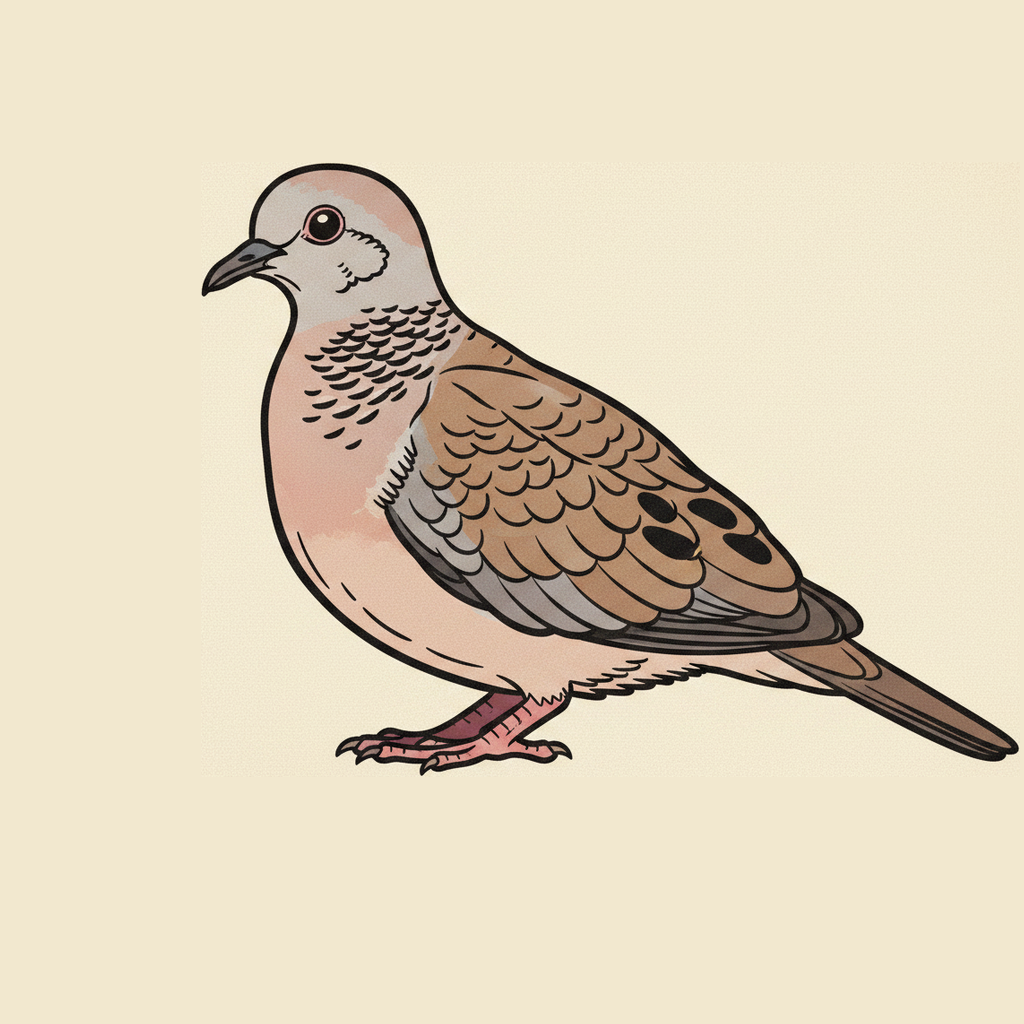
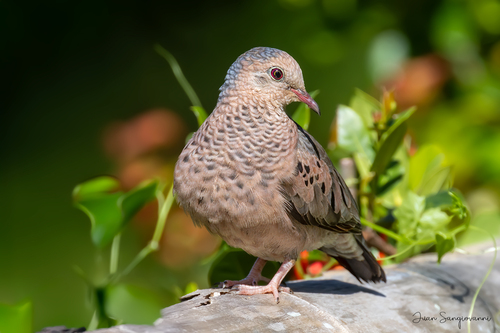
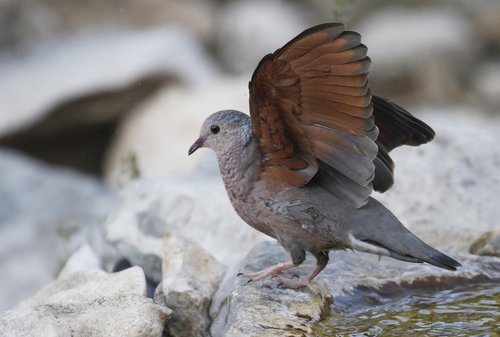
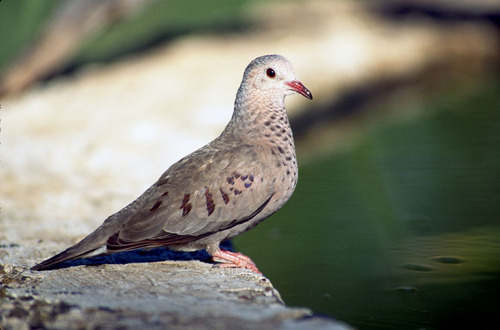
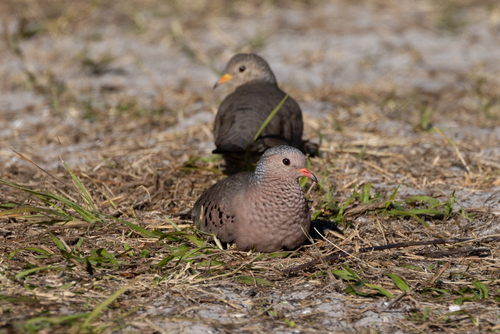
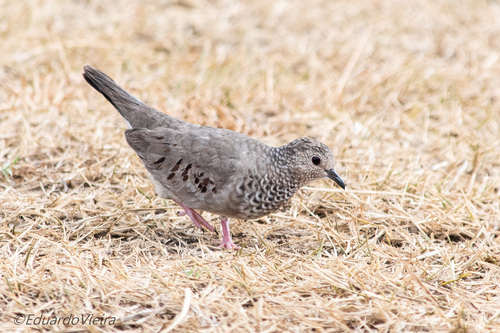
The common ground dove is North America's smallest and one of the world's smallest by mass. This species ranges from 15–18 cm (5.9–7.1 in) in length, spans 27 cm (11 in) across the wings, and weighs 26–40 g (0.92–1.41 oz). The common ground dove has a yellow beak with a black tip. Feathers surrounding the beak are pink in colour. The feathers on the head and the upper breast have a scale-like appearance. The tail feathers are very short and similar colour to the back. The plumage on the back of the bird is brown. The coverts and wing feathers are also brown but have black spotting on them. The common ground dove has chestnut primaries and wing borders, which can only be seen when the bird is flying. The common ground dove shows some sexual dimorphism in their plumage. The males have slate-gray feathers on the top of their heads and pink-gray colouration on their bellies. Females, on the other hand, are grayer than their male counterparts and are more evenly coloured. The common ground dove's call can be described as soft whoops that increase in pitch. Often the call is heard in repetition and is quite distinct. To hear the call of the common ground dove, see the external links for a link to a website.
Range & habitat
It is found in the southern tip of the United States, most of Mexico, parts of Central America, the Caribbean islands and northwestern South America. The common ground dove does not migrate and is a year-long resident in the areas they are found. The common ground dove lives in open areas that have trees and bushes. They are also found in forests with sandy areas, farmlands, and savannahs and near human infrastructure. Common ground doves seem to hold territories but they are rarely aggressive when dealing with intruders.
Adapted from Common ground dove on Wikipedia, used under CC BY-SA 4.0.