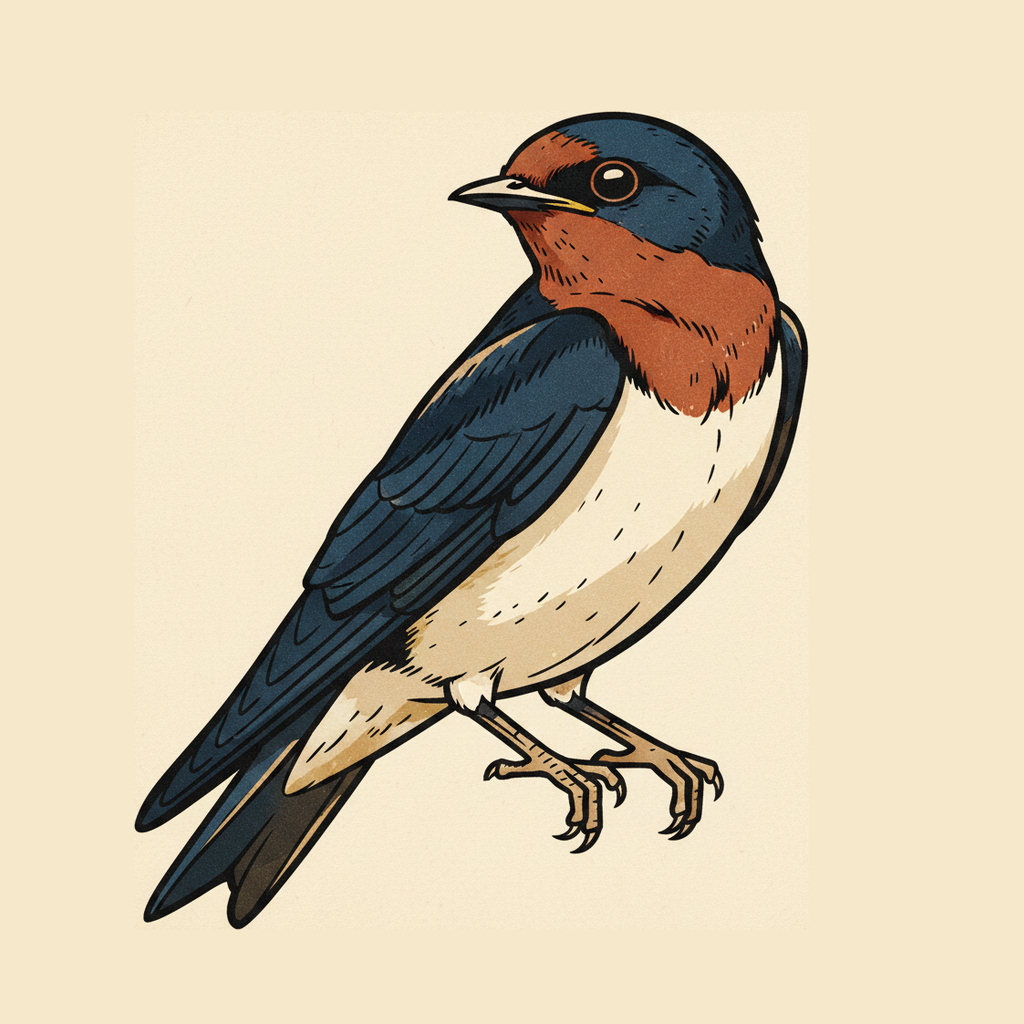
Photographs
what it really looks like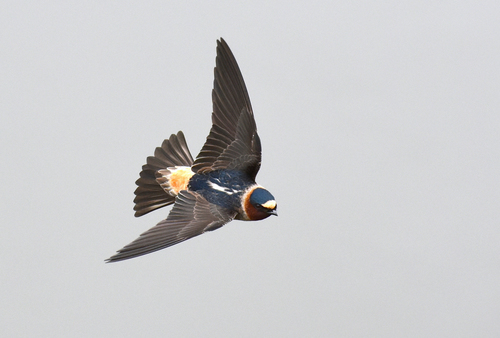
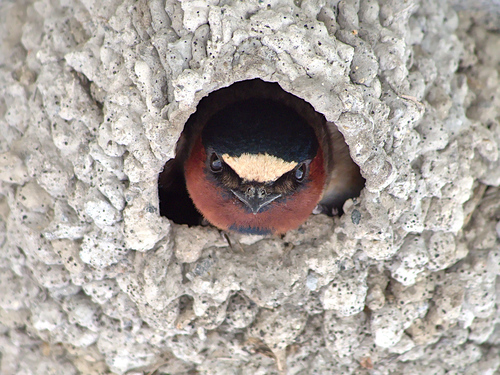
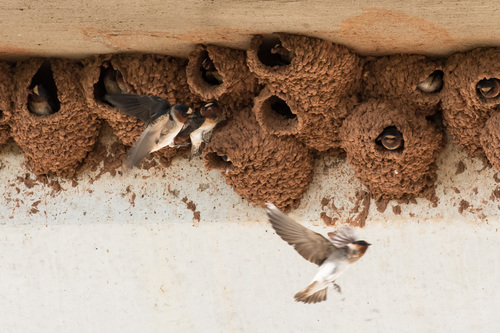
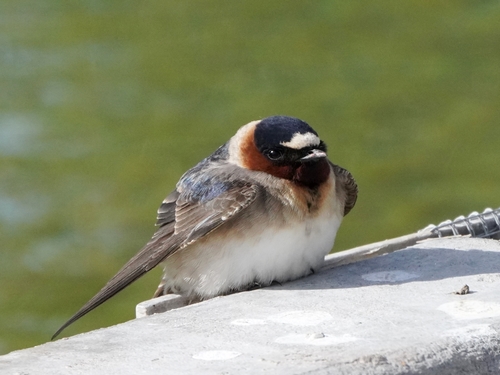
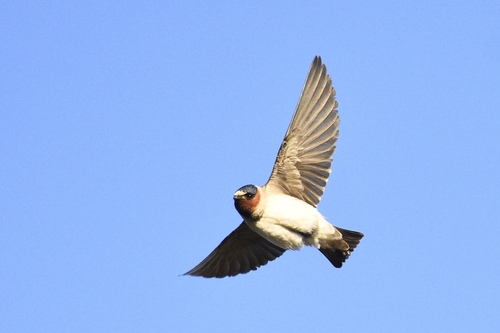
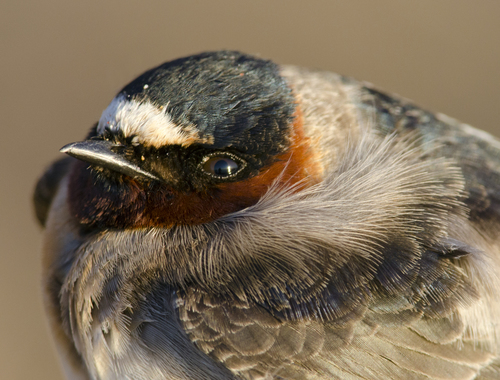
Photographs from iNaturalist · photographer credits
About from Wikipedia
Description
The cliff swallow's average body length is 13 cm (5.1 in), and they have short legs and small bills with relatively long pointed wings. Adult cliff swallows have an overall dark brownish plumage covering both their back and wings, and they have a characteristic white forehead, rich red-coloured cheeks with a dark throat, basic white underparts and a buffy-coloured rump. In good lighting conditions, their crowns and mantle feathers are iridescent. The Northern population is slightly larger in body size and also differs in facial markings from the Mexican population of cliff swallows, which have a chocolate-brown patch on their foreheads. The male and female have identical plumage, therefore sexing them must be done through palpation of the cloaca. During the breeding season, the males will have a harder cloaca that is more pronounced because the seminal vesicles are swollen. In addition, during incubation females will lose feathers on their lower breast to create a warm patch for sitting on their eggs. Cliff swallows are similar in body plumage colouring to the related barn swallow species but lack the characteristic fork-shaped tail of the barn swallow prominent during flight. The cliff swallows have a square-shaped tail. Juvenile cliff swallows have an overall similar body plumage colouring to the adults, with paler tones. The juveniles lack the iridescent adult plumages, and their foreheads and throats appear speckled white. The juvenile cliff swallows' white forehead and throat markings have high variance between unrelated individuals compared with those from the same clutch. These distinctive white facial markings disappear during maturity following their complex-basic moult pattern, because their pre-formative plumage is different from the basic plumage. The pre-formative facial plumage has been suggested as a possible way for parents nesting in large colonies to recognize their chicks.
Range & habitat
As their name suggests, throughout history the cliff swallows concentrated their nesting colonies along mountain cliffs, primarily by the western North American coast. Today, with the development of highways, concrete bridges, and buildings this adaptable bird species is rapidly adjusting its common nesting sites, with populations expanding further east and building their mud nests on these concrete infrastructures. Thus, the cliff swallow's breeding range includes large areas across Canada and the United States, excluding some Southern and Northern areas. The majority of nesting colonies are situated in close proximity to fields, ponds, and other ecosystems that would hold a large variety of flying insect populations to sustain their energy requirements during the breeding season. The cliff swallows' wintering grounds have been recorded as South American countries, such as Southern Brazil, Uruguay, and parts of Argentina. However, their behaviour and populations have yet to be extensively studied on their wintering grounds leaving room for new information about this species. The cliff swallows are long-distance day-migrants that generally travel along the North American coastlines. The Eastern populations travel through Florida, and the Western populations through Mexico and Central America down to their destinations. Flocks containing large numbers of cliff swallows have been recorded migrating together, but whether they stay together or disperse to different locations is unknown.
Behaviour
Cliff swallows live in a colonial lifestyle during the breeding season, composed of a large number of pairs per nesting site. This group-style life can present the birds with some benefits and disadvantages; valuable information can be shared through group learning about food location and habitat preferences, but it is also much easier to transmit parasites or diseases when living in close proximity. The cliff swallows have an unusually large parasite community that includes ectoparasites, ticks, fleas and swallow bugs, among others. These parasite infestations have been shown to negatively affect juvenile growth and developmental rates. Cliff swallows are socially monogamous, one pair will look after each nest, but many occurrences of sexual polygamy have been noted because of the varying genetics throughout the colony and within many individual nests. Both the female and the male cliff swallows will contribute to the colony's genetic variability by performing various actions of brood parasitism. The cliff swallows have an "aggressive and fearless" personality in comparison to their relatives the barn swallows, who were noted as being "timid and fearful".
Adapted from Cliff swallow on Wikipedia, used under CC BY-SA 4.0.