Photographs
what it really looks like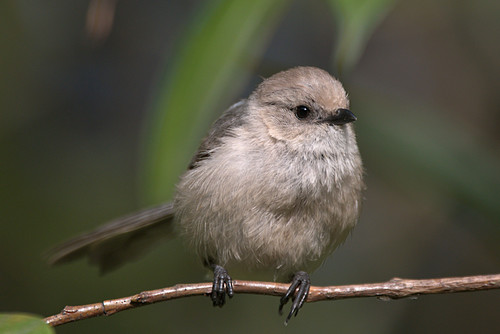
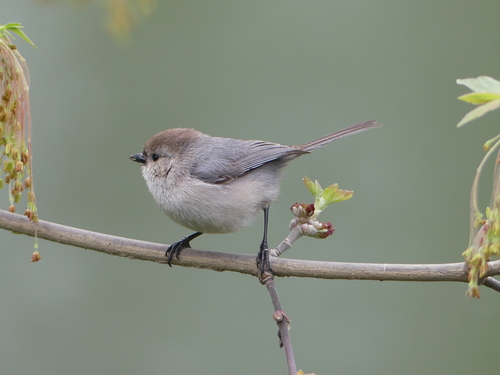
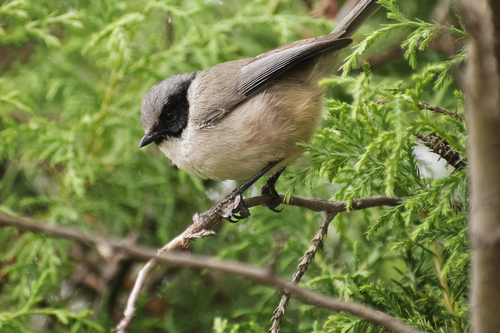
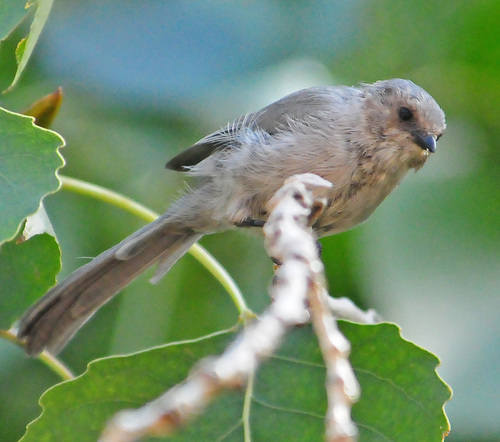
Photographs from iNaturalist · photographer credits
About from Wikipedia
Description
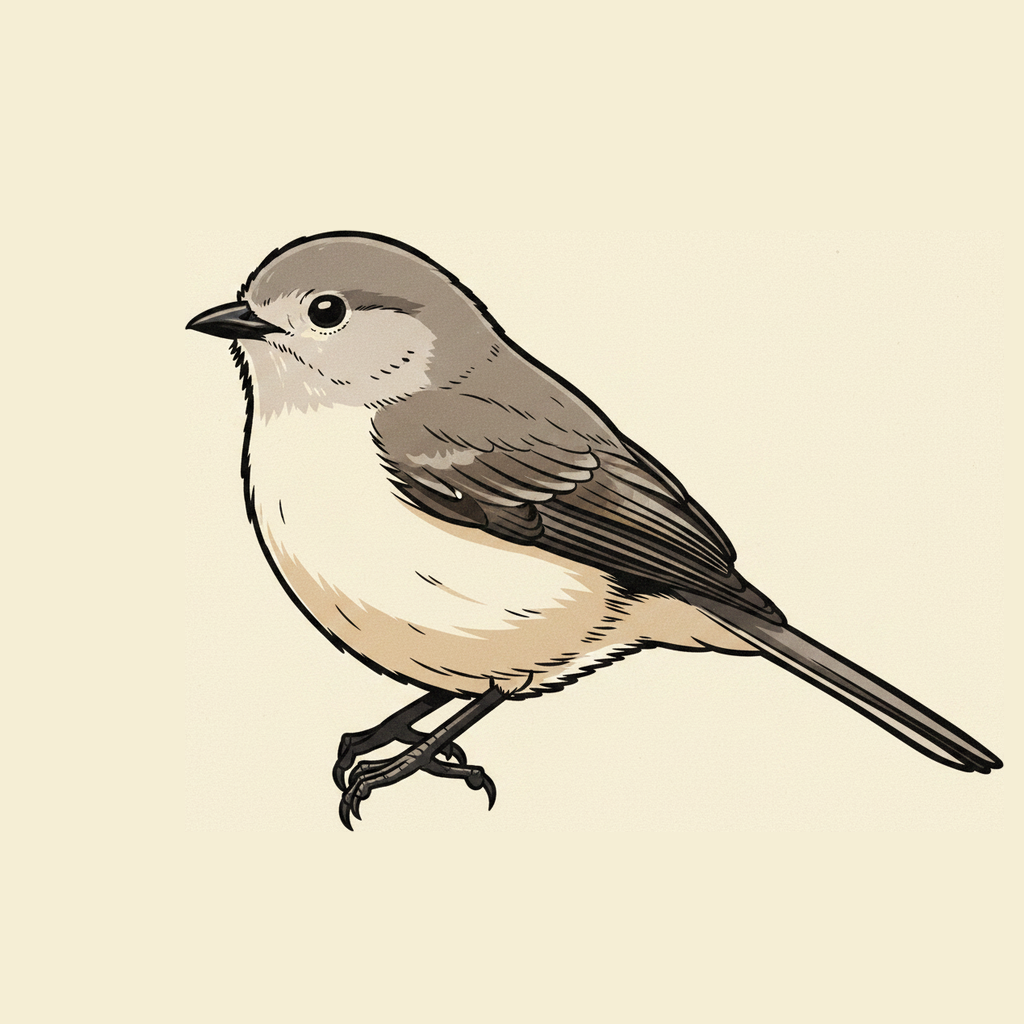
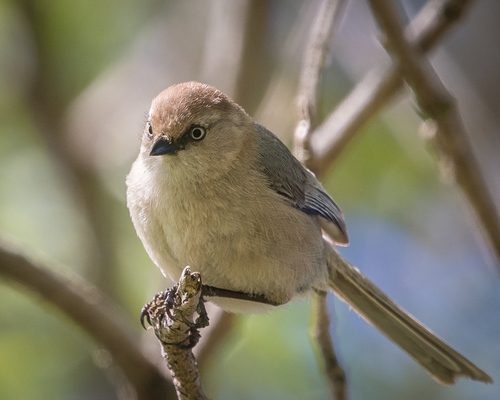
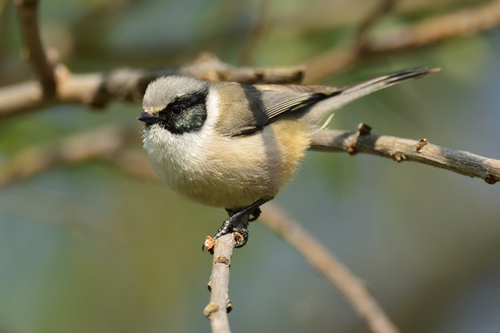
With a length of 100–110 mm (3.9–4.3 in) and a weight of 4.5–6 g (0.16–0.21 oz), the American bushtit is one of the smallest passerines in North America. It is mostly gray-brown, with a large head, short neck, long tail, and small, stubby beak. American bushtits have different characteristics based on their sex and habitats. The male has dark brown to black eyes while the adult female has yellow eyes. Additionally, bushtits resident near the coast tend to have a brown "cap" or "crown", while those further inland have a brown "mask" on their face, and those in Mexico and Central America have a black cheek. This feature does not occur in the northern part of the American bushtits' range and in the United States is confined to near the Mexican border, mainly in Texas. None of the bushtits in that location with the black ear patch are adult females; the majority of them are juvenile males with one or two dark lines on their faces rather than a whole patch. Only from the northeastern Mexican highlands and farther south does the black-eared variant become more prevalent; all males have a full black ear patch, and even mature females have a black arc covering their eyes and typically a black line across them.
Behaviour
Bushtits usually inhabit mixed open woodlands, which contains oaks and a scrubby chaparral understory. It can also be found residing in gardens and parks. It lives under the highland parts of Mexico and the western United States to Vancouver, via the Great Basin, the lowlands and foothills of California, southern Mexico, and Guatemala. The American bushtit has an active and social demeanor. This species forms flocks of 10 to 40 individuals of various species, including chickadees and warblers, to forage for tiny insects and spiders. Group members frequently communicate with one another through brief calls.
Adapted from American bushtit on Wikipedia, used under CC BY-SA 4.0.