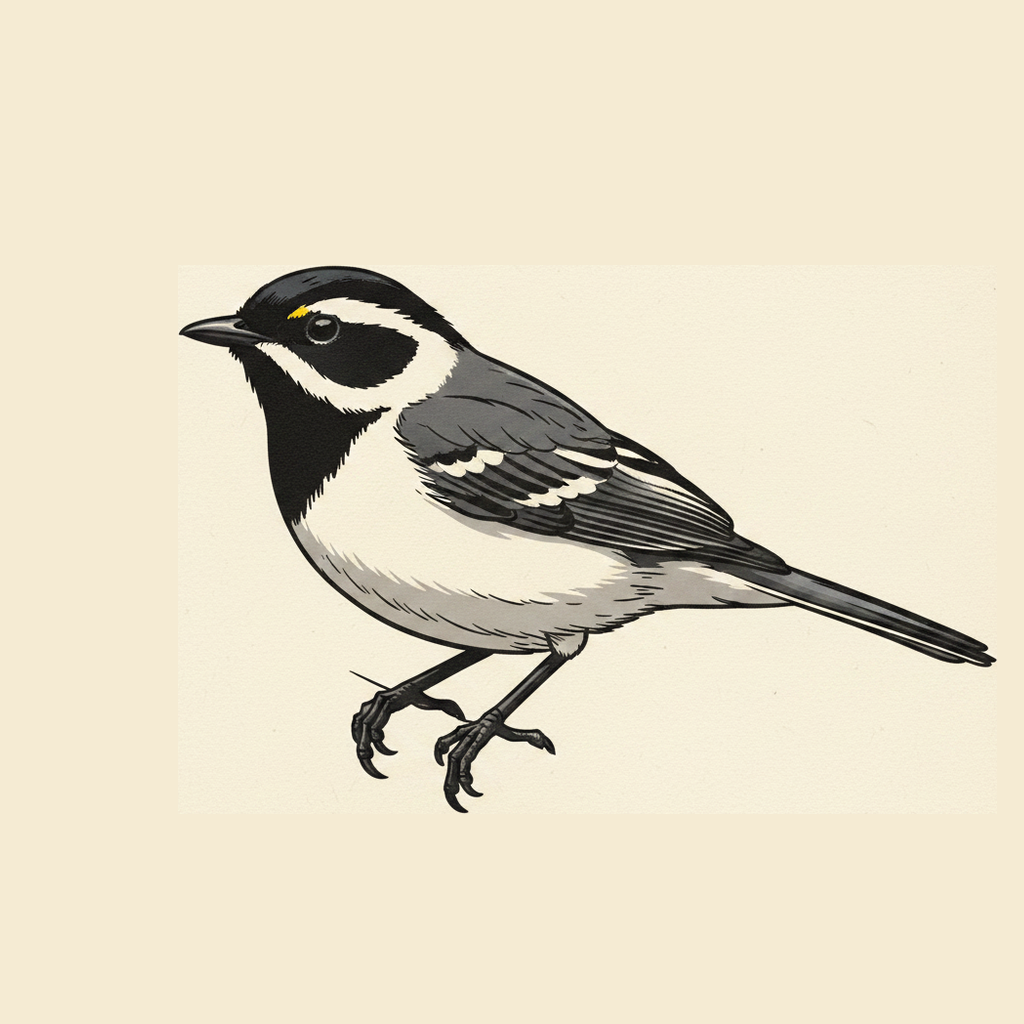
Photographs
what it really looks like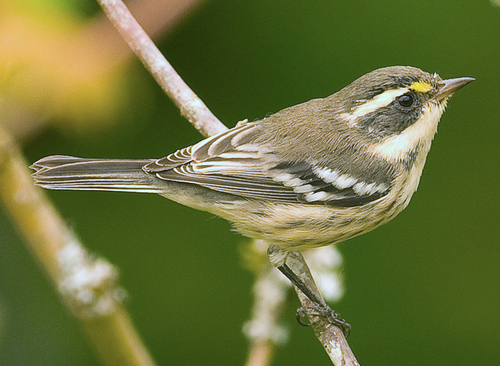
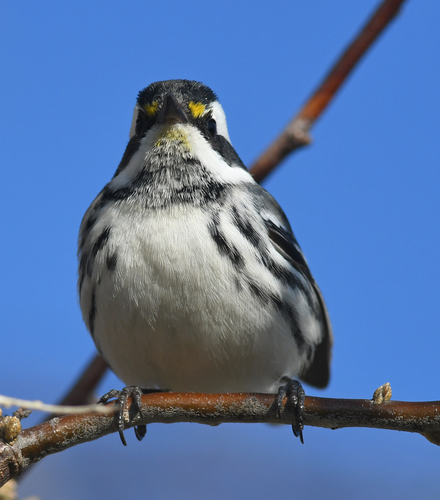
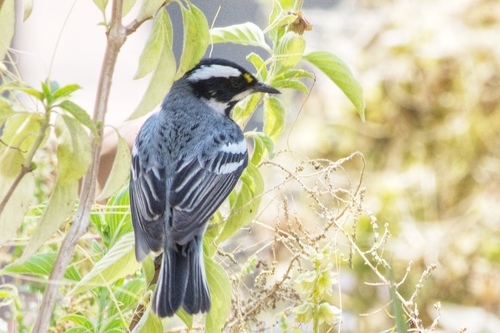
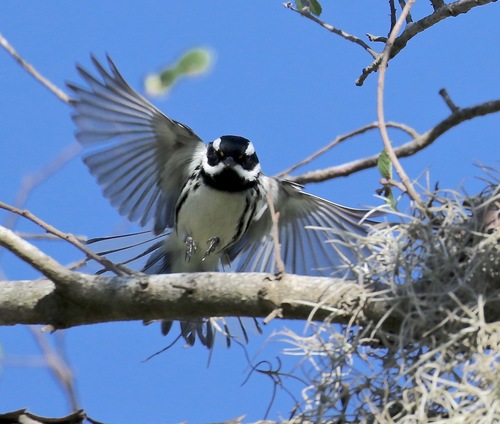
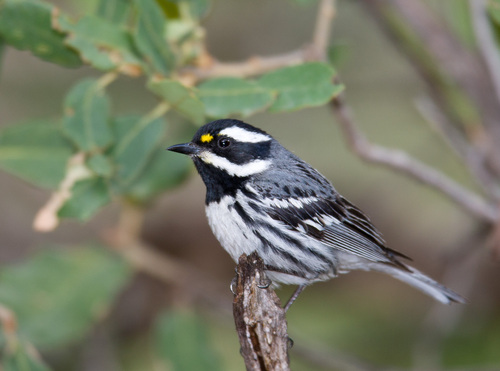
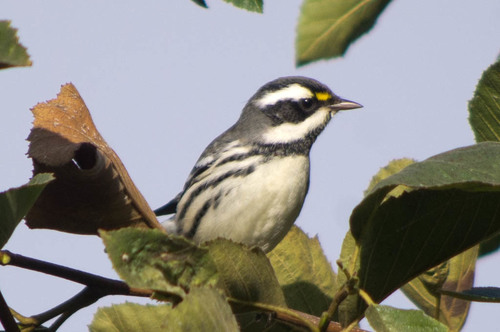
Photographs from iNaturalist · photographer credits
About from Wikipedia
Description
The black-throated gray warbler has mostly black, gray, and white plumage, which is soft, lacking gloss. With its striping and the small yellow spot between its eye and bill, it is a distinctive bird. The sexes differ slightly, both having gray upperparts with black streaks, and white underparts with black streaks on the flanks. The adult male is striped with black on the crown, throat, and below the eye, and has white around its chin and above its eye. The adult female has more dingy plumage on its head, with a white throat and dark gray cheeks. The most similar birds to the black-throated gray warbler are the black-and-white and blackpoll warblers, which although marked in black have entirely different plumage patterns. It is typically 13 cm (5.1 in) long, weighing 8.4 g (0.30 oz). Wing lengths are 5.6–6.9 cm (2.2–2.7 in), tail lengths 4.7–5.5 cm (1.9–2.2 in), bill lengths 8.4–9.6 mm (0.33–0.38 in), and tarsus lengths 1.66–1.88 cm (0.65–0.74 in), with females slightly smaller than males. Wingspan ranges from 7.5–7.8 in (19–19.7 cm). This bird gives a sharp tup or thick call, like that of Townsend's warbler but flat and unmusical, as well as a high see flight call. The male's song is a series of buzzy notes, with the earlier notes doubled and the next to last note high. This song has three variations, including a quiet "soft song" given by the males while following females gathering material for a nest.
Range & habitat
The black-throated gray warbler breeds in western North America, its range extending from southwestern British Columbia along the Pacific coast to northern Baja California, and east to New Mexico and southern Montana. It winters mostly in Mexico, from southern Baja California to Oaxaca state. It has spread into parts of Wyoming and Montana only recently, as Juniperus osteosperma has expanded its range due to a warming climate. Vagrants have been recorded across eastern North America and in Cuba. The black-throated gray warbler breeds in open coniferous and mixed forest with a brushy understory, in dry open oak forests, and in chaparral and other scrubland. It is particularly associated with pinyon pines, junipers, and oaks. It migrates to the south late in the fall, returning north in mid-spring. While migrating, it forages in any woodland or scrub it passes through. In its wintering grounds, it occurs in dry woodland and tall scrub. Though its status is not well known, it does not appear to be seriously threatened by habitat destruction or other human activities, unlike many migratory warblers. It is a fairly common bird, among the most common in some localities. Because it is common and not in rapid decline, it is assessed as Least Concern on the IUCN Red List.
Behaviour
The black-throated gray warbler is usually approachable, and can easily be observed while foraging. Despite this, it is poorly known, especially in its breeding behavior, of which Birds of North America said "almost no information is available". It forages, often in flocks with other species. It feeds on insects gleaned on low branches, especially caterpillars. The nest is usually placed on a horizontal tree branch or in a shrub, a few metres above the ground. The nest is an open cup constructed of grass stalks and other fibres, and lined with feathers and hair. The female lays three to five pinkish eggs with brown dots from May to July. Incubation and fledging periods are unknown. This species has been recorded giving a distraction display, pretending to be injured to distract predators from its nest. Both parents feed the young, though the female may do so more frequently.
Adapted from Black-throated gray warbler on Wikipedia, used under CC BY-SA 4.0.