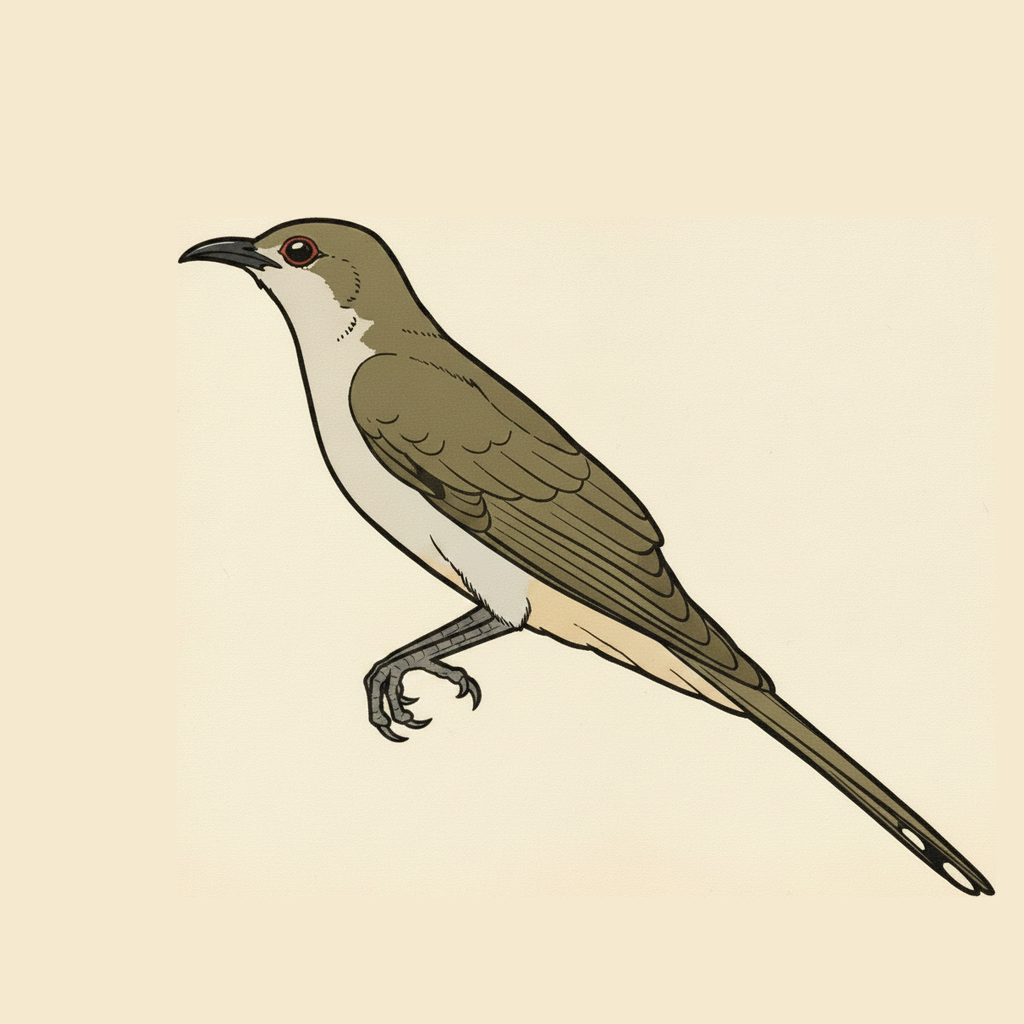
Photographs
what it really looks like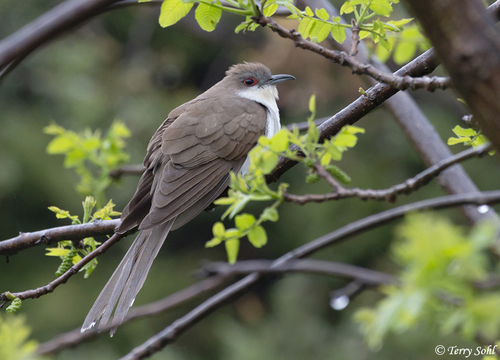
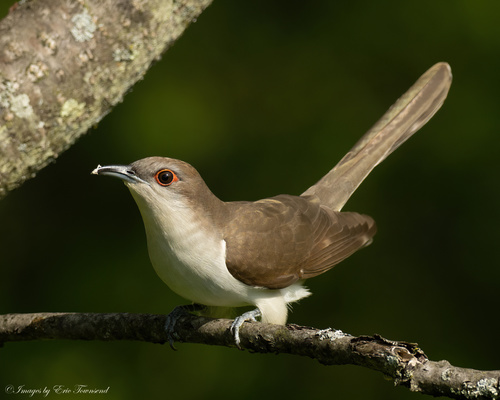
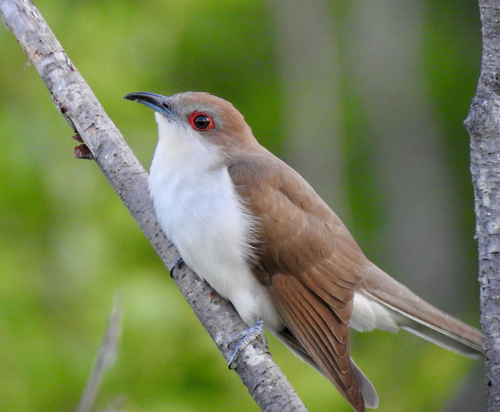
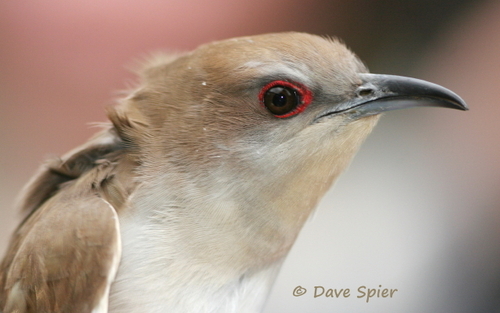
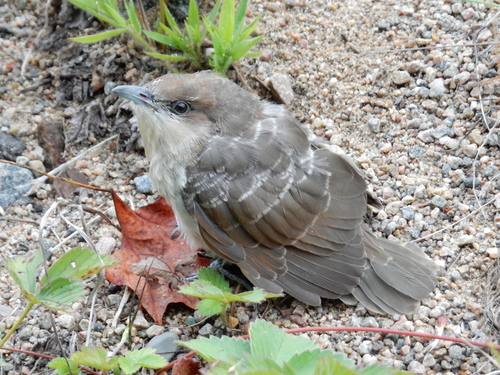
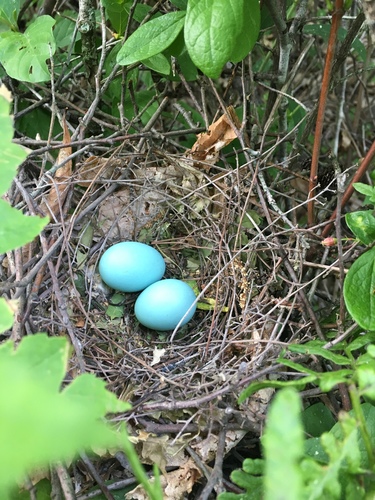
Photographs from iNaturalist · photographer credits
About from Wikipedia
Description
Adults have a long, graduated brown tail and a black, slightly downcurved bill. The head and upper parts are brown and the underparts are white. The feet are zygodactylous. Juveniles are drabber and may contain some rufous coloration on the wing. The adults have a narrow, red orbital ring while the juveniles' is yellow. Black-billed cuckoo chicks have white, sparsely distributed, sheath-like down that contrasts heavily with their black skin. They also have complex, creamy-colored structures on their mouth and tongue, which may appear like warts or some type of parasitic infection however they are normal for the species.
Range & habitat
C. erythropthalmus may be found in a variety of habitats. They are most commonly found around the edges of mature deciduous or mixed forests and much less frequently in coniferous forests. They can also be found in much younger-growth forests with a lot of shrubs and thickets. Wetlands with a lot of alder and willow are another prime location to see them. Lastly, they can also inhabit more open areas such as abandoned farmland, golf courses, and residential parks. Whatever the habitat may be, they are usually quite well hidden and tend to stick to the edges of these habitats. The chosen habitat must also have a water source nearby such as a lake, river, marsh, or pond. On their wintering grounds in South America, they can inhabit tropical rainforests, deciduous or semi open woodlands as well as scrub forests.
Adapted from Black-billed cuckoo on Wikipedia, used under CC BY-SA 4.0.