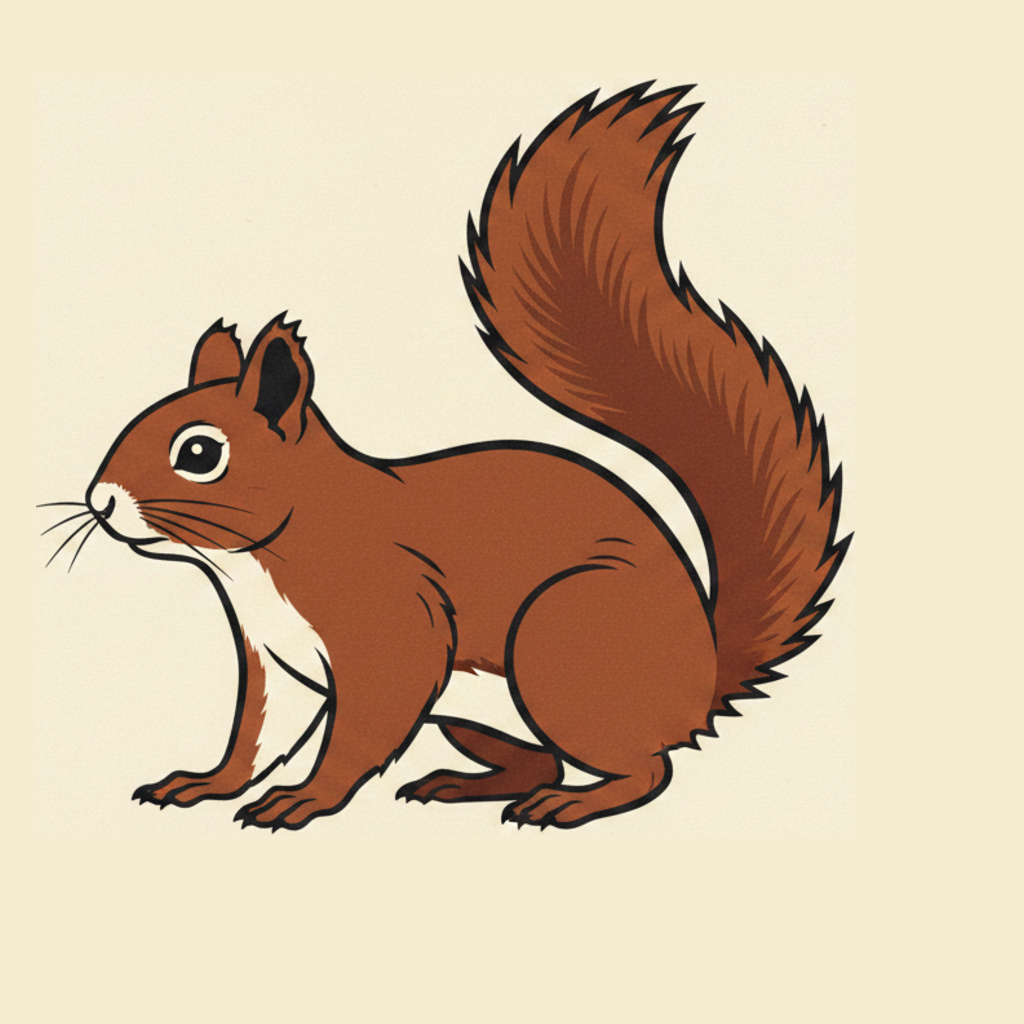
Photographs
what it really looks like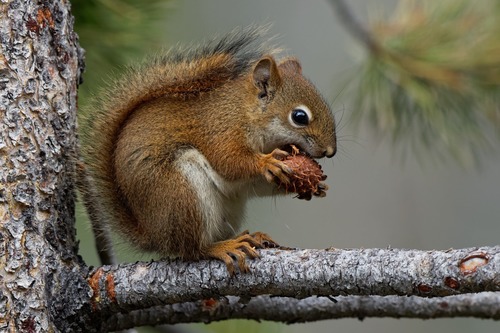
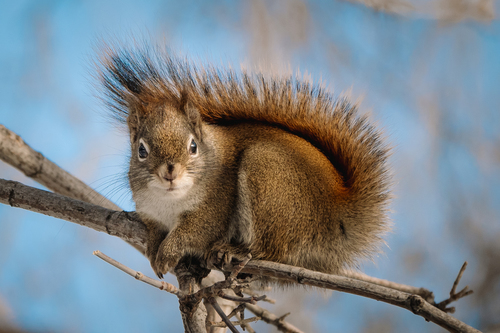
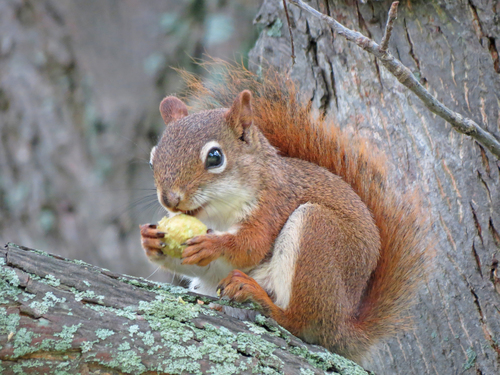
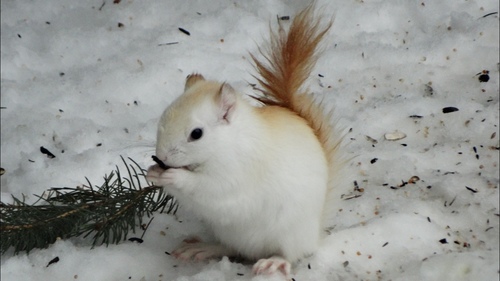
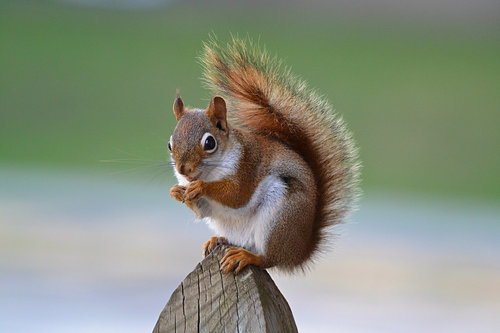
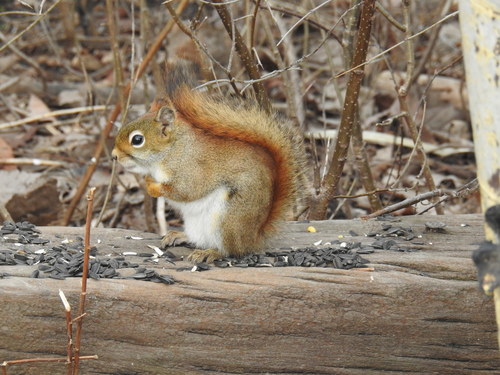
Photographs from iNaturalist · photographer credits
About from Wikipedia
Description
Red squirrels can be easily distinguished from other North American tree squirrels by their smaller size, 28–35 cm (11–14 in) total length (including tail), territorial behavior, and reddish fur with a white venter (underbelly). Red squirrels are somewhat larger than chipmunks. The Douglas squirrel is morphologically similar to the American red squirrels, but has a rust-colored venter and is restricted to the southwestern coast of British Columbia and in the Pacific Northwest of the United States. The ranges of the American red squirrel and the Douglas squirrel overlap in southern British Columbia, northwestern Washington and eastern Oregon.
Range & habitat
American red squirrels are widely distributed across the North American continent. Their range includes: most of Canada, excluding northern areas with no tree cover, the southern half of Alberta and the southwestern coast of British Columbia; the southern half of Alaska; the Rocky Mountains area of the United States, and northern half of the eastern United States. American red squirrels are abundant and not of conservation concern throughout much of their range. American red squirrels were introduced on Newfoundland and have lived there in abundance for decades. The endangered subspecies T. h. grahamensis, found only on Mt. Graham, Arizona, was formerly considered a member of this species, but is now considered a subspecies of the southwestern red squirrel (Tamiasciurus fremonti).
Adapted from American red squirrel on Wikipedia, used under CC BY-SA 4.0.