Photographs
what it really looks like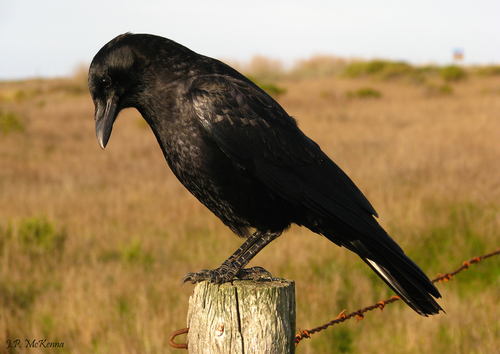
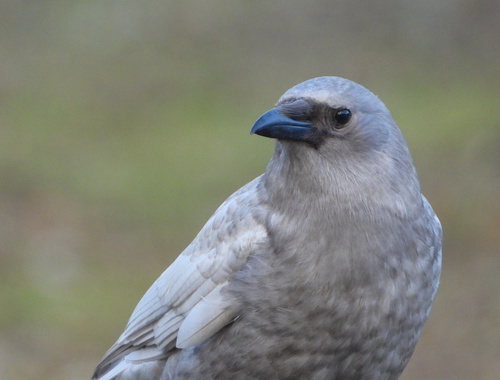
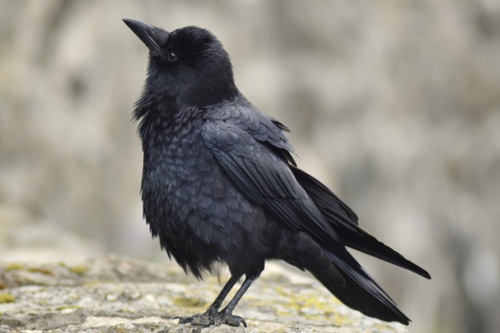
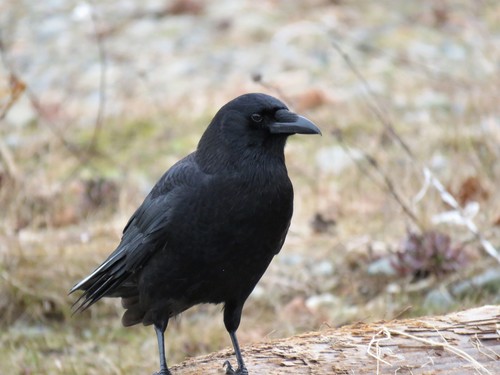
Photographs from iNaturalist · photographer credits
About from Wikipedia
Description
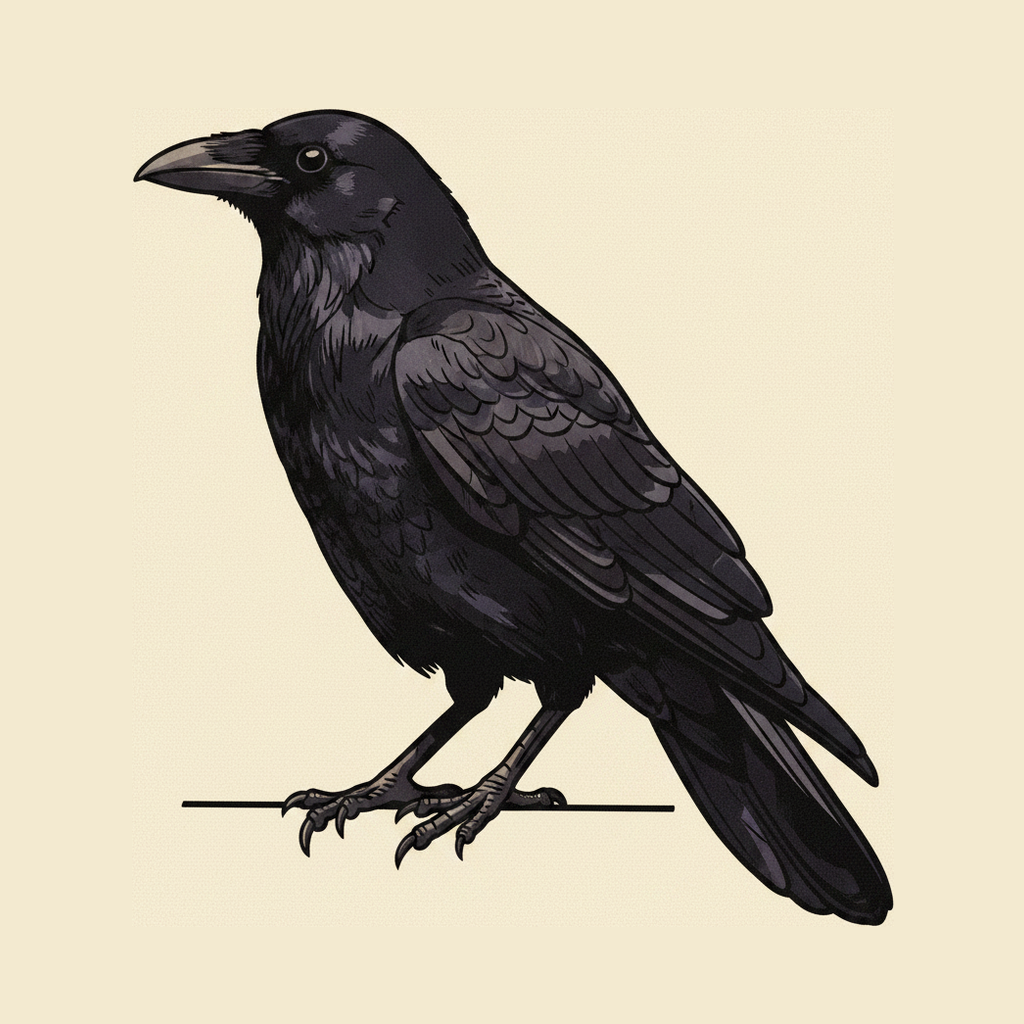
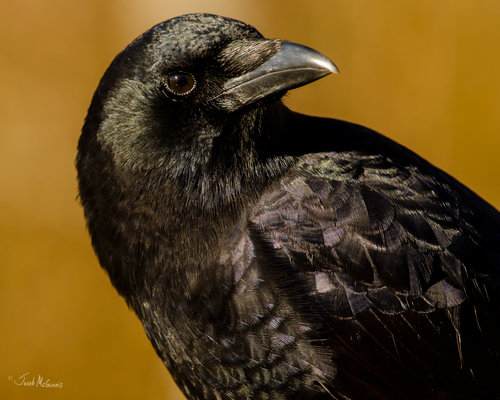
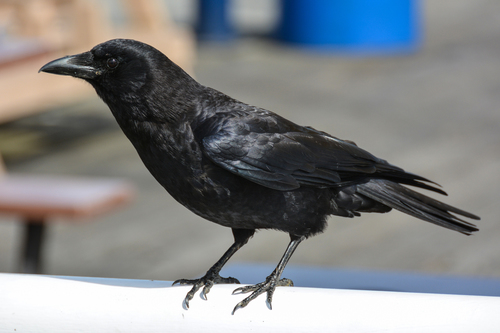
The American crow is a large, distinctive bird with iridescent black feathers all over. Its legs, feet, and bill are also black. They measure 40–53 cm (16–21 in) in length, of which the tail makes up about 40%. The wing chord is 24.5 to 33 cm (9.6 to 13.0 in), with the wingspan ranging from 85 to 100 cm (33 to 39 in). The bill length can be from 3 to 5.5 cm (1.2 to 2.2 in), varying strongly according to location. The tarsus is 5.5 to 6.5 cm (2.2 to 2.6 in) and the tail is 13.5 to 19 cm (5.3 to 7.5 in). The body mass can vary from 316 to 620 g (11.1 to 21.9 oz). Males tend to be larger than females. The most usual call is a loud, short, and rapid caaw-caaw-caaw. Usually, the birds thrust their heads up and down as they utter this call. American crows can also produce a wide variety of sounds and sometimes mimic noises made by other animals, including other birds, such as barred owls. Visual differentiation from the fish crow (C. ossifragus) is extremely difficult and often inaccurate. Nonetheless, differences apart from size do exist. Fish crows tend to have more slender bills and feet. There may also be a small, sharp hook at the end of the fish crow's upper bill. Fish crows also appear as if they have shorter legs when walking. More dramatically, when calling, fish crows tend to hunch and fluff their throat feathers. If seen flying at a distance from where size estimates are unreliable, the distinctly larger common ravens (C. corax) can be distinguished by their almost lozenge-shaped tail and their larger-looking heads. They also fluff their throat feathers when calling, similarly to fish crows. Ravens also soar for extended periods, unlike crows, which rarely fly more than a few seconds without flapping their wings. Crows have been noted to be intelligent. They have the same brain-weight-to-body ratio as humans. This has led to some studies that have identified that crows are self-aware and that young crows take time to learn from tolerant parents. While a human has a neocortex, the crow uses a different area in its brain, the pallium, to perform similar tasks. They can remember and identify people based on their appearance. The average lifespan of the American crow in the wild is 7–8 years. Captive birds are known to have lived up to 30 years. The West Nile virus is a major cause of death in crows.
Range & habitat
The American crow has a large range, extending from the Pacific Ocean to the Atlantic Ocean in Canada, on the French islands of Saint-Pierre and Miquelon, south through the United States, and into northern Mexico. They have also been recorded in Bermuda from 1876 onwards. The increase in trees throughout the Great Plains during the past century due to fire suppression and tree planting facilitated range expansions of the American crow as well as range expansions of other species of birds such as the barred owl. The American crow inhabits virtually all types of country – from wilderness, farmland, parks, and open woodland to towns and major cities – and is absent only from tundra habitat. The American crow is a permanent resident in most of the US, but most Canadian birds migrate some distance southward in winter. Outside the nesting season, these birds often gather in large communal roosts of thousands or even millions of crows at night.
Behaviour
Studying the behavior of American crows is laborious due to the difficulty in catching them, resulting in much of their behavior, including daily routine, migration, molting, survivorship, age of first breeding, nestling development, and the nature of nesting helpers, being poorly studied.
Adapted from American crow on Wikipedia, used under CC BY-SA 4.0.